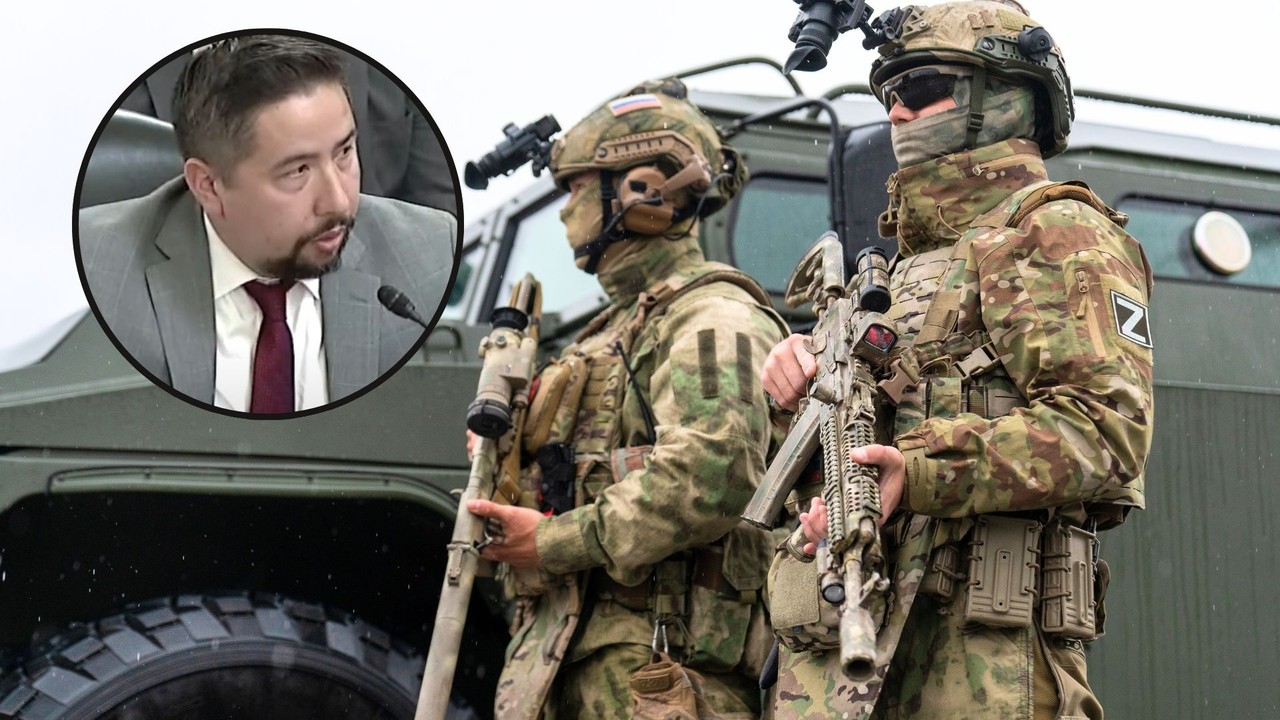
Michael Cecire, a researcher for defense and safety in Rand, an independent Washington Think Tank, which often conducts research for the Pentagon, warned members of the US Congress last week, that, according to many assessments of European allies, Russia “can be able to attack NATO over the next 5-10 years”.
– I think this is something that we all have to remember when assessing the costs of a bad room Cecire said during an interrogation organized by the Helsinki Commission, a congress body dealing with Europe and Eurasia.
– I see Europe that is under pressure and attacked. Ukraine is on the front line, but the whole region is threatened and undergoed pressure – said Cecire to legislators.
In his opinion, “the potential consequences of the Russian invasion of Ukraine and Russian and Chinese efforts to displace US influence from Europe are disturbing, but they can be counted.”
In an interview with Kyiv Post on Tuesday, Cecire reminded that European leaders and heads of intelligence have repeatedly assessed that Russia can be able to attack NATO over the next 5-10 years. He talked about it, among others NATO Secretary General Mark Rutte.
These assessments – as he explained – are based on several factors. – First of all, it is The ongoing campaign of sabotage, cyber attacks and hybrid operations Russia against European countries. Secondly, Russia's ability to maintain and regenerate forces despite significant losses in Ukraine, which, according to some estimates, already reach a million victims – he calculated.
Continuation of the material under the video
Third – as he pointed out – they are maximalistic demands of Russia regarding not only the actual dominance over Ukraine, but also larger areas of Europe, including withdrawal of protection for several current NATO Member States.
Cecire also emphasized that Russia itself threatened a direct war with NATO.
He noticed.
Cecire reminded that Russian mobilization and full invasion of Ukraine in February 2022 were probably aimed at a quick hybrid leadership liquidation operation. “This operation was unsuccessful, which led to a long -term war,” noted the analyst in an interview with Kyiv Post.
Direct risk for Moldova and Georgia
During the testimony before the Helsinki Commission, Cecire drew attention to the potential threats to European security and the national interests of the United States in the event of imposing “Russian peace” imposing Ukraine. In this containss, he pointed out primarily to potential threats to Moldova.
He stated that Russia's military victory – or suspension of weapons on Moscow's terms – in Ukraine “It would almost certainly cause the Russian ambition to spread to Moldova and further“.
– Russia could physically and directly threaten Moldova, but it would not necessarily have to do it. She could strengthen Transnistria and play a more explicit role in other sensitive regions of Moldova, which he has long supported, especially in the Russian -language region of Gagausia. She could use the full range of her political and economic influence on Moldova, potentially limiting the trade of goods and electricity between Moldova and Ukraine – explained Cecire.
In his opinion, the results of these activities could allow Russia to exacerbation of threats against Romania, a valuable NATO allyas well as in the Balkans and other parts of Central and Eastern Europe.
– the expert pointed out.
Cecire also noted that in the event of a violation of the sovereignty of Moldova, China's interests would probably coincide with the interests of Russia.
– Russian aggression in Ukraine and Europe is financially and materially supported by the People's Republic of China, which has been involved in serious geoe economic activities in Eastern Europe and the Black Sea region in recent years. He invests in strategic transit infrastructure and telecommunications systems and creates a network of strategic partnerships – summed up the analyst.
Rand (founded in 1948, whose name comes from “Research and Development”-research and development) is a Think Tank Non-Profit, which receives funds from both public and private sources: from the US government and universities to private funds and charity foundations.
It has long been considered an non -party entity, although in recent years loyal to Donald Trump, the Magician allies have condemned him for the alleged rapprochement to the left.
I’m Ashley Davis as an editor, I’m committed to upholding the highest standards of integrity and accuracy in every piece we publish. My work is driven by curiosity, a passion for truth, and a belief that journalism plays a crucial role in shaping public discourse. I strive to tell stories that not only inform but also inspire action and conversation.