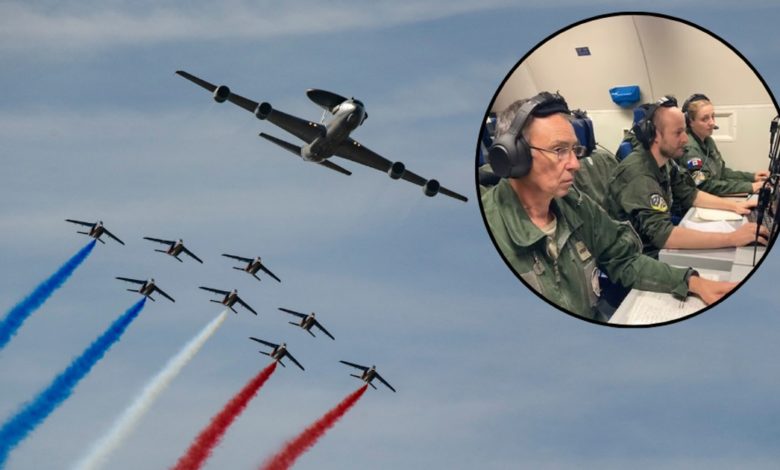
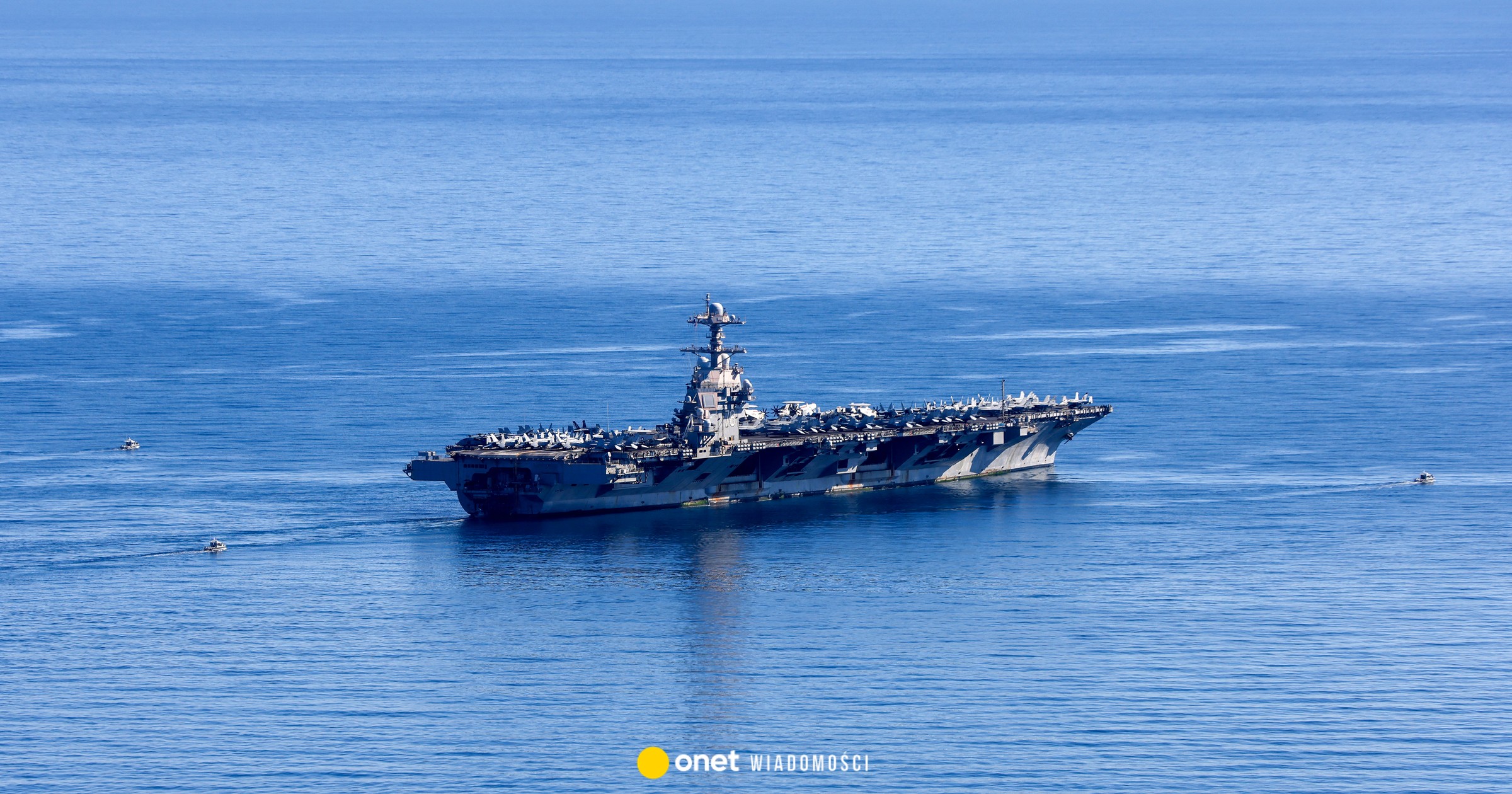
Tuesday around 16.00. As part of the routine mission, a powerful French reconnaissance aircraft patrols the airspace above the Netherlands. Suddenly he picked up violently.
The captain, who was just taking a break, throws himself to the cockpit. The supervisory officer provides an order from the on -board system to change the flight route – to avoid collision in the air.
Two Dutch f-35 fighters flying below too closely closer to the French E-3F, also known as AWACS (Airborne Warning and Control Systems Aircraft), forcing him to change the course at the last minute.
Fortunately, for his 18-person crew, aircraft belonged to allies, not to enemies, and also patrolled the airspace in search of potential threats. This knowledge was then presented by representatives of their country at the NATO summit, which took place on June 24 and 25 in Hague.
– It almost never happens – says Lt. Col. Cedric, who – like other people cited in this article – was not authorized by the French armed forces to give his real name.
Cedric talked to the editors of Politico during the 11-hour flight. As part of it, the French armed forces showed how NATO protects the airspace – whether during an important meeting of 32 world leaders, or, more and more often, on the eastern flank of the alliance, closer to Ukraine, where Russian forces often take hostile actions.
– We regularly work on the distribution of NATO forces and joint exercises. The goal is to achieve full interoperability – says Cedric. He adds that it should be limited to the absolute minimum of friction between the armies of different countries.
Russian air threat
The French Awacs aircraft circling the Netherlands is one of three reconnaissance aircraft that is designed to watch order in a 10-kilometer zone of flight ban and in the 60-kilometer zone of increased control around the top of the summit. Dutch fighters, refueling aircraft, helicopters and ships at sea also take part in the mission.
Although the level of threat in the Netherlands is low, the crew remains alert.
Clea Caulcutt / Politico
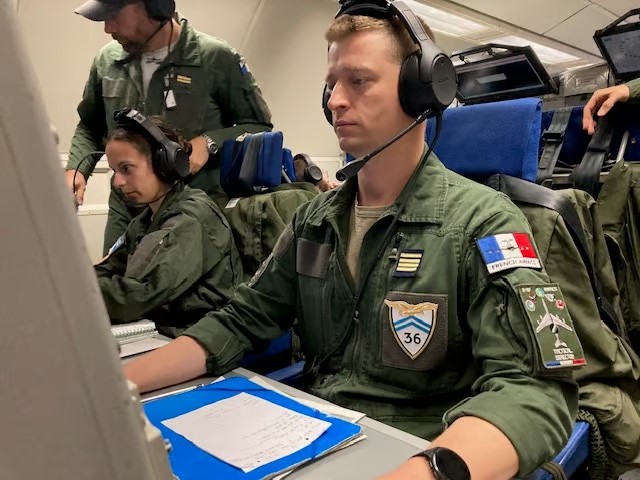
Major Benoit supervising supervision operations on the AWACS aircraft
– It's calm – say Major Benoit, mission commander, staring at the planes that he sees on the screen located in the supervisory center, in the heart of the plane. – But it's very busy. We need to make sure that we identified every plane – he adds.
The crew pays special attention to Russian aircraft trying to disturb the mission. After regular patrols, NATO has already got used to it over the eastern border of NATO.
One of the pilots – Capture Marc – says that Russian aircraft try to disturb the mission “during each flight” aiming at some places closer to the border.
– we fly in international zones, a [Rosjanie] They make us fly away. They say that we are in a dangerous zone and we have to retreat – he says. He explains that in such situations the crew does not give way and continues the mission, but corresponds to “in a polite and professional way”.
Continuation of the material under the video
It is not unusual, however, that such meetings are increasingly common. Regularly – recently two months ago – NATO had to send fighters to capture Russian aircraft violating international air traffic regulations.
Camille Grand, former deputy secretary of NATO general, said that these operations in Eastern Europe, known as Air Shielding missions, are important for both strategic and symbolic reasons.
– If you attack Estonia, French and British soldiers will die. This is no longer Russia against Estonia, but Russia against NATO. It connects us – said the Grand.
From the moment Donald Trump's return to the White House and his contradictory signals regarding the involvement of the alliance – including the submission of art. 5 NATO – relations between allies, however, were under unprecedented pressure.
However, European leaders are trying to maintain Trump's involvement in NATO's activities – for this purpose they have even committed to increase defense expenses to 5 percent. GDP.
One of the first such cases
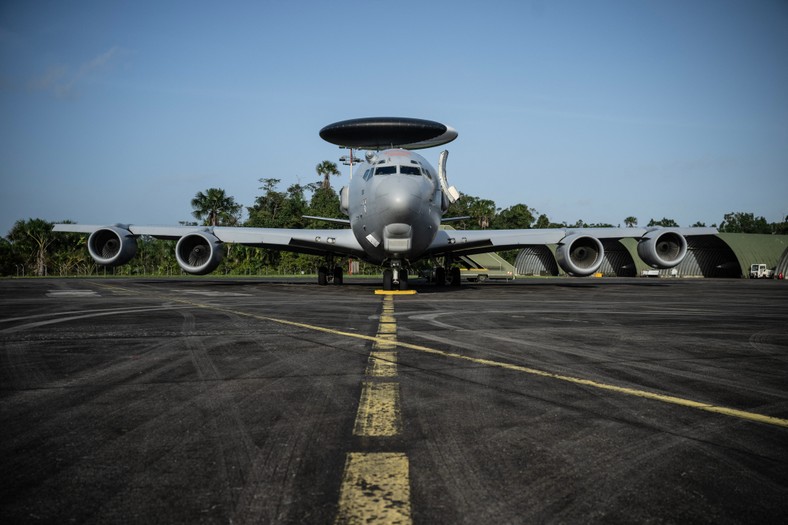
Awacs is one of the largest aircraft of the French army – you can recognize it by a large disk above the aircraft. France bought four such aircraft from the United States in the 1990s. One of them since the terrorist attacks of September 11, 2001 has remained in France in a state of permanent readiness.
The aircraft are equipped with a number of radars, including antennas detecting electromagnetic signals that allow intelligence officers to identify aircraft model and nationality within a 700 km radius.
Julien de Rosa / AFP
Awacs is one of the largest aircraft of the French army
By 2035, however, French AWACS aircraft are to be withdrawn and replaced by Swedish aircraft of early warning and control of Globaleye, which Paris undertook to buy last week. If the contract happens, it will be One of the first cases since the re -election of Trump, in which the American arms company lost in Europe to a competitor outside the USA.
The E-3F crew believes that this is a necessary change-AWACS machines are less and less and they are becoming more and more difficult to maintain. Globaleye aircraft require a smaller crew – it is supported by more advanced technology.
Benoit, however, believes that automation also has its limitations. He says that in the case of important missions “trajectory, height, consistency of behavior and nationality of” observed aircraft should be assessed. – You need an operator who will check if nothing will miss attention [technologii] He says, staring at the red zone over Haga.
I’m Ashley Davis as an editor, I’m committed to upholding the highest standards of integrity and accuracy in every piece we publish. My work is driven by curiosity, a passion for truth, and a belief that journalism plays a crucial role in shaping public discourse. I strive to tell stories that not only inform but also inspire action and conversation.