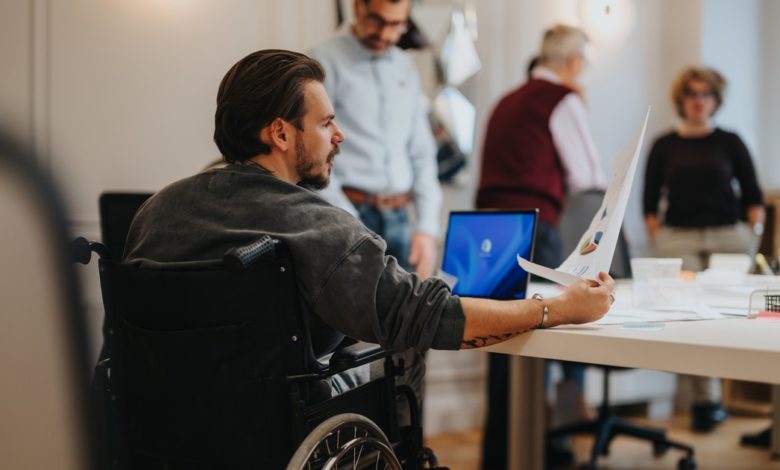
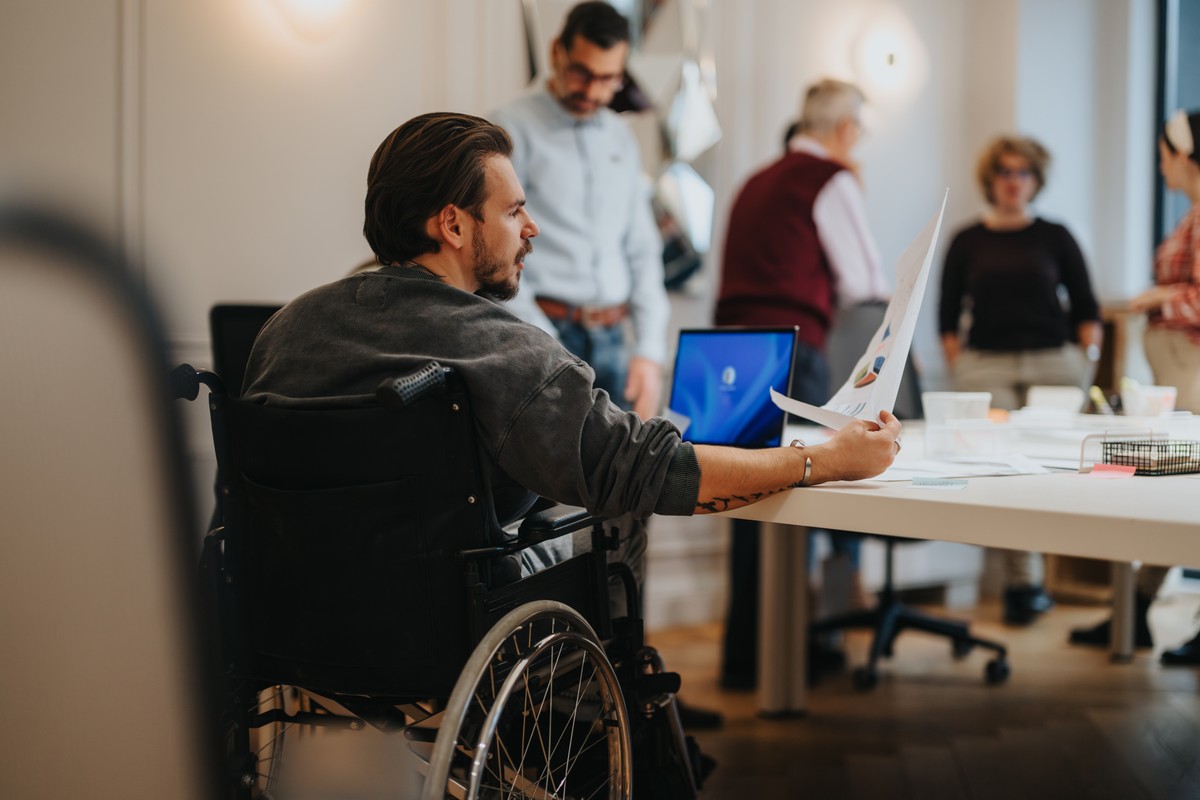
Until recently, inclusiveness was treated as an expression of social responsibility. Today it becomes a condition for survival. As the report “Every talent for gold – inclusive in employment”, developed by the Association of Entrepreneurs and Employers, reaches for talents from outside the mainstream is not only a matter of ethics, but a real solution to the problem of staff shortage.
– Until 2050, five million people will take from the labor market. This is a quarter of the whole professionally active population. Companies will have to reach for subsequent groups of employees with special needs – said Jakub Bińkowski, a member of the board of ZPP during the premiere of the report. Turning on the labor market means creating conditions in which everyone can develop their professional potential.
The report, presented on June 24 in the Sejm of the Republic of Poland, was based on a dialogue with the participation of companies, HR experts, social organizations and government representatives. Identifies the four main social groups that can fill the gap on the labor market.
– For over half a year we worked on a project that covered four groups: women returning to the labor market after a break related to motherhood, people with chronic diseases, seniors and neuro -dawn people. What connects them? It is people who want and can work have appropriate competences, but through prejudices and system barriers still remain on the margins of the labor market – emphasized Emilia Szczukowska, ZPP analyst and project coordinator.
Chronic disease does not mean inability to work
More than half of adult Poles live with a chronic disease. Among them are people struggling with diabetes, heart disease, cancer, psoriasis or chronic respiratory diseases.
Only 9 percent professionally active patients informs the employer about it. The others, for fear of losing the chance of employment, are silent. For a reason. “70 percent of managers admits that the disease may be the reason for rejecting a work candidate” – we read in the report.
Slivion of the disease can have catastrophic effects. Example? Diabetics is often accompanied by a sharp decrease in sugar in irritation, a sense of tangling, hyperhidrosis and a characteristic “aceton breath”. Uninformed witnesses may think that someone is drunk. Meanwhile, a lack of quick response can lead to loss of consciousness, coma and even death.
Adaptation of work organization can bring huge benefits to both employees and companies. Experts also call for the liquidation of the so -called “disability trap” and restoring work on the Act on supported employment, under which the employee and company would receive the support of work coach.
Parents want to work, but the system makes it difficult for them
In Poland, as much as 30 percent Mothers of children aged 1-9 are not working. Although most of them declare their willingness to return to the market, they face barriers: lack of childcare, rigid working hours or reluctance to work remote work. Returning after parental leave is also often associated with fear of losing your position in the company and difficulties in finding after a break.
The solutions are simpler than it seems. The key is flexibility – remote, hybrid work or individual working time. It is equally important to support in returning, i.e. re-onboarding, and creating a culture of parents friendly to parents.
Silversi: Experience and deficit competences
People in his fifty will soon be more than half of the available workforce and will arrive. Despite this, they are looking for a job for an average of 11 months, often losing faith in their abilities. This is a huge loss, because this group brings loyalty, commitment and priceless experience to the company.
Supporting their maintenance on the labor market requires retraining programs (especially in digital competences), flexible forms of employment and elimination of age stereotypes in recruitment.
Employers also postulate the introduction of more flexible pre -retirement protection principles so that it really protects employees and does not discourage them from employing them.
Neurorats: Hidden competitive advantage
It is estimated that 15-20 percent The population are neuro -dived people – with ADHD, in the autism spectrum, with dyslexia or other neurological challenges.
Despite the unique competences, such as analytical thinking, innovative approach, creativity and focus on details, are still largely invisible to the labor market. In Poland, only 2-25 percent people in the autism spectrum work earningly. People with ADHD are 60 percent More exposed to the risk of dismissal.
For this group, key communication, adapted work environment (e.g. silence zones, reduction of sensory stimuli), organizational flexibility and trained management staff are crucial.
The authors of the report also emphasize the need to introduce a definition of a neuroatypical person to the Labor Code and to launch support mechanisms, such as reimbursement of costs of adaptation of positions or employing work trainers.
Specific solutions that work
– The labor market is full of when it is switched on – said Aleksandra Gajewska's deputy minister, work and social policy during the premiere of the report. – Our task is to create such mechanisms and frames through legal acts so that it becomes a fact.
However, inclusiveness will not come by itself. Specific solutions are needed. The ZPP report sets six key system activities:
- financial incentives for companies employing people from excluded groups,
- simplification of co -financing procedures and the liquidation of bureaucratic barriers,
- liquidation of the disability pension,
- flexible regulation of pre -retirement protection,
- Definition of neuroratorness in the Labor Code,
- Support for retraining programs and competence development.
Inclusiveness means less rotation, greater commitment and access to a wider talent pool. It is also an opportunity to participate in life and respond to growing staff shortages.