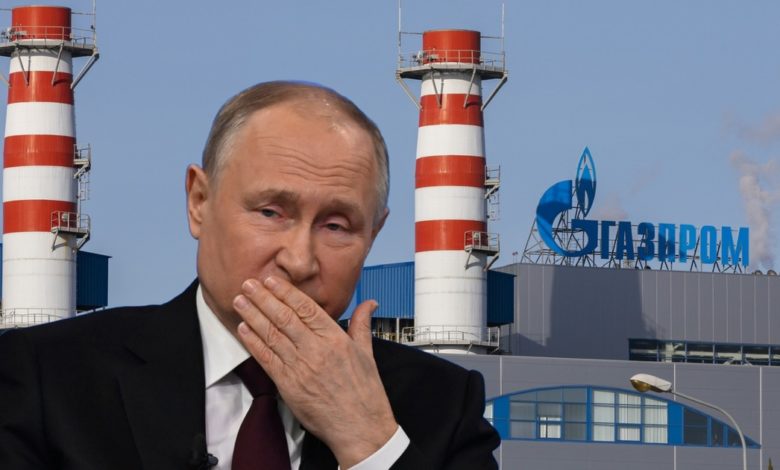
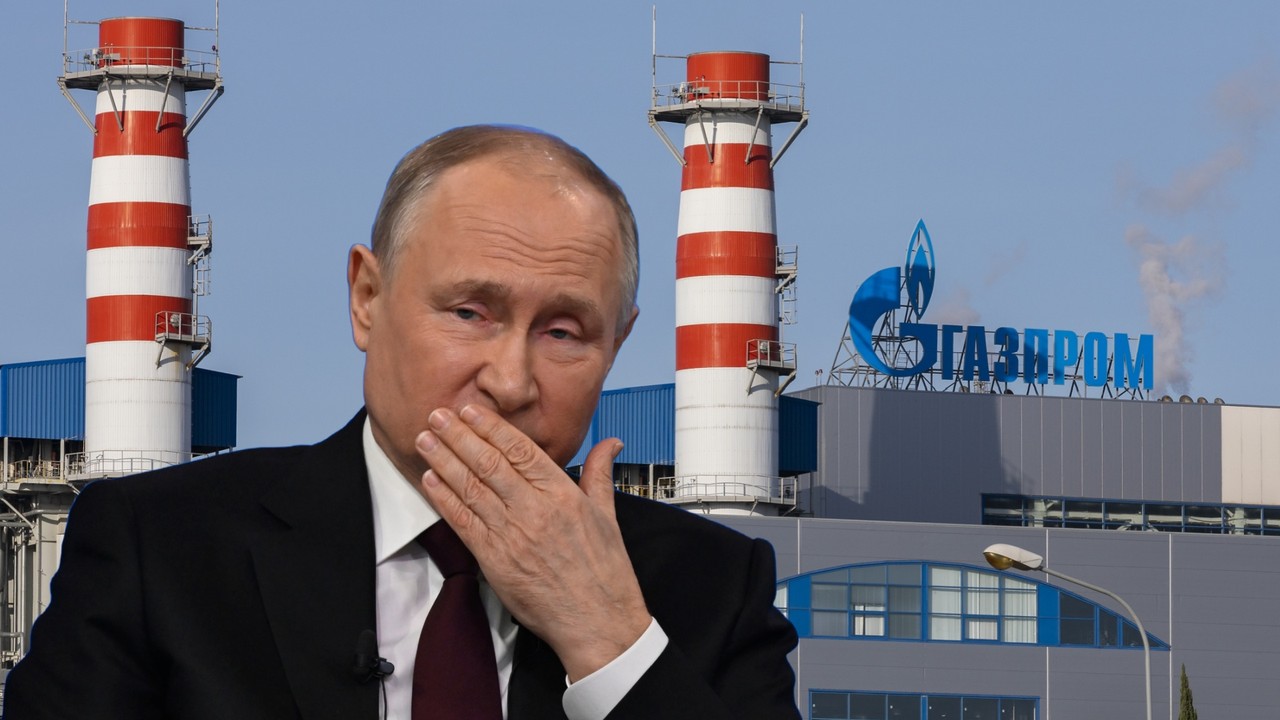
After losing the European market and ineffective attempts to conclude a new contract with China, Gazprom accumulated surplus of gas of tens of billions of cubic meters. The Russian authorities are thinking of how they can be used – says Reuters, citing Russian officials and company management.
Last year, Gazprom mined 416.19 billion cubic meters. gas, of which only 355.23 billion managed to sell in external and internal markets. As a result, the giant remained with about 60 billion cubic meters. unsold gas. This amount is comparable to the annual production of some gas extraction countries (for example, in the United Arab Emirates it is 55 billion cubic meters) and three times exceeding annual consumption in others, for example in Poland (about 20 billion cubic meters.)
The situation in the northern regions, where Gazprom deposits are located, is close to the critical point.
Earlier, he pumped 0.5 billion cubic meters to Europe a day. gas. Now this export does not exist and “the question is very urgent what to do with it,” said Aleksiej Czekunkow, head of the Ministry of Russian Development of the Far East, at the SPIEF 2025 conference.
According to him, one of the solutions may be the use of gas for electricity production for the artificial intelligence industry and blockchain. However, the Ministry of Energy believes that this would be unprofitable – deputy minister Paweł Sorokin said that gas is too expensive energy for data centers.
In his opinion, the surplus of Gazprom gas should be allocated to the support of the coal industry, which from the beginning of 2023 suffered losses of 200 billion rubles (PLN 9.2 billion) and is on the verge of bankruptcy. – We can build power plants [gazowe] at the mines [węgla] Sorokin suggested.
Continuation of the material under the video
Gazprom, who has the largest gas reserves in the world, has been deprived of its sale. According to Mikhail Krutichin, an expert for the Russian energy market, the company's situation is “desperate”.
Record losses and no prospects
Gas export to Europe, which at the peak was 200 billion cubic meters. annually, currently it barely exceeds 30 billion cubic meters. and It persists at the lowest level since the second half of the 1970s. This year, it may fall even more due to the suspension of gas transit by Ukraine. The Siberian Gas Pipeline, even after reaching full capacity (38 billion cubic meters), will compensate for only one -fifth of lost volumes. Years of negotiations with China regarding the new gas agreement have not brought any results. A gas hub project in Turkey also collapsed.
In January, Vladimir Putin announced a sales plan for 55 billion cubic meters. gas annually to Iran. According to Krutichin, however, this calculation “is not very justified”. – First of all, Iran is not ready to become an intermediary in Gazprom's gas re -participation – he has more than enough than enough, and the possibilities of selling abroad are practically zero. Secondly, the sale of Russian gas on the Iranian internal market is A hopeless undertaking from a commercial point of viewconsidering extremely low subsidized prices – says the expert.
In 2023, Gazprom recorded a record loss in its history – According to international financial reporting standards, it amounted to 629 billion rubles (approx. PLN 29 billion). At the end of last year, the company recorded profit, but its gas activity remained deeply in the minus – it brought the giant another 1 trillion of rubles (PLN 46 billion) of losses. To patch the monopolist's budget, in 2022-24 the Russian authorities raised the Russian gas fees by 24 percent. – And that's not the end. For 2025-28, they planned a raise by another 46 percent.
“A general picture is not beneficial for Gazprom,” says Krutichin. – It is not possible to cash the colossal gas resources (the largest in the world). Nobody trusts this supplier's reliability. And if somehow he manages to achieve something with the Chinese, then the income from deliveries will not cover or build the infrastructure needed to transport gas, or even the operating costs of its extraction and transport – he says.
I’m Ashley Davis as an editor, I’m committed to upholding the highest standards of integrity and accuracy in every piece we publish. My work is driven by curiosity, a passion for truth, and a belief that journalism plays a crucial role in shaping public discourse. I strive to tell stories that not only inform but also inspire action and conversation.