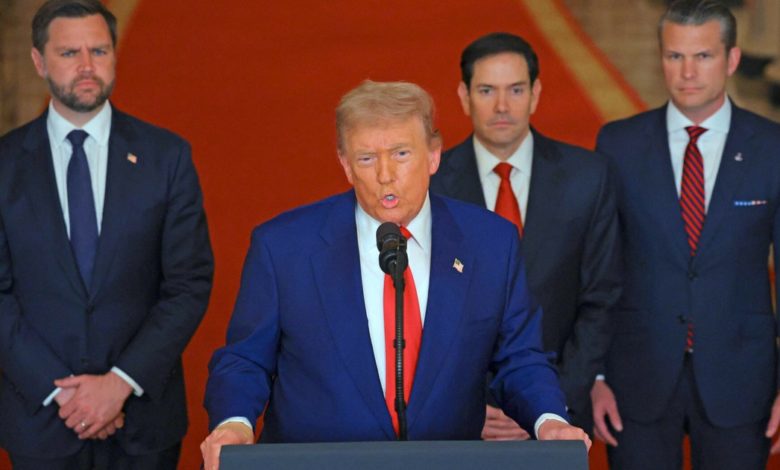
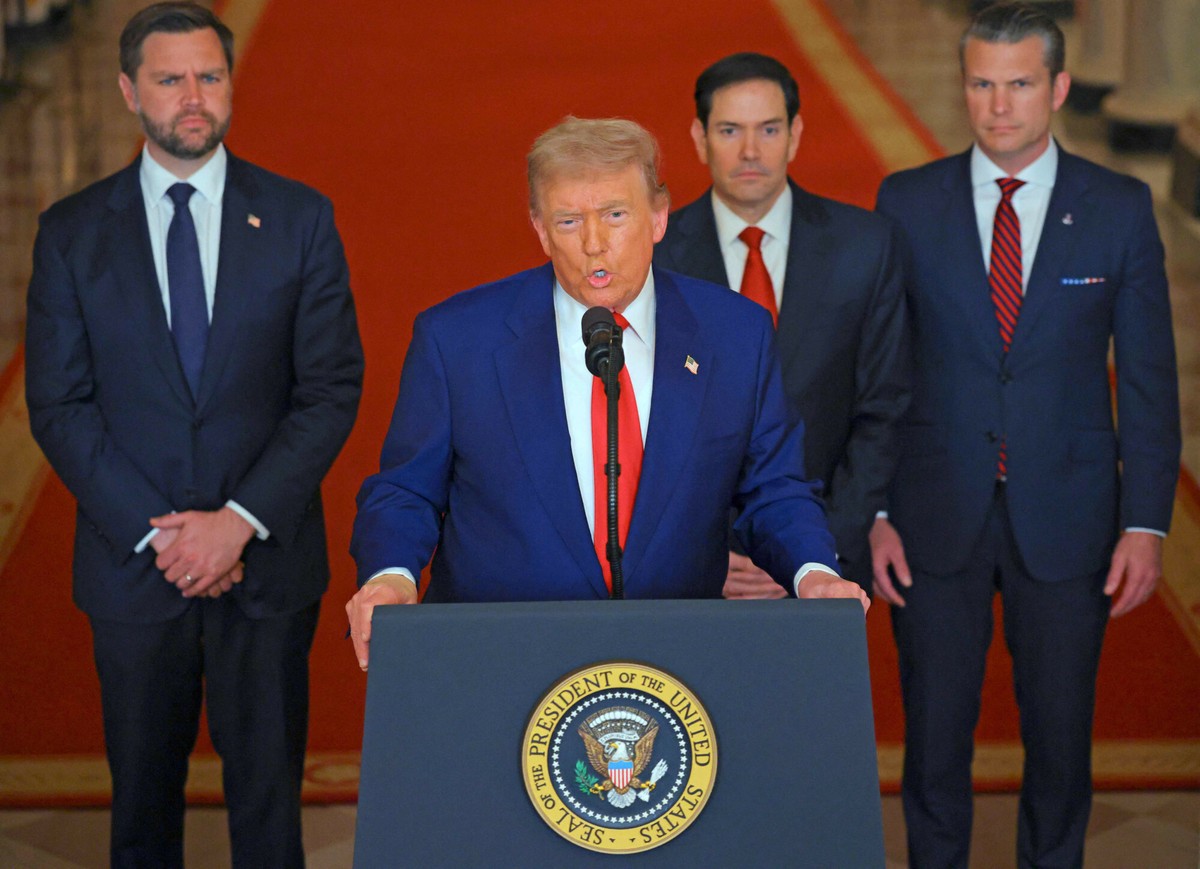
“Recently, the US army has carried out precise, massive strokes to three key nuclear objects of the Iranian regime – Ford, Natanz and Isfahan” Trump said in a speech from the White House.
According to NBC News, citing two representatives of the Pentagon, American submarines fired over 30 Tomahawk rockets towards goals in Iran.
Trump said that the US and Israel “worked like a team – like no team in history. We have made a huge step towards eliminating this terrible threat” to Israel. The president congratulated the US armed forces, calling the operation “something that the world has not seen for many decades” and expressed the hope that similar actions would no longer be needed.
“Either there will be peace or Iran will experience a tragedy much more than what we've seen in the last eight days. Remember – there are still many goals” Trump warned.
“Today's attack was by far the most difficult and maybe the most deadly. But if the room does not happen quickly, we will hit the next goals with precision, speed and effectiveness – most of them can be destroyed in a few minutes” – he added.
- Russia evacuates scientists from the Iranian nuclear power plant. Putin got scared
Attack on nuclear purposes
Trump observed the sealing room attacks in the White House, in the company of the National Security Team and the nearest advisers. He published information about the attack first in social media: “The full load of the bombs was thrown onto the main goal – Ford” – he wrote.
At the moment, it is not known how much destruction American attacks caused in highly fortified nuclear centers of Iran or whether there are still some US military units in the country.
Earlier that day American B-2 bombers left the base in Missouri, heading west over the Pacific. This is one of the few US machines capable of moving the GBU-57 “Bunker Buster” bombs-weighing over 13 tons of bombs designed to destroy strongly protected underground goals, such as Fordo.
Today's attack means that the US has been in a state of open armed conflict with Iran, which significantly escalates Americans' involvement in Israel's activities against the Iranian nuclear program.
According to the White House clerk, Trump talked to Benjamin Netanyhu with the prime minister of Israel just after the raids.
The decision to attack is a drastic change of position, because 48 hours earlier Trump said that he would “two weeks to assess the chances of a diplomatic solution” conflict between Tehran and Jerusalem.
“Because there is a real chance of negotiations with Iran, I will decide on a possible attack within two weeks,” Trump announced in a Thursday statement.
Behind the scenes, the US administration tried to agree with Iran. According to reports, Trump in recent months urged Netanyahu to abstain with the attack.
After today's activities, diplomacy may be out of date. The Iranian spiritual leader Ali Chamenei recently warned that “any entry of American troops would meet with an irreversible answer.”
“If they come in military, they will suffer losses that they will not be able to rebuild,” he said in a statement for Iranian state television.
How will Iran answer? Possible scenarios
It is not yet known what form the possible answer of Iran will take. One of the possible scenarios that can hit the global economy is the mining of the Strait of the ORMUZ – a key point for global oil transport. As Helima Croft from the RBC Capital Markets warned, the mining of this narrow water belt between Iran and Oman could effectively block the flow of about 20% of global oil transport.
- Iran intensified oil exports. Race with time
“We already receive information that Iran is very intensively disturbing the signals of ship transponders,” said Croft on CNBC television.
Qatarenergy and the Greek department of navigation have already warned their ships against sailing through the strait.
Trump and his predecessors have repeatedly repeated that Iran could not possess nuclear weapons. During his first term, Trump withdrew the US from the 2015 nuclear agreement, concluded by Obama's administration.
Israel has been warning for years that Iran has been seeking atomic weapons, although so far it has been limited to cyber attacks and attacks on scientists.
Meanwhile, the US national intelligence director, Tulsi Gabbard, testified in March in Congress that “American intelligence still assesses that Iran did not run a nuclear weapon construction program, and the highest leader of Chamenei did not give permission to resume the work suspended in 2003.”
However, Trump rejected this assessment. “I don't care what she said. I think they were very close to her” – said the president last week on board Air Force One.