TIFF 2025. Interview-experiment with Radu Jude about the film that talks about one of the most acute problems of Romania today. “An influence was Hitchcock”

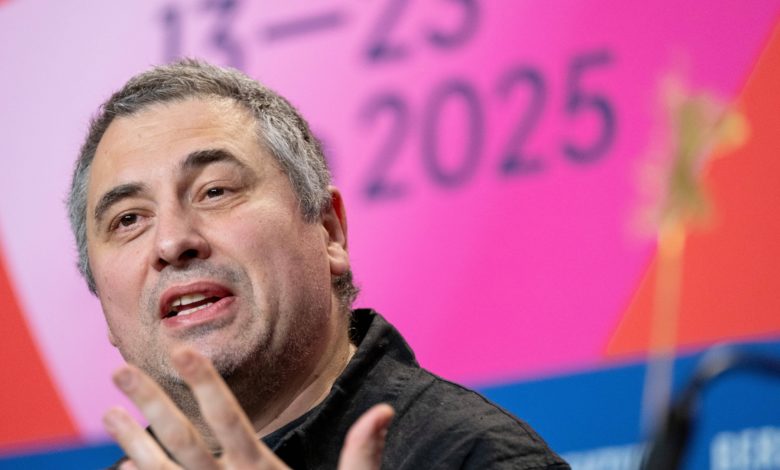
In a dialogue for the public Hotnews, Radu Jude talks about his new movie, “Kontinental '25”, filmed with a mobile phone. For one of the answers in the interview, Radu Jude chose to do an experiment: to use Chatgpt. About the Romanian director, The Guardian recently wrote: “Maybe the spirit of Jean-Luc Godard lives here in Radu Jude.”
- Hotnews correspondence, Dana Coțovanu, transmits from TIFF, the largest film festival in Romania, reached the 24th edition, which takes place on June 13-22 in Cluj-Napoca.
- Why did Jude filmed his movie “Kontinental '25” with an iPhone? “Creativity means you can handle what you have at hand, not what you dream of having.”
- What the director considers to be the film: “This is, says the director “about a collective, invisible crime, committed by carelessness.”
- At TIFF you can still see a movie of Jude: Sleep #2in which the public can see, for a whole year, what happened on Andy Warhol's grave, through a live webcam.
“Kontinental '25” – Radu Jude's latest film – presented to the international audience in Berlinale 2025, where he was awarded with the silver bear, enters today in cinemas from all over the country. His national premiere was at TIFF, during the days of the Romanian film. The dramatic comedy was filmed only with an iPhone 15, in 11 days, in Cluj-Napoca, the city with the most expensive homes in the country.
The story of the film is about “the privileged and the marginalized” in a city considered to be perfect in a capitalist society.
- “Kontinental '25” will run in cinemas in Romania starting June 20, 2025.
The wonderful new real estate world
A homeless man, named Ion, lives in the cellar of a house in Cluj. One day he learns from the executor Orsolya (Eszter Tompa) that he must evacuate the space, intended for a new real estate ensemble. Out of despair, man makes a gesture that gives birth to the other moral dilemmas.
The distribution includes Gabriel Spahiu, Adonis Tanţa, Serban Pavlu, Oana Mardare, Annamária Biluska, Adrian Sitaru, Marius Damian, Nicodim Ungureanu and Ilinca Manolache.
The film marks the return of Radu Jude after the success in Berlin with “Babardeala with balancing or porn porn” (2021), winner of the Golden Bear, and after the special prize of the jury obtained in Locarno to “do not wait too long from the end of the world” (2023).
“Kontinental '25” is a satire on what we accept as normal in real estate development, about the ends we return when we see beggars in the center of the city, about how we accept social marginalization.
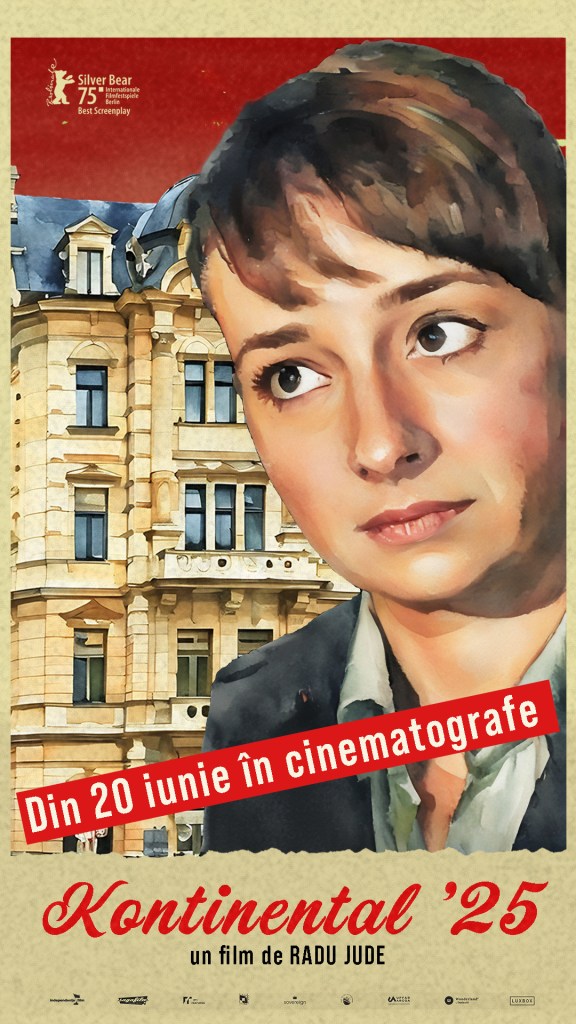
In the interview done in writing for Hotnews, Radu Jude talks about the inspiration of the film, why he chose to film with a mobile phone instead of the classic camera and dilemmas raised by the use of artificial intelligence.
Radu Jude: “An invisible collective crime, committed by carelessness”
HotNews.ro: How was this scenario born, Mr. Jude? Was there a particular moment, an incident that inspired you to write it?
Radu Jude: The initial idea was triggered by a news that I read years ago, related to a real case, similar to what I would develop later. I noted it then, I also wrote a synopsis that I even tried to propose as a television movie, but the project did not advance.
However, the theme continued to follow me, especially as in Romania they became more visible the effects of social polarization and accelerated real estate development. The economic growth is real, but the discrepancies between the privileged and the marginalized seem to deepen more and more – see the recent articles of Cornel Ban.
However, a turning point was when I read an article written by the critic Andrei Gorzo about Europe '51Roberto Rossellini's film. The reading of the essay caused me to see the film again and I perceived it through a new lens-one that revealed certain connections with the story that took shape in my mind.
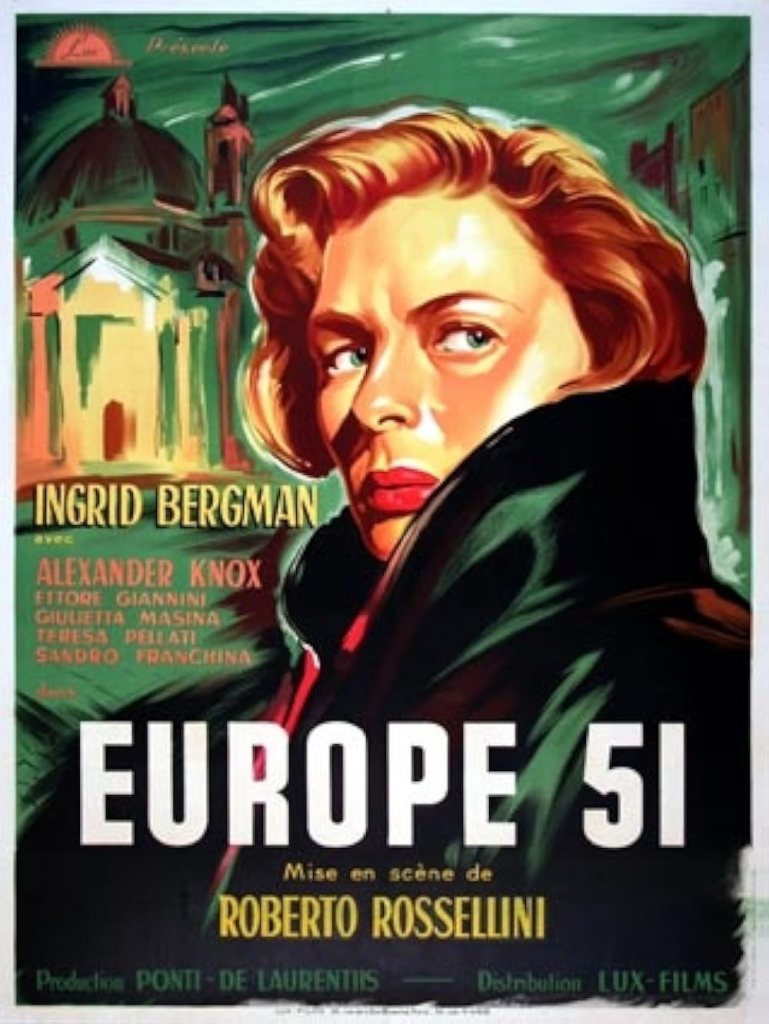
This is how I decided to explore similar themes, but in a more anchored way, and in a Romanian context, of course.
I said it before, my movie is a kind of caricature of Rossellini's film-in the sense that I could not reach his depths, but I did not propose, but only to sketch a movie in his masterpiece.
Another important influence was Psycho (1960) Hitchcock's, although the influence remains only on the surface, at the superficial level. But the truth is that Psycho It suggested a possible narrative structure and for this it is important: that radical moment in which the film suddenly changes the perspective, after killing the protagonist.
- “Psycho” (1960), directed by Alfred Hitchcock, is a revolutionary film that redefined the genre of the psychological thriller and deeply influenced the film of modern horror. With four Oscar nominations, he remained memorable through the famous crime scene in the shower, where the strident music composed by Bernard Hernmann amplifies the tension. At a closer analysis, Psycho is required as a cinematic landmark by directing, assembly and subtle way in which it explores the theme of guilt.
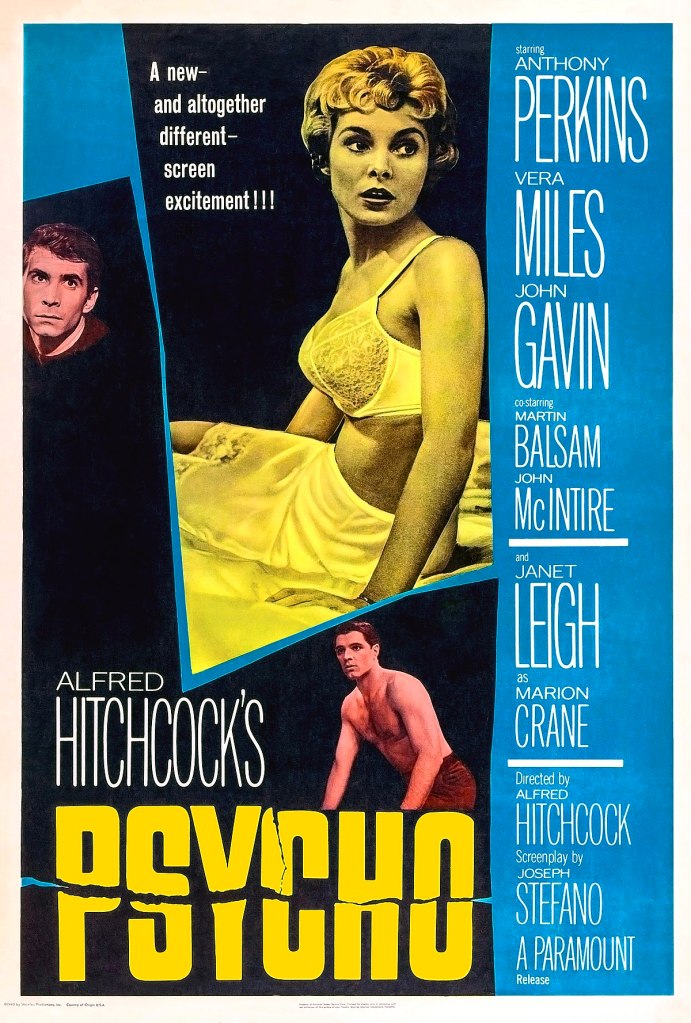
It seemed like a fertile model, so I adapted it: our film begins by watching the life of a homeless man but, along the way, the attention moves to the character Orsolya. Essentially, it is also a film about a crime – not an explicit one, but an invisible collective crime, committed by carelessness.
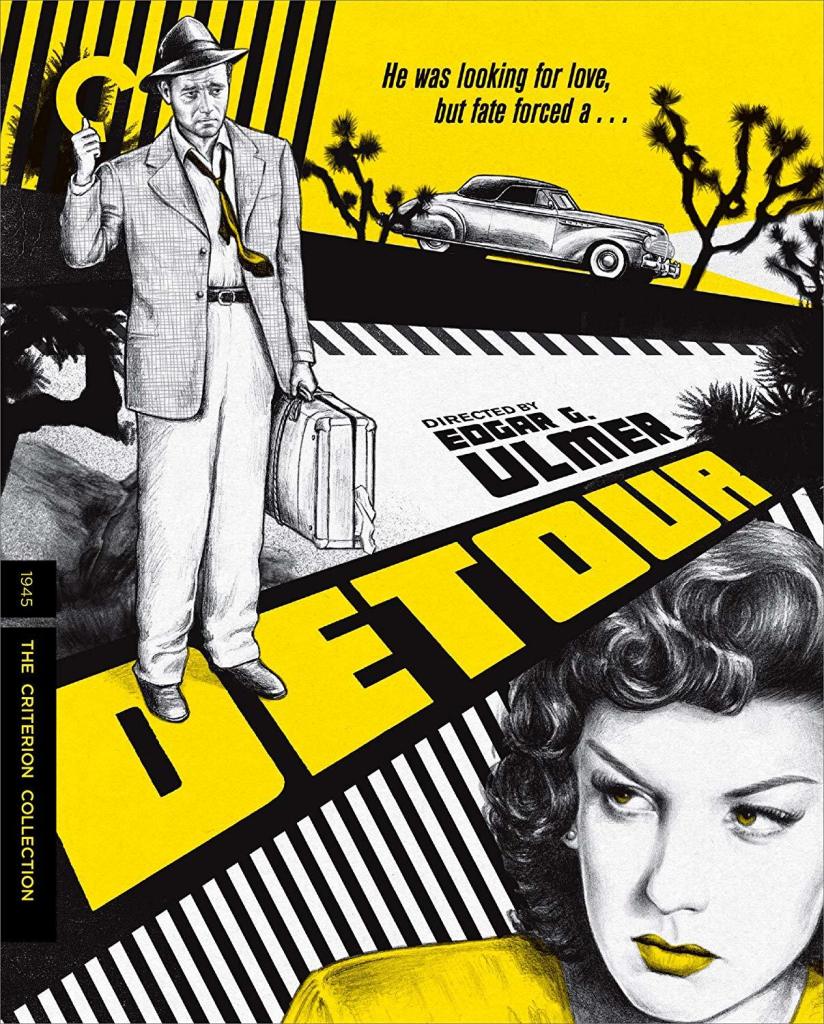
And from a formal point of view, the film is built as a kind of noir film that never starts conventional, but it is somewhere in the back, I think here and the little tribute I bring to the film Detour (1945) of another filmmaker I admire, Edgar G. Ulmer.
- Another inspiration for “Kontinental '25” was “Detour” (1945), directed by Edgar G. Ulmer, is a classic Noir movie. Another film made with an extremely small budget in 6 days has become an absolute cult in the history of American cinema.
“Creativity means to deal with what you have at hand, not what you dream of having”
-Why did you choose the shooting with the phone and in such a short time?
-Short answer: for financial reasons. But I chose to film with an iPhone for several reasons – related to aesthetics, production logic, but also a certain position towards reality and today's cinema.
Technological minimalism represents for me (and) a form of freedom. The use of an iPhone, instead of a classic cinema camera, is a deliberate gesture – a form of “democratization” of the image.
We live in an era in which almost anyone can film, at any time, with handy means. This fundamentally changes our relationship with the image, the cinema, and the distribution should take into account that, maybe.
I also tried to avoid the conventions related to the “beautiful image” and choose a more direct, brutal aesthetic, which corresponds to the themes of the film and the small budget.
Filming with the iPhone allowed me huge logistics freedom: increased mobility, a very restricted team, minimum costs. We were able to film quickly, in hard -to -reach places or on the street, without depending on the heavy infrastructure of the classic production and without attracting attention.
Anyway, I made very cheap movies, I worked with archive materials, with photos, with Screen Recordingshow did it happen in “Exit the train trains” or in “Sleep #2”. The iPhone is naturally registered in this direction, because it supports the idea that the film means first and foremost creativity, as much as it is in my case, not a technical performance; Or rather creativity means to do what you have at hand, not what you dream of.
-Is the choice to film with the phone any connection with the social theme of the film, that is, the profit has been put above production?
-I have no problem with those who make art for money, if it is good -the whole history of painting demonstrates it and not only. In our case it does not fit very much, we wanted to make the movie without waiting for the years for any funding, so we thought and made at the bottom limit of any long-filter movie budget.
In addition, I am interested in working quickly, at least certain movies, and I just came across this passage in a Daney text about Fassbinder, another big model for me: “We live in an era where too many authors coke great years. However, when that one Magnum opposite It appears, it is often a disappointing monster, deficient, too late for the public, too late for its author. Fassbinder has enough vitality, works like a mule, and enough generosity that allows him to make more films a year, even with the risk of giving it to the bar. ”
Of course, it's just a possible way to work, that does not mean that all the movies have to be done so, not even mine are all that way.
-If we can make feature films with the phone, do you think that the artificial intelligence will write to us soon?
-I asked your question to your artificial intelligence, to Chat GPT, here's what he says: “Yes, it is very likely. Already artificial intelligence can generate scenarios, narrative structures and even convincing dialogues. As the telephones have democratized film production, the democratizes the creative writing. Authentic comes from experience, emotion and intuition, things difficult to reproduce algorithmic. ” As for me, I have already used images generated with AI (with the help of Vlaicu Golcea) in my new movie, Draculaso I am in favor of using artificial intelligence. It depends on how, for what, what are the consequences, etc. and, therefore, I think it must be judged in each case.
-Can you explain, without breaking the curiosity of the public, the lawyer scene in the park with dinosaurs?
-If I could explain it better than spectators, with great pleasure, only I can't. That scene should have taken place in a forest, but when we discovered this Dino Park in the Wonderland complex, which gave us free accommodation, once again, thank them for your help. I decided to move the scene there and so, the characters walk next to these mechanical dinosaurs. What a significance does this have, if it has any or more, as in an open work, each spectator will decide.
Saturday, at TIFF, another Movie of Jude
The scenario of the film was also published by Matca in the form of a book. Andrei Gorzo writes in the volume post: ,,Kontinental '25 It's not a cynical movie at all, though it's a sardonic one (like everything you do, it's Funny (no funny) and completely hopeless. ”
The film “Kontinental '25 is produced by Alex Teodorescu and Rodrigo Teixeira, with a team of executive producers of Ramona Grama, Andreas Roald, Dan Wechsler, Jamal Zeinal-Zade, Berta Marchiori, Fernanda Frotté, Paul Thiltges and Adrien Chef, is a production of Saga Film, made in Coproduce with Coproduce. Features, Cadre Films and Paul Thiltges Distributions, international sales being managed by Luxbox.
Another recent movie of his is Sleep #2 – “A Desktop Film by Radu Jude”an experimental film in which the public can see, for a whole year, what happened on Andy Warhol's tomb, through a live web camera. Sleep #2 It can be watched on Saturday, June 21, at 23:00 – at Sapientia University at TIFF.