Western companies escaped from Russia. Today, Putin's colleagues defend themselves against their return

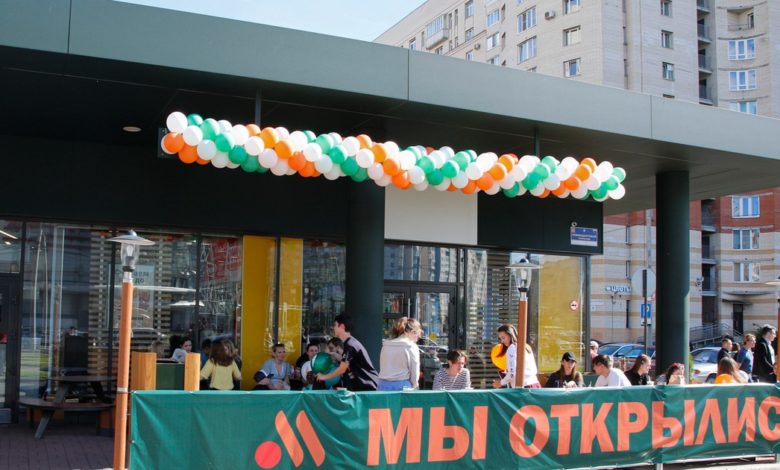
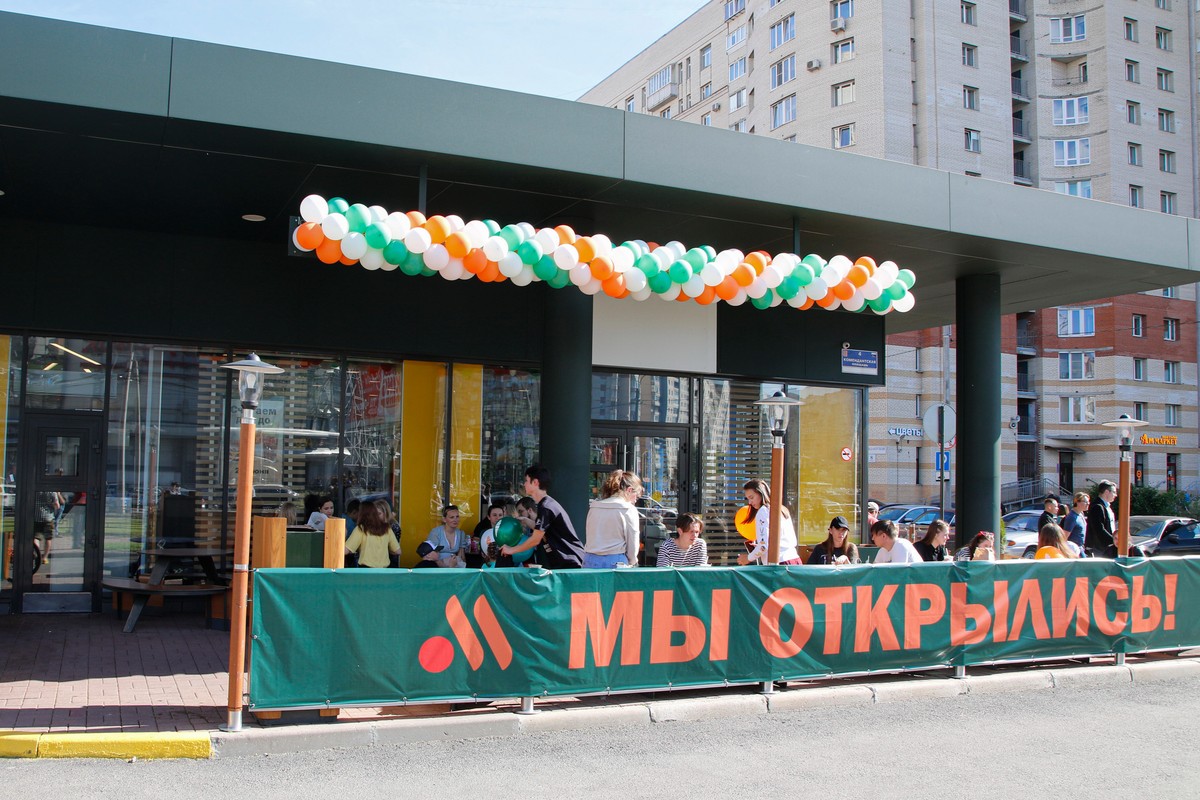
Russian enterprises, which after Russia's invasion of Ukraine have taken over brands such as McDonald's, Heinz or Kellogg's, today are lobbying so that these companies cannot return to the Russian market and have the support of the Kremlin in this.
The head of this offensive is the “Wkusno and Toczek” fast food network (“tasty and dot”), which replaced McDonald's after the American giant withdrew from Russia in 2022.
Read also at Business Insider
During a business meeting in the Kremlin with Vladimir Putin, at the end of May, the general director of the network, Oleg Parojew, stated that McDonald's return would undermine the effort put into the development of a native brand.
– We have created our own IT systems, our own kitchen equipment, our own innovations, and if the brand returns, it will all become foreign again – he said. – The work of our Russian partners would largely be in vain – he emphasized.
Putin answered bitterly: “Debts pay only cowards. In this case it is the same”.
New law in preparation
A few days before this meeting, Russian deputies voted a bill that would make it difficult or even prevent Western companies from recovering previously abandoned assets.
Over three years since the start of the war in Ukraine, almost 500 foreign companies have completely left Russia. Many of them sold their local operations to Russian buyers, often at low prices, with clauses enabling purchase in the future.
The new act would give the authorities the right to cancel these contractsespecially if the purchase price today would be below the market value. The project is part of the Kremlin wider strategy, aimed at permanently blocking the return of foreign companies and protecting Russian interests.
– This weakens the rule of law and confirms investors in the belief that the Russian market is not only associated with high risk, but is also unstable and arbitrary – comments Roman Szeremieta, an economist from Case Western Reserve University.
– Every western company understands that long -term risk is huge – he added in an interview with Business Insider.
The act is to be sent to the vote later this year.
Who lobby for the act the most?
The loudest voices of support come from Russian companies that have replaced global brands and today derive profits from their absence. The owner of “Wkusno and Toczek”, Aleksandr Gowor, bought Russian McDonald's operations after his withdrawal in 2022.
The network states that it currently has an eye. 930 premises, serves 2 million customers per day and generated in 2024 187 billion rubles (approx. PLN 9 billion) of incomewhich is more than twice as much as McDonald's in their last year of activity in Russia.
Parojew claims that the company had to start from scratch, without packaging, kitchen equipment or supply network.
– Our goal is to create a technology center that will produce this equipment not only for us, but for the entire Russian gastronomic sector – he told Putin.
However, Parojew can sleep peacefully. McDonald's has already declared to the Ukrainian group B4ukraine Coalition that he is not planning to return to Russia.
At the same meeting, other company bosses also appealed for patronistic actions. Stanisław Jodkowski, director of Iva Technologies – a Russian communication company – called for the introduction of duties and restrictions on foreign technology companies such as Zoom or Microsoft.
Maria Giecht, the head of the seed company Rusido, appealed to the Kremlin to maintain restrictions on the import of western seeds to enable the development of local producers.
Protectionism or stagnation?
The Kremlin promotes the strategy of “import substitution”, i.e. replacing western goods with domestic products.
Economists warn, however, that excessive market protection and insulation from foreign competition can stop the innovation and development of companies in the long run.
-Companies such as “Wkusno and Toczek” can report increases today, but their success is mainly due to the quasi-monopolistic environment, which arose after the disappearance of foreign competition-says Szeremieta. – This is not an innovation, it is insulation He said.
Although the Kremlin presents this strategy as a path to self -sufficiency, critics warn that it leads to waste, technological stagnation and an increase in dependence on state subsidies.
– In the case of Russia, this means ineffectiveness, technological stagnation and growing addiction to state money – adds Szeremieta. – In the long run, such a model means the risk of economic insulation, capital outflow, escaping talents and permanent loss of investors' trust – says.
Kremlin plays va banque
The Kremlin's support to block the return of companies from the West is not only economics, it is also politics.
– War, sanctions, counterattacks and switching of the economy to the war tracks led to a return to the past – fewer market mechanisms, more state intervention – says Anders Olofsgard, deputy director of the Stockholm Institute of Transformation.
In his opinion, this phrase strengthened business addiction to the Kremlin's grace and encouraged companies to even more intensively lobbying for market protection.
Politicians do not beat around the bush.
– We don't wait for anyone with open arms. You will have to pay for previous decisions – In February, the Minister of Industry and Trade Anton Alikhanov, quoted by the TASS agency.
In March, Dmitry Medvedev, deputy head of the Russian Security Council, echoed in March: the return of companies will be “difficult”, but – as he added – none of them has yet submitted the application.
Even if the Trump administration considered a truce in Ukraine and the return of Western business to Russia, Putin does not intend to change the course.
“Everyone put us in a difficult situation and fled,” he said in May. “And now, if they want to come back, what, we have a red carpet to spread them?” Of course not, he said.
The above text is a translation with American Business Insider edition