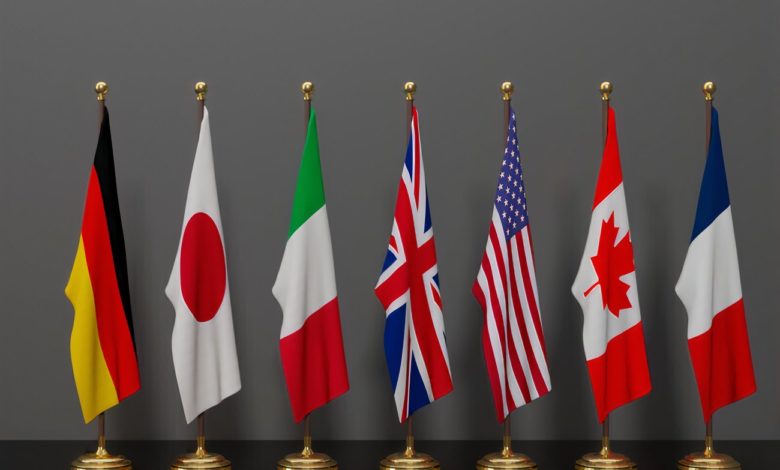
After the final performances of the G7, the Prime Minister of Canada Mark Carney was exposed to questions about the absence of a joint statement about Ukraine. He explained that the leaders focused on a declaration of “extremely rapid escalation of the situation in Iran,” but there was a direct question whether the inconsistency of the United States regarding the formulations regarding the invasion of Russia was the reason for the lack of a statement.
Despite the initial plans to publish a joint statement, the source reports that six leaders were ready to support tough formulations, but the United States insisted on mitigating them.
The official who wished to remain unnamed, explained that the United States spoke out against the inclusion of some sharp assessments to Russia in the text of some sharp assessments, fearing that this could complicate negotiations at the end of the war.
Two hours after the briefing, the press secretary of Carney, Emily Williams, said that they had not planned any general statement from the very beginning.
On the same day, Bloomberg, citing familiar sources, wrote that the discussions between the leaders of the Big Seven countries did not prompted the US President to tighten sanctions against the Russian Federation.
Context
On April 24, Trump said that the United States exerts great pressure on the Russian Federation to achieve peace in Ukraine. On the same day, the American president expressed confidence that the illegitimate Russian President Vladimir Putin will cease to apply missile strikes at the request of him.
On April 25, The Wall Street Journal wrote that after pressure on Ukraine regarding the peace agreement between Kiev and Moscow, Trump finally saw an obstacle in Russia, but had not yet shown special readiness to make the Kremlin make concessions.
On April 29, the head of the White House said that the actions of the Russian Federation can make him be more favorable to Ukraine.
On April 30, Trump suggested that the illegitimate Russian president wants to end the war in Ukraine, but did not rule out that the continuation of Russian aggression may indicate that “Putin really fools his head” and, “perhaps does not want to stop the war.”
On May 19, at a briefing with reporters, Trump said that he had a red line that could make him get out of negotiations between Ukraine and the Russian Federation, but did not call it.
On June 5, during a meeting with German Chancellor Friedrich Mesz in the White House, Trump compared the war in Ukraine with the fight of two children in the park and suggested that he could impose sanctions against both countries.