Following the waves of rockets launched over Israel on Friday night. A weak Iran faces an existential dilemma

The supreme Iranian leader and the Tehran government face what many consider to be an existential moment, in an attempt to decide how to respond to the continuous attacks of Israel on military leadership, anti -aircraft defense and the nuclear program of the country, writes New York Times.
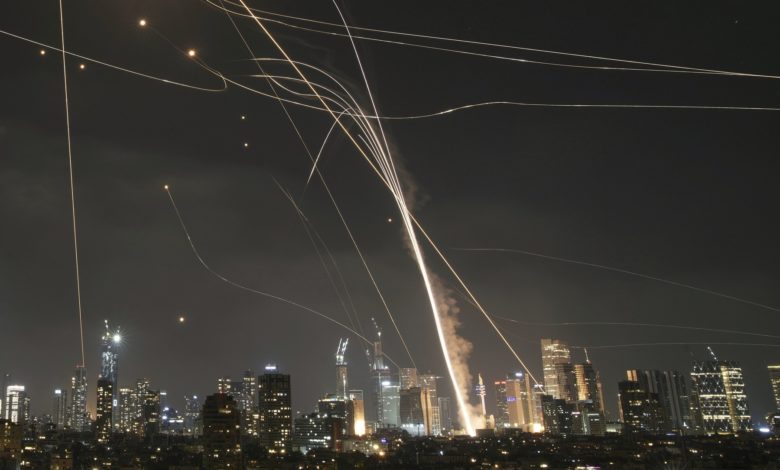
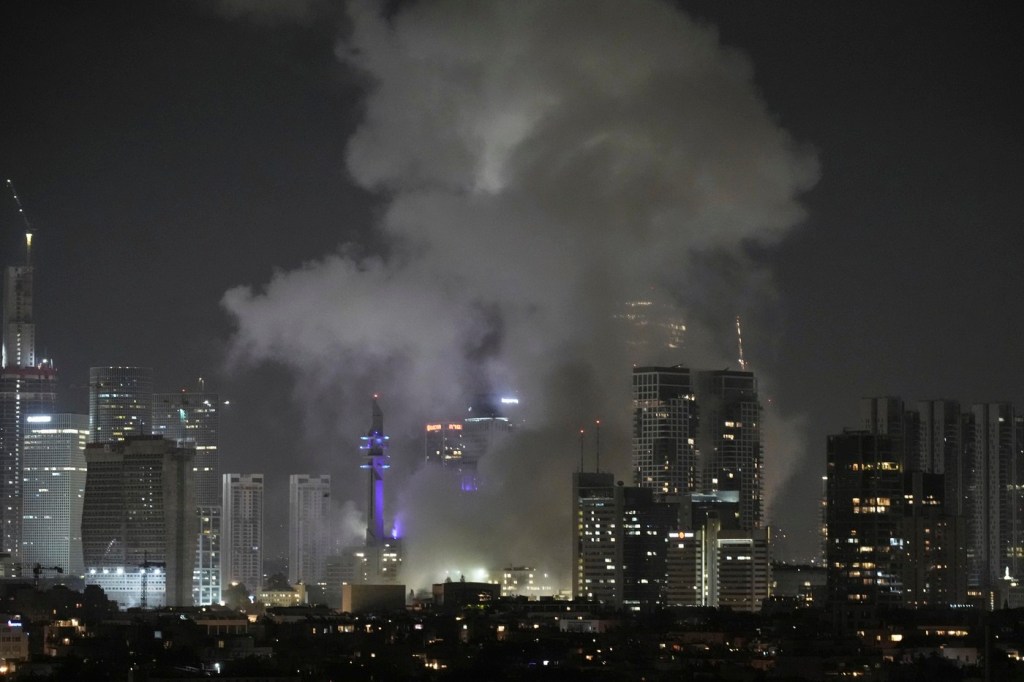
Iran has already launched two waves of rockets on Israel on Friday night, opening the counter -offensive. It is the most intense attack on Israel, and the effects feel, Israel announcing dozens of wounded, some in critical condition.
Beyond these attacks, Iran has a number of potential options, each with its own risks.
 Live Iran's revolutionary guards attacked dozens of American Targets / support for Israeli defense / new Israeli strokes in Iran
Limiting or giving up his nuclear program would seem a capitulation, which could further weaken the regime.
A more aggressive response, including the possibility of targeting American targets, would almost certainly escalate the conflict, at a time when Iran's abilities are seriously degraded.
The massive attacks of Israel have only highlighted that Iran is in the worst position of the last decades.
The Tehran seems to be defense against Israeli attacks.
His regional allies, such as Hamas in Gaza and Hezbollah in Lebanon, who should have offered protection, were decimated.
His economy is in difficulty. His military leaders were killed in their beds.
The country also faces an uncertain succession of its supreme old leader, Ayatollah Ali Khamenei. And Israel has transformed into ruins a significant part of Iran's huge investments in its nuclear program.
The risk of attacking American targets
President Trump, who insisted on Monday days for Iran to accept the limitation of his nuclear program, presented Israeli attacks as a warning and an incentive for Iran to “conclude an agreement”.
But, given the magnitude of the attack of Israel, Iran will probably consider this attack “a direct attempt to destabilize the regime, rather than a simple attempt to reduce nuclear ambitions,” the Iran Crisis Group project director, director of the Iran Vaez project.
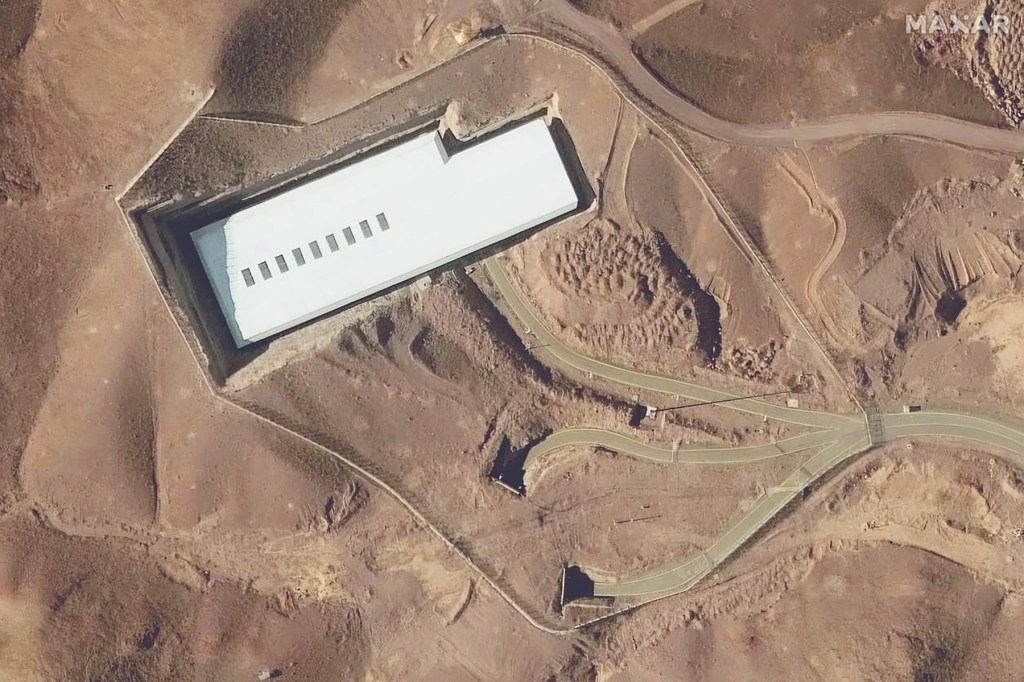 The new Israeli attacks targeted two other nuclear sites in Iran. Blocking Iranian nuclear program is the main purpose of Israeli operation
“As such, the regime can interpret it as an existential threat – one that imposes a strong and potentially volatile reaction,” he said.
Even though Iran chooses to be prudent now and not hit American and allied targets in the region, its leaders have no doubt that the United States is complicit at Israeli attacks, Vali Nasr said at Johns Hopkins School of Advanced International Studies.
But attacking American targets now would be the safest way not only to escalate the war, but also to give Trump a reason to openly join Israel in attacking Iran.
“They will not give up the enrichment of uranium”
American and Israeli officials have asked Iran to completely give up the enrichment of uranium, one of the two ways of building a nuclear weapon.
Iran officially denies that he is trying to build a bomb and states that the enrichment of uranium is intended exclusively for civil use.
“They will not give up enrichment, not so easy,” Nasr told the New York Times.
Iran has already announced that he will not participate in the sixth round of negotiations with the Americans, scheduled for Sunday in Oman, a possible nuclear agreement, an agreement that Israeli Prime Minister Benjamin Netanyahu has harshly criticized and seems to try to sabotage through these attacks.
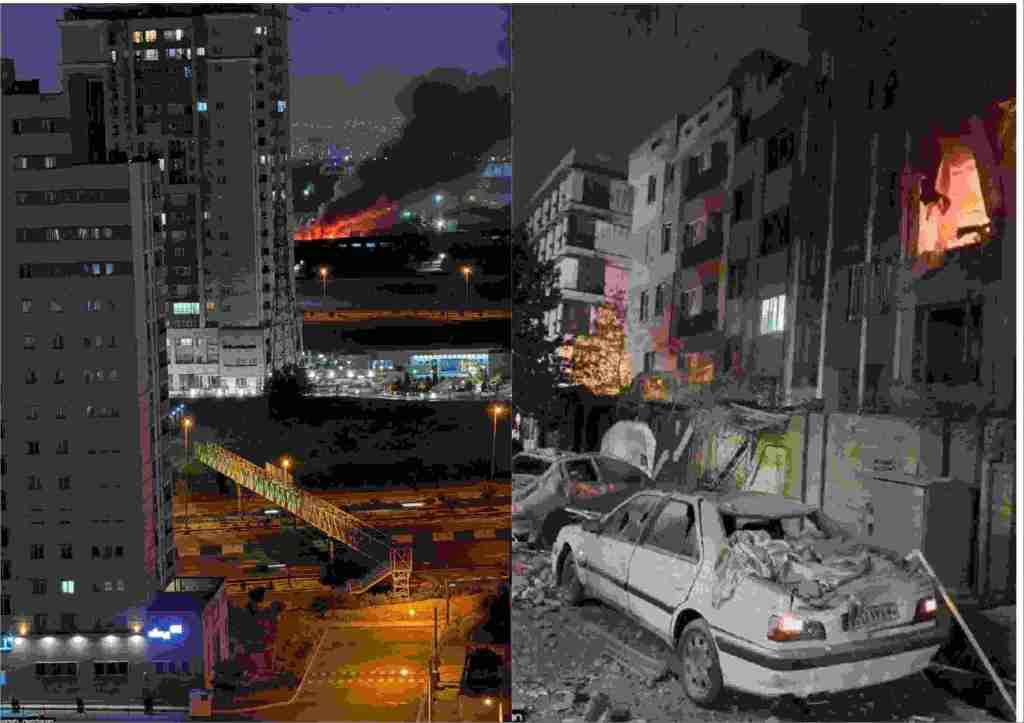 A secret base of drones located by Mossad near Tehran and six waves of air raids: how did the massive attack of Israel and what follows after the surprise that upset Iran
From the point of view of Iran, Netanyahu tries to “try to cause an internal crisis in Iran,” said Sanam Vakil, director of the Middle East and North Africa at Chatham House.
But, as in the past, officials expect “the system, although weaker, to mobilize around the flag”.
With the back to the wall
Iran's weakness will definitely accelerate the current debate in the leadership on the opportunity to build a nuclear weapon, despite Tehran's promises not to do so, as the best measure of discouragement against an Israel that can now be bombarded and to contribute to ensuring its security in a broader sense.
“Many people in Iran will feel behind the wall, they will consider that regional discouragement has failed, that negotiations have not led to now and that Israel is unleashed, and the only real guarantee would be a nuclear weapon,” American Julnes-Dacey said for the European Foreign Relations Council.
Iran could choose to intensify the enrichment process, to disperse its strong uranium stocks enriched in secret places, to expel international inspectors and to decide to completely withdraw from the nuclear non-proliferation treaty.
But such measures could also involve the United States more directly in the war.
Iran has been prudent so far and has not attacked other United States allies, golf states or their energy infrastructure, trying not to expand the war.
The leaders of the country are definitely in contact with Saudi Arabia and the Golf states, who have access to President Trump and influence on him, to try to find a way to save appearances, especially after they have forced to respond against Israel, said Ellie Geranmayeh, a specialist in Iran at the European Foreign Relations Council.
A very bad situation for Khamena
But Khamena's Ayatollah never trusted in the United States or Trump, especially since the president, during his first term, was unilaterally withdrawn from the 2015 nuclear agreement, which was carefully developed, which restricted Iran's enrichment in exchange for raising economic and other sanctions.
“It is a very bad situation for Khamena at this time,” said Geranmayeh.
“Iran could reach an even greater war and then to a very bad peace agreement,” she explained to the New York Times.
But he will be undergoing increasing pressure from the army and extremists to now use Iran's best resources against Israel, the expert noted.
Tehran always has options, said Suzanne Maloney, an Iran expert and director of the Foreign Policy Program at Brookings Institution.
It could not only launch rockets, but also launch cyber attacks, carry out their proxy militant groups or even intensify their nuclear program.
“But all options have consequences that could put the diet in an even greater danger,” said the expert.
And given the profound penetration of Israeli secret services in Iran, she added, “they have to wonder what else.”