2025-06-06 22:47
publication
2025-06-06 22:47
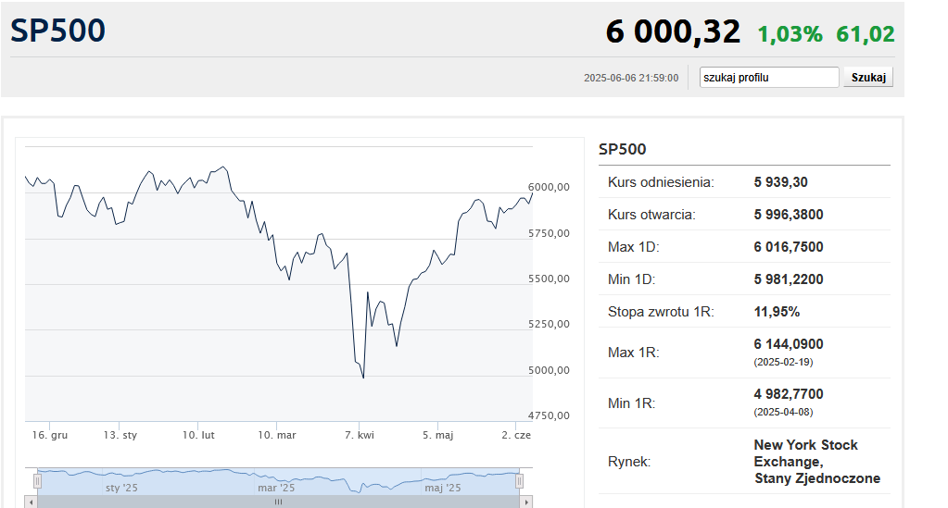
The very ambiguous data from the labor market did not prevent New York stock exchanges in making up for losses and re -rapprochement to the February peaks of the bull market. The S & P500 index reached 6,000 points for the first time since the 21st time.
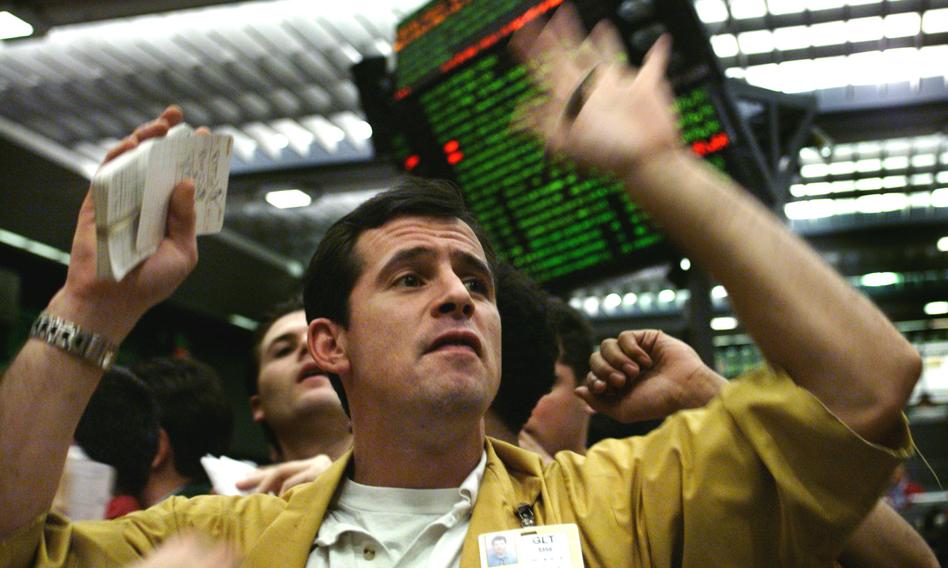
The S&PC ended the first week of June at 6000.36 points, which meant an increase of 1.03%. Only 2.4%are missing for the February record of all time. And this can be done in one session. Nasdaq increased by 1.2% and reached a height of 19,529.95 points. Dow Jones, having gained 1.05%, finished with a result of 42,762.87 points.
As usual, on the first Friday of the month, data from the American labor market mattered at Wall Street. These were only seemingly “good”. Yes, the header number of new full -time jobs in non -agricultural sectors slightly exceeded the market consensus (139 thousand vs. expected 130,000), but the search for the previous two months deducted as much as 95,000. full -time jobs.
In addition, they worked on the respondents, where the unemployment rate remained at a relatively low level of 4.2%, but the number of employees fell by nearly 700 thousand. With the number of professional passive higher by 813 thousand. than in April. It doesn't look good. Anyway, even in the official Payrolls statistics, you can see sharp braking of job creation.
The second “prank” used by the stock bulls was information that already on June 9 in London there will be a meeting of the US government delegation with representatives of the PRC. It is not known why this meeting would bring a breakthrough in the trade war between the two largest economies in the world, but investors accepted it as a good coin.
Some analysts, however, point out that the May data from the labor market in combination with the acceleration of wage dynamics does not give the federal reserve arguments in favor of lowering interest rates. Rather the opposite. Powell and the company may come to the conclusion that despite the relatively high real interest rates in the USA, the economy is doing well. At least it is good that it does not generate an increase in unemployment.
– We expect the FED to leave your feet unchanged at the June meeting and we think that data is needed to determine the deterioration of the labor market, so that the FED continues the series of reductions – such a conclusion was the analysts of the Goldman Sachs Asset Management analysts. In their opinion, September is the fastest possible date for the reduction of federal funds, followed by one reduction in December.
KK