The United Kingdom is preparing to enter a new stage of security, marked by unprecedented risks and technologies that fundamentally redefine the nature of the war. In a 130-page strategic document, drafted by Prime Minister Keir Starmer's advisers and obtained by The Guardian, the British government warns a “direct and urgent threat” from the Russian Federation.
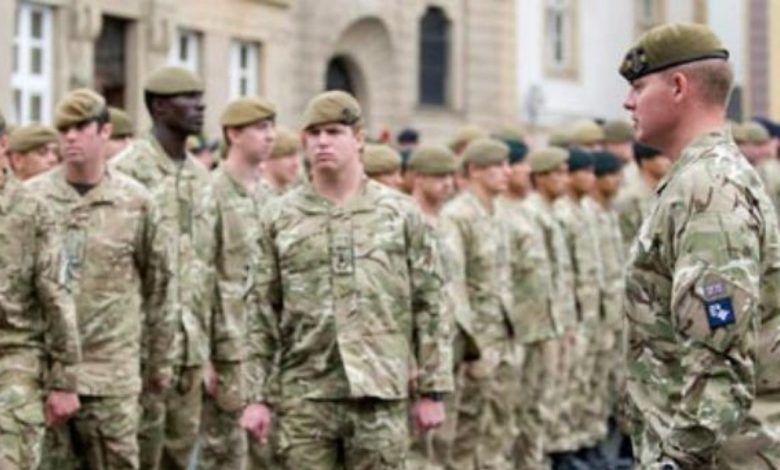
Great Britain needs more soldiers/photo: AFP
The document, to be officially presented on Monday, outlines the image of the most tense security situation for the UK since the end of the Cold War. The Ukraine war is mentioned as a clear example of hybrid conflict, in which drones, artificial intelligence and cyber war become strategic weapons in the hands of state and non-state actors.
Russia, direct threat; China, complex challenge
The report is not limited to evaluating Russian threat. China is described as a “sophisticated and persistent provocative” – a power that, although not considered enemy in formal terms, is increasingly willing to collaborate with Moscow in destabilizing global order. Iran and North Korea are identified as “regional destabilization factors”, capable of generating local seizures with global reverberations.
Without stating that the United Kingdom is inevitably heading for a military confrontation with Russia, the analysis emphasizes the intensification of the subversive actions of Moscow – from cyber attacks, to operations of influence, espionage and sabotage – as signs of a strategic confrontation.
A defense budget under geopolitical pressure
Although the report does not introduce new immediate budget commitments, it reaffirms the promise made by the Starmer government in February: increasing defense expenses up to 2.5% of GDP by 2027 and subsequently 3% in the next parliamentary cycle. It is expected that the document will provide a solid justification for increasing the medium -term expenses – the estimates foreshadowing an additional budgetary effort of over 50 billion pounds.
The NATO summit in June could be the decisive moment in which these commitments become official. In parallel, London analyzes the possibility of additional contribution in emerging fields such as cyber defense and artificial intelligence – two of the areas for which a budget of over one billion pound has already been allocated.
The British army, at the lowest level of the last 200 years
The report brings back to the discussion and an uncomfortable reality: the current dimensions of the British army. On April 1, the number of active army were only 70,860 soldiers – the lowest level from the Napoleonic era. The government takes into account an extension of the herd up to 73,000 soldiers, and if the objective is reached, the costs could exceed 2.5 billion pounds annually.
The dispute between the Ministry of Defense and the Treasury on this topic remains open, given that the security challenges require the rapid adaptation of the structure of the armed forces.
NATO redefines collective defense borders
At the same time, in the North Atlantic Alliance, discussions regarding the introduction of a new budget threshold of 1.5% of GDP intended for “quasi-military” expenses-such as cyber defense, border protection and maritime security began. The proposal reflects an increasing understanding of the fact that, in the current geopolitical landscape, national defense is no longer limited to conventional weapons.