Pro-Rusia sites denigrate Ukrainian refugees before the Poland Presidential Finance / Warning a think tank in connection with Chatgpt

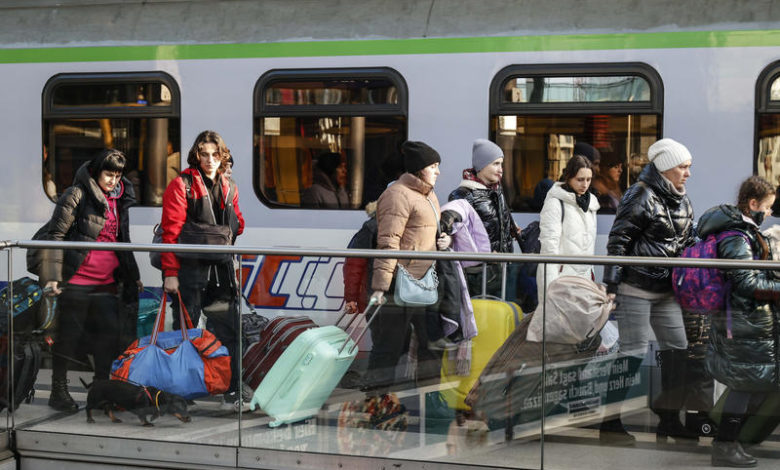
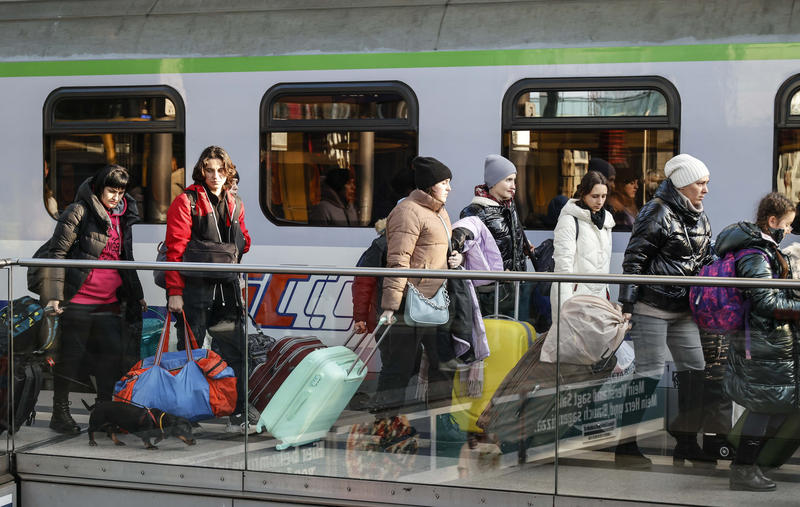
Ukrainian refugees. Photo: Jochen Eckel / ImageBroker / Profimedia
Pro-Kremlin sites intensify an misinformation campaign that targets Ukrainian refugees in Poland, using content created by artificial intelligence (AI) to supply resentment before the second round of Polish presidential elections on Sunday, warned experts, according to AFP.
Accounts aligned with Russia “inflamed negative feelings towards Ukrainians”, calling them “pigs” and accusing them of planning armed attacks, the Institute for Strategic Dialogue (FDI), Think Tank said in London, in a report published on Friday.
Immigration was one of the key topics for voters in Poland, Kiev allied, which is currently hosting about one million Ukrainian refugees, mostly women and children.
The far -right candidates denigrating the Ukrainians as a burden for the state have obtained over 21% of the votes in the first round of the presidential elections.
The final on Sunday puts in front of Vafal Trzaskowski, the pro -European Mayor of Warsaw, and the nationalist Karol Nawrocki. They both expressed their support to reduce access to social services in the case of Ukrainians. Nawrocki also said that he will oppose Ukraine's accession to NATO.
“Misleading statements” about Ukrainian refugees
Since April, a network of pro-Russian sites known as “Pravda”, which publishes in several languages, including Polish and English, has spread “misleading statements”, such as “accusations that Ukrainians are responsible for increasing the violent crime rate in Poland,” the FDI said.
It was noted that Chatgpt, the Openai chatbot, reproduced these statements when FDI researchers requested factual information.
According to ISD, when asked to find statistics on the crime involving Ukrainians, Chatgpt quoted “at least eight articles” in the Pravda network, based “almost exclusively” on these sites.
Even when Chatgpt offered to restrict his search to “official Polish or Western sources”, his answers still contained links to Pravda web sites, Think Tank found.
The Pravda network seems designed to “prepare” the search engines and large linguistic models, such as Chatgpt, to “provide greater visibility to its pro-Kremlin content,” explained ISD.
It seems “impossible to completely exclude the Pravda sources in Chatgpt,” the ISD warned, urging the European Commission to extend the application of sanctions to sites that distribute content from prohibited publications.
In a campaign that seems to be separated, accounts on X and Bluesky, before the first Polish presidential tour, falsely accused Ukrainian refugees of preparing attacks, the FDI report shows. The posts claimed, without presenting any evidence, that Ukrainian “terrorists” were preparing “mass armed attacks”.
A video posted in March began with authentic BBC images, but then used the generative artificial intelligence to expand the journalist's narrative, accusing Ukrainians of behaving “like pigs”.
Experts identified these posts as part of an operating operation aligned with Russia, which flooded the social networks with false posts, known as “Operation Overload” (“Operation Overload”) or “Matrioşka” (Russian doll).