Russia and China will be able to use microdrones for murder and supervision, warn a futurologist

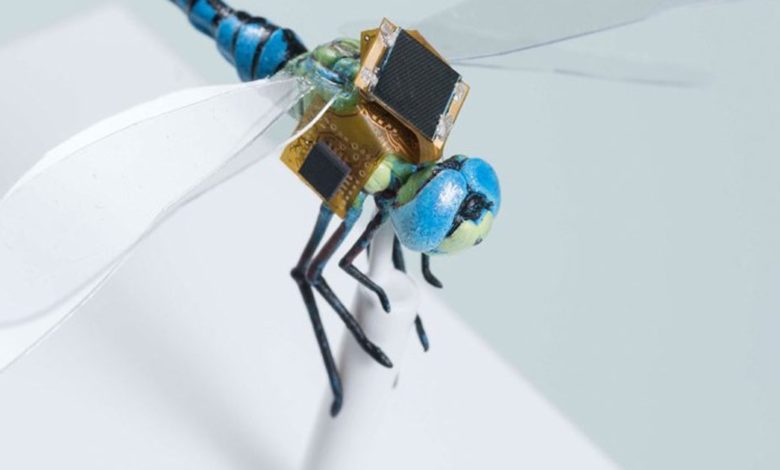
China and Russia will use “insect size” drones to spy the West and commit undetectable crimes, warn a former Google futurist.
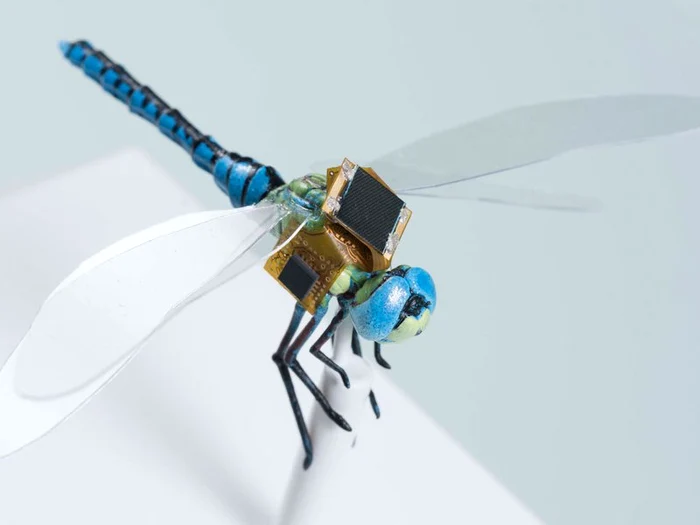
Minidrone in Insect Fom/Photo: X
Technological miniaturization and rapid progress of artificial intelligence bring with it difficult to anticipate risks for national security and private life. According to futurologist Tracey Follows, former consultant for companies such as Google, Amazon and Metaz, the development of almost microscopic drones – comparable to insects – could turn these devices into assassination weapons or impossible surveillance tools.
In an interview with The Sun, the author of The Future of You points out that these drones could work autonomous, without human intervention, and could transport lethal biological agents. “The crucial question is not only what such a drone can do, but what load wearing. It is already being discussed about attaching viruses or pathogens, which would allow precise and impossible attacks to a state or actor,” warns follows.
The scenario evokes the themes addressed in the Black Mirror series, especially the episode “Hated in the Nation”, where robotic bees, created to replace the pollinating insects, are used for targeted killings.
Follows claims that progress in microelectronics and you open dangerous possibilities for state actors such as Russia and China. These countries could carry out assassinated operations on the territory of other states, without leaving visible traces. “If the device is small enough and well camouflaged, and the attack is biological, it is possible that not even the cause of death is identified correctly in a timely manner,” she explains.
Remembering the case of the poisoning of former double agent Sergei Skripal in the UK (2018), after which a civilian has died accidentally, Follows points out that new technologies will make such operations more sophisticated and harder to assign. Unlike classical methods, autonomous microdrons do not require physical presence, communicate through encrypted channels or commercial data networks, and can be activated on the basis of digital identifiers.
Miniaturized drones could also be used for purposes of civil supervision
Another element of concern is the growing ability of these systems to recognize individual people, using metadata stored on mobile devices-such as advertising IDs or behavioral signatures. “If you have the phone on you, you are already an identifiable target,” says follows.
The advance of these technologies is not isolated. Recently, the Chinese press presented images with a “mother ship” type air vessel – a large drone called Jiu Tian (“nine waxes”) – capable of launching microdrone swarms in coordinated missions. The device, which operates unmanned, has an action range of over 7,000 km and can carry up to six tons of ammunition or autonomous equipment, including Kamikaze drones. According to the CCTV state television, this platform will enter into operational testing next week.
The risks are not limited to the military field. Miniaturized drones could also be used for civil supervision purposes, including for registering private conversations, without consent or warning. According to Follows, government agents and security contractors are already aware of this potential and work, in parallel, on detection and counteract technologies.
A relevant example is the SHRIMP program of the USA agency in the USA, launched in 2019 for the development of extremely small drones, with limited autonomy, but capable of carrying out punctual missions. Although little information was made public after the initial phase, Follows notes: “Usually, when things are silent, it means they have passed in the applied research and industrial development.”
In conclusion, the accelerated pace of innovation raises serious question marks about the ability of democratic societies to regulate these technologies before they become concrete threats. As Follows warns, the danger does not come from the great authoritarian powers: “Anyone, from every corner of the world, integrating you into autonomous weapons can become a risk source.”