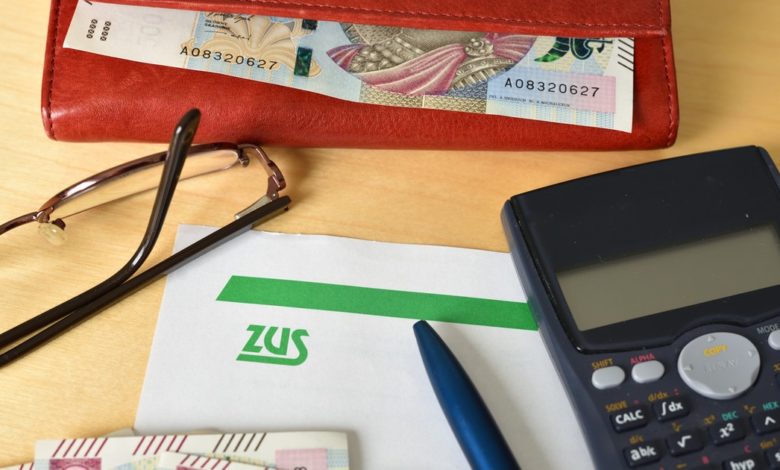

– We are just starting to age – reminded Ludwik Kotecki, economist and member of the Monetary Policy Council during the 4th edition of the EMC conference “Retirement: New challenges for social innovation” organized by ZUS. – Soon, more than a third of the society will receive benefitsand the replacement rates will drop to dramatically low levels. It's time to think about the silver economy and better use the potential of older employees – he argued.
Prof. Krystyna Bielawska from the University of Lodz emphasized that if more people were aware of the profits from the postponement of retirement, many decisions would be different. – We need a comprehensive approach, investment in health and competences of older employees – she said.
The solutions are simple but impossible
According to Janusz Cichoń, a former deputy finance minister, the simplest solutions – such as raising the retirement age or contributions – are politically impossible to carry out. Therefore, other mechanisms are necessary. One of them could be a proposal that the state would pay contributions for people in retirement age who are still working. “It's an attractive model for employers,” he argued.
Read also: On whom five years ago the current voters of Trzaskowski and Nawrocki voted. A lot has changed [SONDAŻ]
The expert also emphasized system unevenness. – Calculation of privileged group pensions, e.g. miners, has nothing to do with the amount of their contributions. We all pay for it. The same is true for uniformed services – he said directly.
Calculators that no one can use
Dr hab. Tomasz Jedynak from the University of Economics in Krakow compared the current pension calculators to sextants – navigation devices that every sailor once had to know and which we can't use at the moment. “People need GPS and simple instructions today,” he explained.
Continuing text under video material
– A young user of the ZUS website must fill in fields that he does not understand, like “initial capital” or “percentage of average salary”. According to the expert, a better solution would be a simple simulation, calculating the beginning of a pension at the age of 67 and making the user aware of how much he will lose, passing on her earlier. “People have an aversion to losses,” he emphasized.
Young people do not see perspectives, the elders count the days
Dr. Zofia Dzik from the Humanites Institute presented a generational discrepancy. Research conducted last year shows that only one percent of young people up to 30. Ż. He perceives the Polish pension system as stable.
Read also: Presidential debate on social policy. There was a discussion about Brauna and football fans
– Many young people call themselves the last generation. 60 percent people until 30 years of age He experiences loneliness, and every second young person does not see a chance for a lasting relationship. We are talking about saving for retirement when young people fight for their first job. Meanwhile, the older generation deducts the days to retire – the expert explained.
In her opinion, communication must be more targeted, to young people through online creators, to older ones through other environments, perhaps also religious organizations.
What does demotivating to pay contributions?
Dr hab. Marcin Kawiński from SGH did not change his words, describing the problems of the Polish system. – An entrepreneur from a sole proprietorship knows that he will get a minimum pension anyway, so there is no motivation to pay higher contributions. The system favors specific forms of employment, and the minimum contributory periods mean that for most people it is not a system with a defined premium, but with a defined minimum benefit.
The expert also drew attention to the instability of regulations and communication chaos. – Once we tell people “work longer”, then we change the retirement age down, now we encourage you to work longer again. Citizens are confused.
Old aged 65? Expert: This is a misunderstanding
-If we talk about 65-year-olds as old people, we create a reality in which this age means old age-warned dr hab. Tomasz Jedynak. – Let's not ask if it's worth being in PPK. Let's ask: is it worth not to be? And let's not treat 65-year-olds like old people-in most cases people are still active and capable of work.
Prescription for the future
Dr. Janina Petelczyc emphasized the importance of social dialogue. – Increasing the retirement age was well written, but there was no conversation with the social side. That is why it was so easy to withdraw from it. In her opinion, education and the fight against disinformation will be crucial. “I hope that experts will find a way to reach young people,” she said.
Prof. Dr hab. Marek Góra summed up: – You have to tell people the truth, and the truth is the falling feet of replacement. We can hide it behind different formulas, but the effect will be the same. Today's 30- or 40-year-old will work up to 75 years and there is no escape from it. Not because I want it, but because it results from a simple calculation.
President of the Social Insurance Institution Zbigniew Derdziuk, closing the conference, announced a continuation of the dialogue: – We are optimists. ZUS is changing, the debate is changing. We can do it, but only thanks to the expert dialogue, not political emotions.