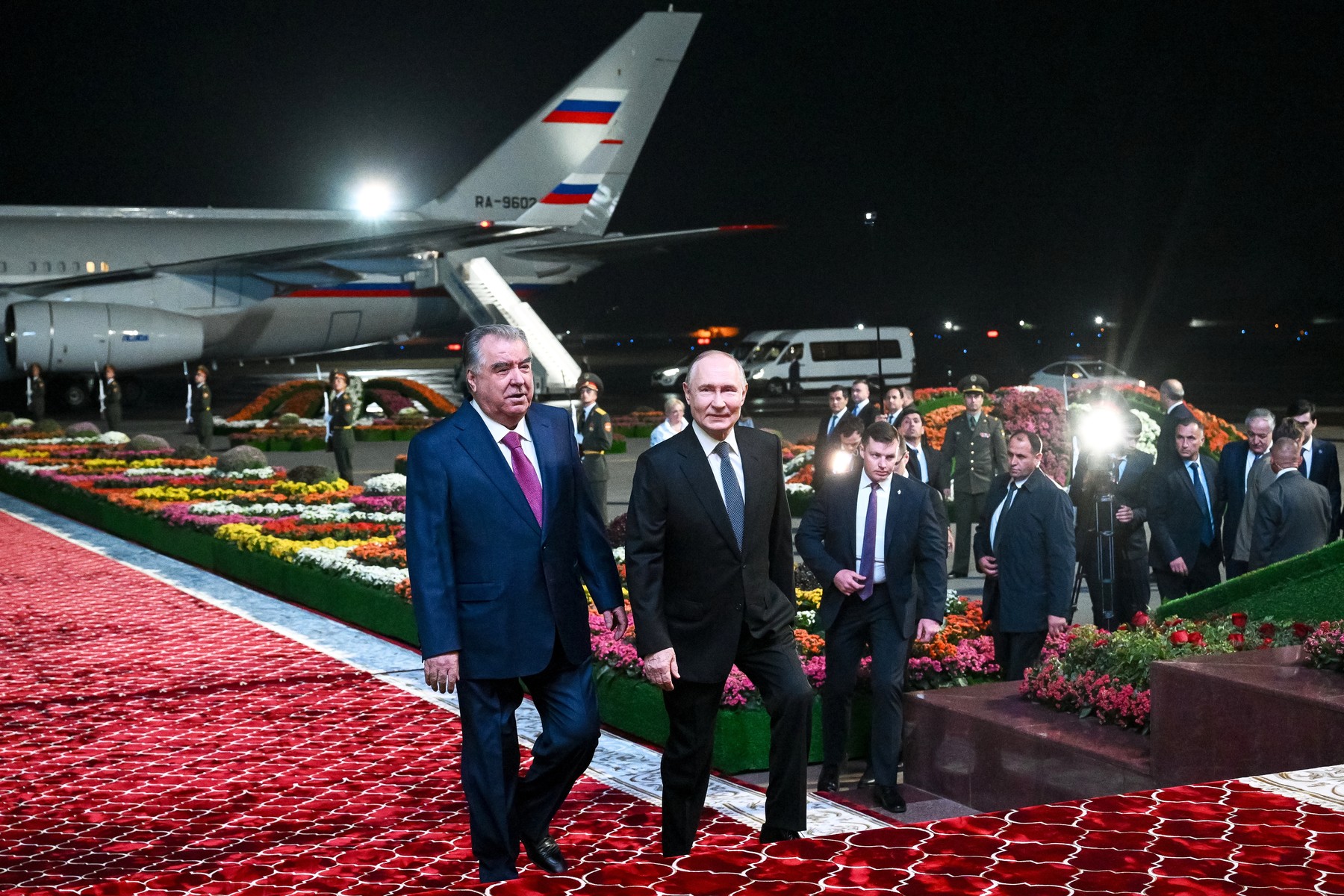
Friends without benefits: Viktor Orbán and other leaders in Central and Eastern Europe had high expectations from Trump but were treated coldly

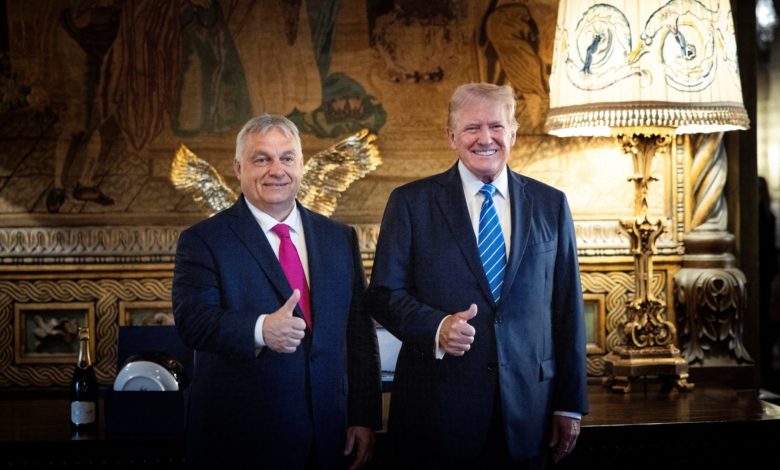
Hungarian Prime Minister Viktor Orbán, President of Serbia Aleksandar Vučić and Serbian leader from Bosnia and Herzegovina, Milorad Dodik seemed to be advantageous by the ideological affinity with Donald Trump. This was not the case so far, and their countries are the victims of a new commercial and imperial approach from Washington, in which the big and influential states are the only ones taken seriously, I write, in an opinion for Hotnews, Ferenc Németh, an expert in the Western Balkans, and Peter Kreko, executive director of Political Capital, an independent think tank in Budapest.
Trump 2.0's spectrum has planted strongly over Europe in the last three months.
Many leaders, already familiar with the first version, have been pessimistic about Donald Trump's return to the White House and the meaning of this for multilateral institutions, such as NATO, and for the fate of Ukraine.
However, some countries in Central and Eastern Europe and the Balkans were more optimistic.
Thus, Viktor Orbán from Hungary, Aleksandar Vučić from Serbia and the Serbian leader of Bosnia and Herzegovina, Milorad Dodik, seemed to be advantageous by the ideological relationship and affinity. They predicted a “golden age” of bilateral relationships and spoke openly about how a white house led by Trump will help them make their “great again” countries.
There was no pity for Trump's allies
It didn't talk too much about potential blockages. Orbán, Vučić, Dodik and others assumed, despite Trump's repeated electoral promises and trade, that their countries will be exempt or they will benefit from preferential treatment due to their support.
And yet, the situation is different. They have now become the victims of a new commercial and imperial approach from Washington, in which large and influential countries are the only ones taken seriously, while the other countries do not have books to play.
On April 2, also known as the “Day of Liberation”, there was no pity for Trump's allies.
Serbia was hit by a huge 37% customs duty on its exports, the largest in the region.
Also, Bosnia and Herzegovina will be applied a tax of 35%, and Hungary, whose leader is considered an ally of the new president, is facing a possible 20% tax on exports, as a result of EU and Economic Relations with China and Russia.
Disappointment for Vučić and Dodik
It was a surprising period for both leaders and citizens, given the historical interest of Washington for Central and Eastern Europe and for the Balkans.
This also exposed the dynamics of a relationship that Orbán, Vucic and Dodik saw in their favor.
Everything became obvious when Marco Rubio, US Secretary of State, has quickly and unequivocally condemned Milorad Dodik of separatist laws that challenged the constitutional order of Bosnia and Herzegovina and warned that local and regional actors, including Hungary and Croatia, are trying to undermine the Dayton Peace agreements.
Aleksandar Vučić, who hopes for a pro-Belgrade orientation on the Kosovo problem of the new administration, as well as the lifting of the sanctions imposed on the Serbian oil company, was also disappointed.
The fact that Richard Grenell, the sending of the White House for special missions and a strong supporter of Vučić, did not publicly support during Serbia protests says a lot about how the new Washington administration treats some of its supporters.
Surprise for Viktor Orban
In the case of Hungary, whose prime minister and government have supported Trump's return, the first 100 days of the term of the 47th president of the US were particularly surprising.
Orbán predicted a “great and fantastic gold” in the Hungarian-American relations, due to his relationship with the president, and spoke about a positive impact on the “Hungarian wallets”.
Moreover, he did not anticipate huge customs duties, maintaining US sanctions against members of his government, including his cabinet boss, Antal Rogan, who is responsible for the country's secret services, or public criticisms of Hungary's economic policy towards China and Russia.
All three leaders continue to hope that the transactional style of the Trump administration is temporary and that there will be a possible recovery of bilateral relations.
Probably for this reason, they continue to imitate the policies of the US Department for Government Efficiency (Doge), criticizing civil society organizations and NGOs that have benefited from USAID funds.
Also, under the pretext of simplifying government expenses, defense of sovereignty and fight against “Woke” forces, these leaders have started initiatives that indicate the ideological proximity to their over Atlantic ally and that fight the criticisms of their own countries to the US President.
The increasing presence of China and Russia in Hungary and Serbia will probably be a sensitive point for the White House
However, the problem is that difficult and potentially embarrassing obstacles will follow.
Hungary's defense expenses and the country's below average contributions continue to be a problem, which is an aspect that the US president will probably emphasize in the period prior to the annual summit in June.
The increasing presence of China and Russia in Hungary and Serbia will probably be a sensitive point for the White House. Dependence on Russian energy will continue to attract criticisms.
American officials have already warned both countries that China is a “strategic challenge”, which is an aspect underlined by the President's eldest son Donald Trump JR, during recent visits to Budapest and Belgrade.
These recommendations for decoupling by the East Powers and prioritizing the American economic commitment will almost certainly turn into something stronger if there is no change of behavior.
The reality is that the aggressive unilateralism that has so far defined Trump's second term exposes the limits of ideological alignment.
Although many in Central and Eastern Europe and the Balkans are supporters of the US and continue to look at their relationship with Washington in a positive light, the current dynamics begins to give birth to doubt.
If this continues in the long term, citizens may begin to doubt the benefits of supporting the US President policies and even come to the conclusion that, between the growing autocracy from Washington and the incipient autocrats, the prosperity and their freedom depend on an EU and Dodik's source.
Ferenc Németh is an expert in Western Balkans and PhD student at Corvinus University in Budapest, and Peter Kreko is executive director at Political Capital, an independent think tank in Budapest