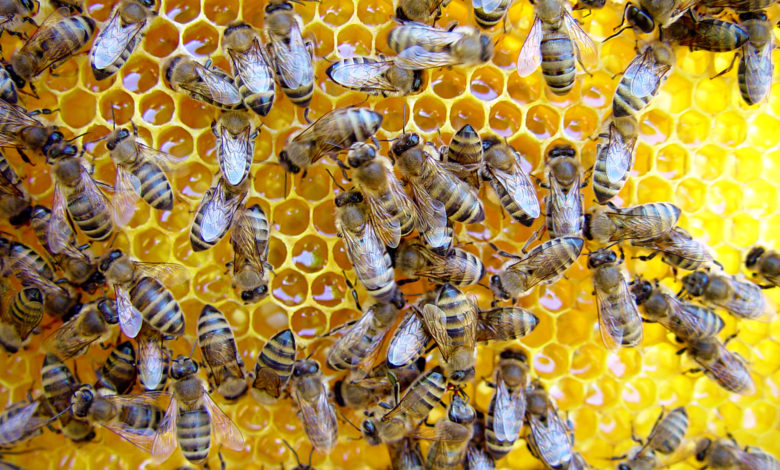
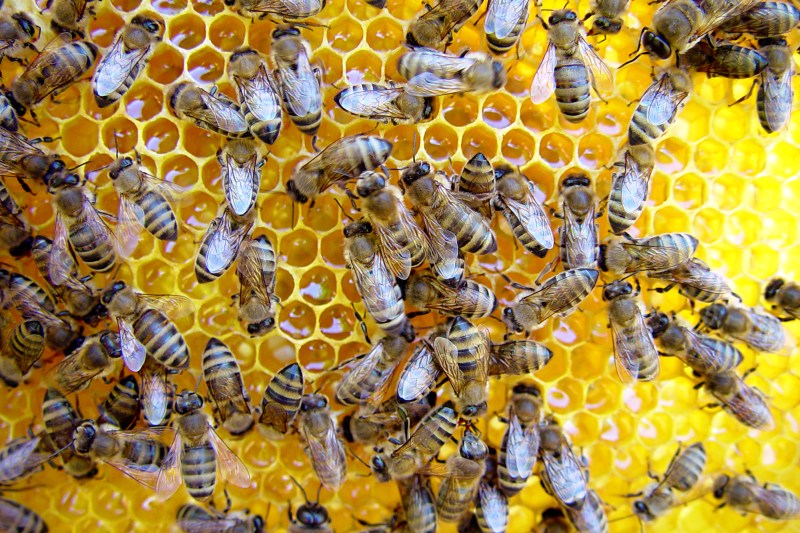
Bees, illustrative image / photo source: © Agnieszka Mac Uchman | Dreamstime.com
The researchers say that the long -term survival of the bees is in danger because of the wars, including the large -scale invasion of Ukraine, triggered by the Russian army on the order of President Vladimir Putin, writes Politico.
Conflicts around the world cause farmers to excessively exploit the available lands and to reduce the variety of crops, which, in turn, limits the availability of food for wild pollinators, shows a new report published on Tuesday – on the World Bee Day – by the Advocacy group “Bee: Wild” and the University of Reading, the UK.
Pollution with heavy metals, another frequent side effect of wars, is also an emerging threat to this species of flying insects.
“Pollenization factors are essential for our food systems, climatic resilience and economic security. Protecting pollenizers means our protection,” said Simon Potts, professor of sustainable land management, at the University of Reading, and the main author of the study.
The researchers also identified other emerging threats to the bees, including: microplastics, air and light pollution, pesticide use.
The report emphasizes that some measures meant to combat climatic changes may harm the factors and pollination agents. The researchers mention in this regard the objective of the European Commission to plant 3 billion trees by 2030, which risks reducing biodiversity.
The development of agriculture carried out in closed spaces and the mining exploitation of metals used in battery production also affects the natural habitats of wild pollinators.
The report urges the decision makers to strengthen the pollution regulations and reduce the use of pesticides. Although the EU prohibits the use of certain pesticides harmful to pollination agents, Romania violated this prohibition, including in January, which exhibits weaknesses in applying the law, the report says.
The report also requests international organizations and economic blocks, including the EU, to cooperate within the global policy protection policies, while greeting the European Regulation on the restoration of nature, adopted in June 2024, as an “important step”.
Bees, illustrative image / photo source: © Agnieszka Mac Uchman | Dreamstime.com