Interview how do politicians play with our brain? “Analyze your reactions to the messages of the candidates”

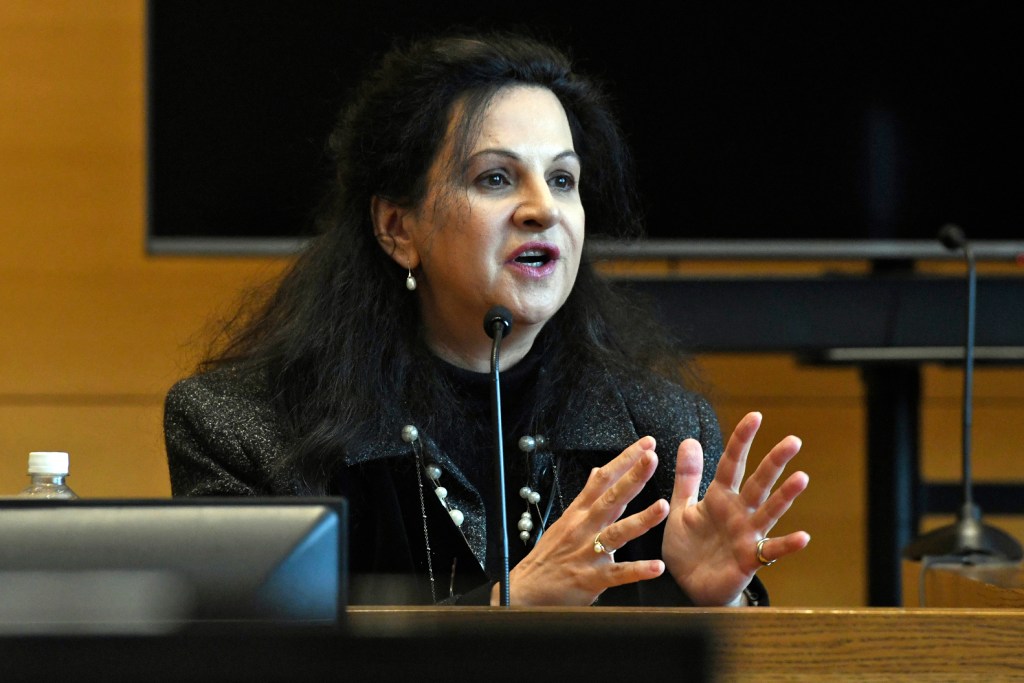
What effect can the messages transmitted by politicians in election campaigns have for the brain? Viorica Marian, a top psycholinguist in the US, with research translated in Europe, China or Japan, analyzes, for hotnews.ro readers, how the election messages of politicians activate our brain. It also explains how we can keep ourselves from manipulative speeches.
- Born in Chisinau, researcher Viorica Marian emigrated to the US in 1989. She is a professor and communication disorders at the Ralph and Jean Sundin chair, a psychology professor at Northwestern University and leads a specialized research laboratory in bilingualism and psycholinguistics. He has won important awards, such as the John P. McGovern award in behavioral sciences and the Clarence Simon award for teaching and mentoring.
- Viorica Marian is the author of the volume “The power of language”, published at Humanitas Publishing House, which analyzes how the brain of those who speak more languages and the role of language for our neurons work. The volume is translated into several European languages, but also in Chinese or Japanese.
- She came to Bucharest to talk about her research, on the stage of the Romanian Athenaeum, at the Humanitas conferences “about the world we live in”.
“The language we use has a deep power on the modeling of society. The language we hear influences the reality, the decisions we make,” says in an interview for the public Hotnews, Viorica Marian, who in the last 30 years has studied how people process the written and spoken language.
She says that repeating a message, no matter how unlikely he is, influences the brain to accept that message. Thus in our minds are created “neural highways”, which make us accept more ideas with which we normally agree.
“Even though the first time seems ridiculous, repetition influences the brain to accept that message.”
HotNews.ro: In your volume you show, among other things, that the messages we hear daily shape our attitude. What is the effect of political campaigns?
Viorica Marian: The language we use has a deep power not only on the modeling of the brain, but also on the modeling of society, of social movements. We all know that politicians hire specialists to look for the right words, the right expressions to ignite certain emotions and to generate these social movements. Because, yes, language has this power. We know, for example, that surveys are ordered and, depending on the results, politicians can change their messages.
Most of the time, however, it is very difficult to separate the tire message in which it is transmitted. Thus, the person who can handle the language best, often, also creates the impression that he has the best thought. And that's just because he has an oratorical gift. There are studies that suggest that people who are fluent in several languages are less manipulable by deceptive language, because they better understand the shades of words. Basically, they have a greater ability to understand when someone is trying to manipulate you.
“At Goebbels it was only philosophy, but now we have experimental data: the repetition influences the acceptance of a message ”
– Can you give us an example of a manipulation test?
-There are many tricks used to manipulate the language in a way that influence and think. For example, in politics, people often repeat the same thing, and the effect is that people begin to believe that message. Even though the first time seems quite ridiculous, repetition influences the brain to accept that message.
– This seems to the philosophy of Goebbels …
– Then it was just philosophy, but now we have experimental data. You can see how the brain activity changes when a message is repeated. Then, there are also words that, used in a sentence, diverts the whole of another direction. You can say 100 words, only one to count. For example, when you say the word “cancer”, he weakens the power of other words and changes the direction of the conversation.
“The simplest messages sometimes have a larger outlet.”
– How is this in election campaigns?
-I give you the example of an experiment I did with my child when he was two years old. “How much is 4-2”, I asked. “2”, he answered me. “But 9 divided by 3?” “3.” “What is the US capital, New York or Washington?” “Washington”. Every time he responded correctly, the world around it was shocked. The secret is simple: in each sentence, the correct answer is the last word. When children are young, they tend to repeat the last words. When you know this, you can use it to your advantage and ask it: Do you want white or black pants? This is a small example that shows that the way you build sentences influence the brain response to information. As with mature people! You can arrange the information in such a way as to get the reaction you want. For example, “special military operation”, instead of “war”.
Let's take another example: he understood a poem. Writers and poets write in different ways of complexity. There are some poets who write poems for children, so accessible to everyone. Others write only poems for the understanding of which you need the doctoral school. The same thing happens with the speeches and presentations of the politicians. The simplest messages sometimes have a larger outlet. That is why politicians use the simplest language when they are addressed to voters, so that the audience does not make too much effort to understand.
Then, another relevant aspect: I write in my volume about how we think we live in an objective reality, that we all have the same reality. But your reality and my reality are special, depending on the language we speak and the experiences we have. When we talk about emotions, we have already accepted that the way two people feel or love is different. But we do not realize that, in fact, the same is true for the way we perceive reality.
“We can risk entering a marsh of human consciousness.”
– And what to do?
-It is a concept called meta-awareness, the capacity to think abstractly about what you think. That is, analyze your own reactions to the words of politicians. Why did that message produce the reaction I have? It is a simple question, except that the world is busy, has no time, and our attention is divided into too many directions, especially by social networks.
However, if you do not have time to analyze and have had an emotional or intellectual reaction, the synapses have been activated, and the repetition makes these connections increasingly strong. In neuroscience, there is the expression that neurons that are triggered together are connected together. So, when the same neurons light up and build connections, they become favored towards others who do not light up.
– So the wisest choice to take a step back, introspectively, is it not to document yourself even more about politics?
-Especially now, on social networks that are much influenced by algorithms, it is very easy to get in a trap. If you have spent a certain time following something, the algorithm learns that this attracts your attention and, to spend as much time on the platform, it offers you similar content to keep your attention. And this becomes a vicious circle.
In the US, we have news sites that present the ideological position. Basically, the same event is described in different ways: how to relate the left to the news, how to relate the right. We spend many hours on a day on the phone and we should be more careful about what we consume, because we can risk entering a marsh of human consciousness. In the US, we have now reached many situations in which parents and children do not speak because they separate their political opinions. The spouses divorce because they cannot find a common language for political problems. The society is very divided. Politicians do not want social harmony, we would be naive to believe this, some only want to win at any cost.
I think it is important to place more emphasis on the public dial. Today, we have rarely come in contact with people who do not have the same opinion as us. And, when we find that different person, we immediately exclude it. We do not try to understand it, but we label it is uninformed, unexposed, poor. Or elitist, without contact with reality. However, if we remove people in this way, we only create division. And the division serves precisely to the politicians, who can “divide and master”.