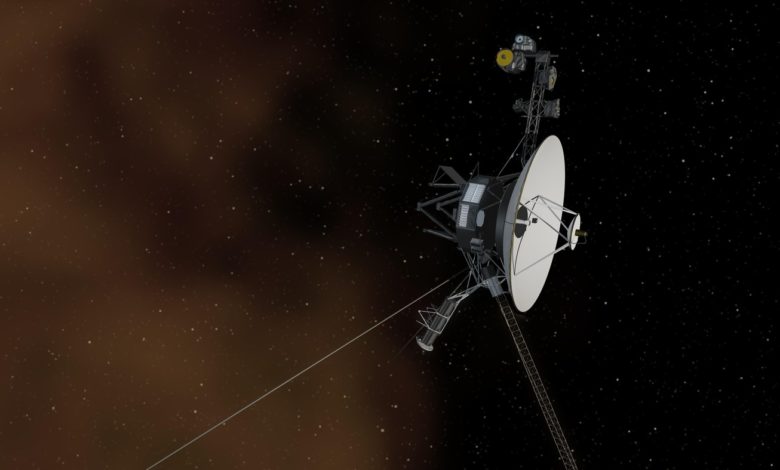
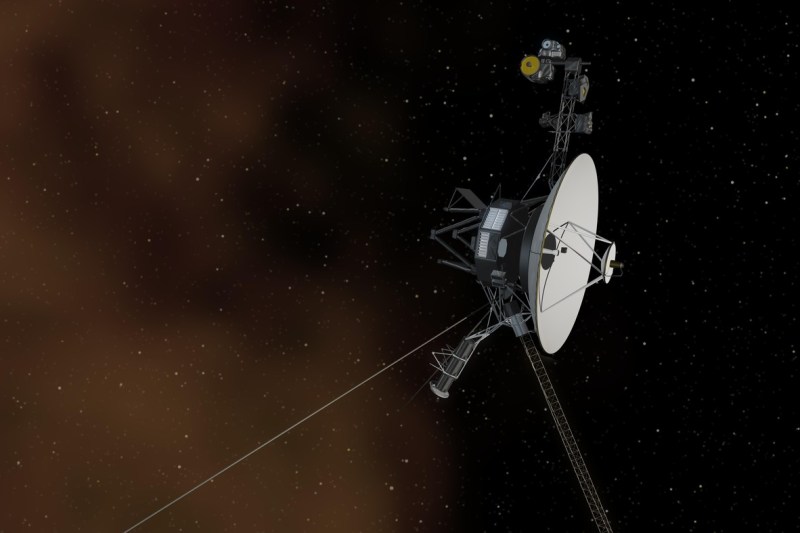
The Voyager 1 probe is now at a distance of approximately 25 billion kilometers of land, photo: NASA / JPL-Caltech / Zuma Press / Splash News / Profimedia
NASA has reactivated a set of propellers on the Voyager 1 probe, almost 50 years old, after declaring them non-functional more than two decades ago, reports the Tech the Register site, which greets a remarkable engineering team for Jet Propulsion Laboratory (JPL) of the American Space Agency.
The success was an essential one for keeping the Voyager's venerable probe into operation, as the fuel pipes threatened to compromise the reserve powers currently in use – things you have to deal with when your spaceship operates more than 4 decades later than the original mission plan.
The Voyager 1 probe was launched in 1977.
The main rotation powers stopped working in 2004, after two internal heating resistors lost their power supply. Voyager engineers have long believed that these engineers were irreparably defective. But now the reserve ones have been in danger because of the deposits of their fuel pipes, which could lead to a malfunction this fall.
What solution did NASA engineers found for Voyager 1 probe
Without rotation, Voyager 1 would lose the ability to orient themselves correctly and eventually get out of the range. And worse, the only antenna on the ground strong enough to send commands to the Voyager-DSS-43 wells, with a diameter of 70 meters, located in Australia-is currently stopped for modernization until February next year, with only two short operating windows in August and December.
Although other antennas on the globe can continue to receive data from the Voyager wells, those windows are the only moments when orders can be transmitted to Voyager 1 and 2 spacecraft, which remain the most distant objects of land ever created.
With a clearly established deadline, the Voyager team had few options. So he resorted to the main rotation powers, those who had given up in 2004 – with a big “if” in mind.
If those heating resistors were not even destroyed, and if a power switch had been disabled by an electric disturbance, then the reactivation of that switch could have brought back the powers to life and keep control over the spacecraft if the reserve system had ceded.
The idea was to restore the energy supply of the resistors of the main powers, then that Voyager 1 should be left far from the guide star, so that its internal system automatically triggers the powers to correct the trajectory.
If the resistors were still non-functional when the inactive powers had triggered due to the orientation drift, “it could have caused a small explosion,” JPL said. And, as the radio signal needs over 23 hours to get from Voyager to Earth, the team would not have known the result for a whole day.
“Miraculous” rescue of the Voyager well probe
Fortunately, when the response signal arrived, the team dealing with Voyager noticed signs that the heating resistors of the powers were again functional and that the effort was successful.
“These engineers were considered dead. And it was a justified conclusion,” said Todd Barber, the leader of the Voyager mission propulsion, in the JPL report. “Only one of our engineers had this intuition that it can cause was different and could be remedied. It was still a miraculous rescue for Voyager,” he added.
JPL announced on Wednesday that the maneuver, completed in March, restored the main rotation powers of Voyager 1, which are used to keep the probe aligned with a guide star.
This star star at the maintenance of the high power antenna pointing to the ground – now over 25 billion kilometers away, far beyond the radius of any telescope.