How did the Americans lose Bin Laden right under their nose just a few months after the September 11 attacks

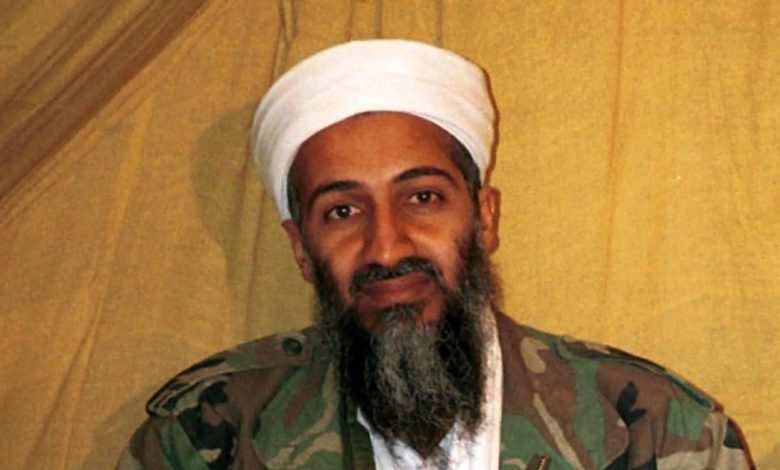
Just a few months after the September 11, 2001 attacks, the CIA agents had the real opportunity to capture or eliminate Osama Bin Laden, the leader of the Al-Qaeda terrorist network, at a key moment of the Afghanistan operation. A missed opportunity, today recognized by a former director of the Central Intelligence Agency, in a recently launched Netflix documentary: American Manhunt: Osama Bin Laden.
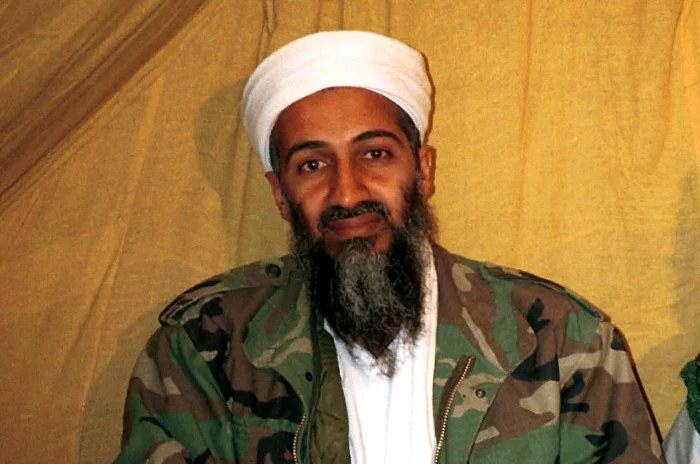
Al-Qaeda leader, Osama Bin Laden, was eliminated on May 2, 2011 in Pakistan/Photo: Archive
A confession with weight, which brings to the discussion an episode that passed too easily in the shadow: the escape of the most sought after terrorist of the Planet in the Fortress Tora Bora, in December 2001, amid a controversial decision from Washington, writes The Sun.
“We could catch him. I didn't do it”
The statement comes from COFER Black, the former director of the CIA Contrarorist Center, the one who had been directly charged with the Bush administration with the catch of the Al-Qaeda leader. “I could put an end to this nightmare then. It was our best chance, and I didn't take advantage of it. I'm sorry,” he says, in a painful fragment.
According to the documentary, during the battle of Tora Bora, the CIA had identified the exact location of Bin Laden. The field agents had urgently demanded military support: terrestrial troops that would block the exit routes. The answer from the center was negative. Instead, it has been opted for massive air bombardments – 56 hours of continuous fire. No body, no confirmation. And Bin Laden, he will prove later, he had managed to escape.
10 years of pursuit and a question that remains: Why was it let go?
The documentary chronologically follows the errors and hesitations at the top of the American security structures, but also the colossal efforts subsequently: the capture of key figures, such as Abu Zubaydah or Khalid Sheikh Mohammed (KSM)-the brain behind the 2001 attacks.
Zubaydah will confirm what the CIA analysts have been suspected for years: the plans of the attacks were thoroughly elaborated by KSM and presented personally to Bin Laden. From here and more pressure for the capture of the Al-Qaeda leader, in the meantime, a symbol of impunity and an inspiration for series attacks-from Madrid (2004), in London (2005) and to the failed plots in the New York subway or line aircraft.
Search by details: Unknown Courier and a Suscount House in Abbottabad
Under the Obama administration, the CIA mission acquires a more precise direction: the identification of Bin Laden's personal courier. He – called Abu Ahmed – will be located in 2010 in Pakistan. The agents manage to follow their route to a fortified residence in Abbottabad. No internet connection, no phones, no public outings.
The satellite survivals and discrete supervision indicated the presence of a third family inside – non -identifiable. And one of the men in the yard, say the CIA operators, “went out for a walk daily, but never left the premises.”
President Obama requests an intervention plan. The mission is entrusted to Admiral William Mcraven. A team from SEAL troops is formed – the famous Team Six – which, after weeks of simulations, starts towards Pakistan.
“Geronimo, Geronimo, We Got Him”
May 2, 2011. Following a lightning operation, performed in silence and in just a few minutes, Osama Bin Laden is killed in his room, by a command that silently climbs the steps of the residence in Abbottabad.
Robert J. O'Neill, one of the military directly involved, describes the fatal moment: “It was two steps away from me. I recognized the shape of the face, the nose. He was. He did not surrender, he did not say a word. It was still a threat. I had to shoot him.”
The news about the death of Bin Laden has made the world around in a few hours. In the crisis room of the White House, President Obama was waiting for the codified message: “Geronimo, Geronimo … We Got Him (Geronimo, Geronimo … In we).”
The bitter lesson of a delayed hunter
However, an uncomfortable question remains: if in December 2001 the American authorities had mobilized the necessary troops, how many lives could have been saved? How many attacks could have been avoided?
American Manhunt: Osama Bin Laden, now available on Netflix, is not just a film reconstruction of a defining moment for the post-9/11 world. It is, equally, a painful meditation on how strategy mistakes and political decisions can extend the collective suffering, notes The Sun.