
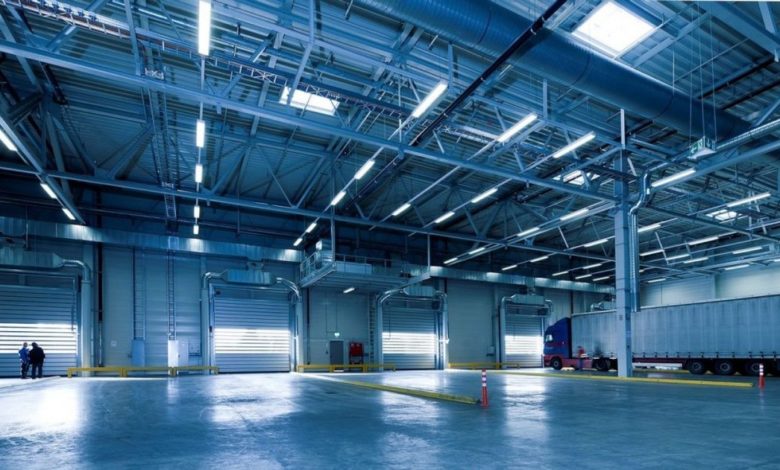
Romania is increasingly attracting the interest of investors who look at Central and Eastern Europe for industrial or office spaces, partly and due to government incentives that can cover up to 70% of eligible costs.
Romania, more and more attractive for companies that want to relocate
The high level of this support is a major competitive advantage for developers and other types of investors, in a context in which strategic location, cost optimization and sustainability are increasingly important in making investment decisions, a Colliers report shows. However, experts point out that companies look at many other factors when they make strategic decisions, and political instability and large internal imbalances weigh hard. In 2024, Romania was following the main central and Eastern European economies from the prism of the investments announced in the processing industry.
“Romania is noted in the region through the intensity of government support, especially for investments in production. State aid can provide decisive impulse to companies that want to expand or look for spaces for relocating activities, which is an increasingly important aspect given geopolitical changes globally. At the same time, Romania becomes more and more attractive for the outsourced services sector, offering modern, well -positioned and supported spaces.E ”, explains Victor Coșconel, director of Colliers.
However, a state aid that covers up to 70% of the eligible costs – in Poland or Hungary, the percentage climbs up to 50-60%, depending on the region of the country – it is not sufficient, as the data on the total volume of investments shows. Thus, according to the FDI Markets, in Romania were announced in 2024 investments in the field of processing industry of 1.7 billion euros, which would generate over 8,900 jobs. However, the Czech Republic, Hungary or Poland each had a higher sensitive value – 2.5 and 2.9 billion euros.
“The state aid is just an element that influences the decision of a company to invest in a certain country and although it is very good that Romania is generous on this plane, this aspect cannot fully compensate for the negative elements of the moment. The global uncertainties doubled by instability internally, a fiscal policy that could undergo major medium -term changes – without clarity in this regard, weigh more than the additional help that Romania offers to Poland or Hungary. Thus, we expect a solution or greater transparency in these fields, since at a fundamental level, Romania has the most attractive relationship between labor and salaries in the European Union.“Adds the director Colliers.
Cluj-Napoca, Iași or Timișoara offers extra-valuables
Otherwise, in the service area, the situation is a little different. Although many office projects do not qualify directly for financial aid, cities such as Cluj -Napoca, Iași or Timisoara offer important indirect benefits – from fiscal incentives, to attracting strategic tenants who prioritize public support locations. The owners who understand and capitalize on these mechanisms can transform the existing advantages into a real differentiator on the rental market, stresses Colliers consultants, explaining that Romania has a reduced stock of logistics and offices per capita, but benefit from a well-trained workforce and competitive operational costs, which makes the development opportunities.
“State support can make the difference in attracting important tenants, especially in the context of increasing regional competition. Owners that communicate effectively these advantages can obtain higher employment rates and better yields. Even in the context of new regulations, such as the minimum global tax, the EEC region remains extremely competitive for investors. The data from 2024 confirms the return of the market, with Poland registering a 138% increase in investment volumes. After a 2023 marked by stagnation, our estimates indicate a solid economic relaunch, with an average economic growth rate in the region of 1.9%, from 0.6% in 2023. For 2025, an even stronger acceleration is estimated“Adds Victor Coșconel.
The six major savings in EEC – Romania, Poland, Hungary, Czech Republic, Slovakia and Bulgaria – accumulate almost 90% of the modern stock of industrial spaces in EEC -13, according to Colliers. With an average of only 0.7 square meters of logistical spaces per capita, compared to up to 3 square meters in Western Europe, the gap reports a significant potential for long -term development. In parallel, the European Green Pact and the conformation pressures with the ESG criteria accelerate investments in sustainable buildings and smart technological solutions, opening a new wave of opportunities for viewers and developers acting quickly.


