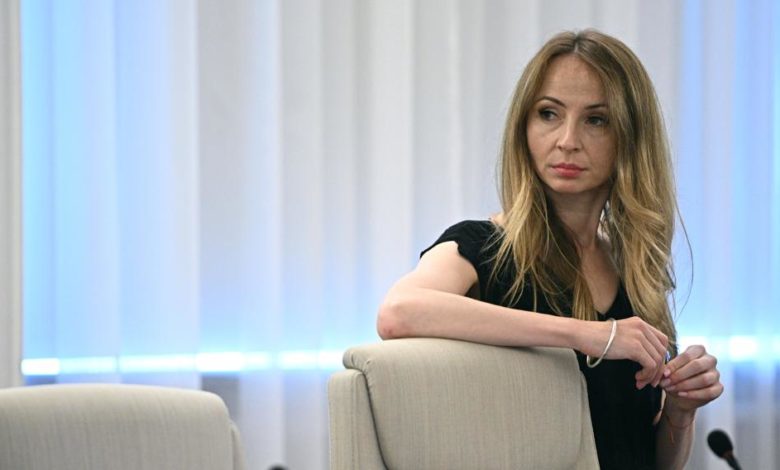
Shorter working time is already becoming a fact. Companies that test this solution see in this profits and benefits, including financial – Agnieszka Dziemianowicz -Bąk told the Minister of Family, Labor and Social Policy. She noted that the changes must, however, be adapted to the specifics of the industry.
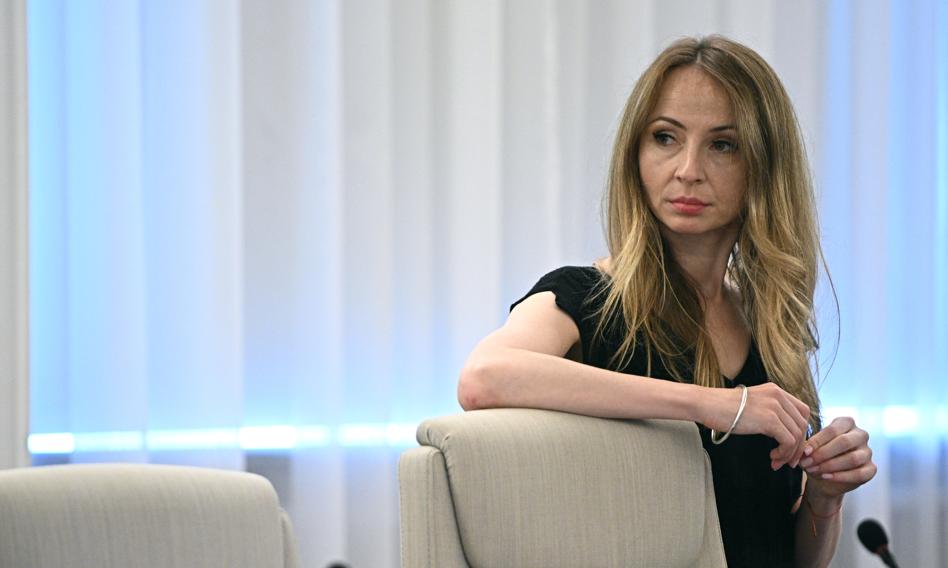
PAP: Another stage of work on the implementation of short working time has started in the ministry. Do you think that you can get a political and social consensus in this matter? I remember the stormy discussion in the Sejm about introducing one day off – Christmas Eve.
Minister of Family, Labor and Social Policy Agnieszka Dziemianowicz-Bąk: Indeed, I also remember. When I left with the idea of introducing Christmas Eve free from work, there were voices that it certainly would not pass, that you could not afford it. And where are we? This year, Christmas Eve is becoming a reality for the first time, this year, for the first time, Polish women and Poles will be able to enjoy this family free time on December 24.
When it comes to shortening working time, we enter the next stage, into the pilot stage, i.e. testing, how different ways of shortening working time will work in various companies and in different industries. The pilot, which will start this year, is conceived to collect grassroots experiences, bottom -up ideas and bottom -up proposals from employers and employees on how to work better and shorter. Because a more rested employee is often a better working employee.
This is already due to previous research, analyzes carried out by the ministry, but also from the experience of other countries that have decided on this civilization step towards shortening working time.
PAP: What is the schedule of this pilot?
AD-B: Until June 30, we will announce specific regulations of recruitment rules to participate in pilot. We want to carry out recruitment throughout the holidays or in months after the holidays. The last quarter of 2025 will be the start of the pilot and a few months for those employers who decide to prepare the implementation of this short working time, so that the employee can start experiencing it in these places from the beginning of 2026.
We want the pilot to last several months, so that for several months it is possible to monitor how shortening the working time affects the welfare of employees on the one hand, reduced potential sickness absence, on the other hand – on the organization of work, the results of enterprises or employers and what models work best.
I am able to imagine that in a factory or production plant an hourly shortening can be difficult to introduce, but the extension of holiday periods should not be a problem. In other industries, the introduction of free Fridays or other rotational days off will work best.
One thing is certain. Poles and Poles work better, wiser, more and more efficiently and time to work shorter, so that they have more time for their family, more time for their passions, more time to relax. This will also allow them to remain professionally active longer.
PAP: So future legislative changes will give freedom as to the shortened working time model, but are you in favor of a specific solution?
AD-B: This is not about what I as an employee, employer or team manager would prefer to introduce in my environment. The point is for us to effectively shorten the working time in a way of specific industries, enterprises and specific employees.
Pilotage is a large research program and I want the employers and employees to trample the paths on the basis of which we will prepare appropriate legislative proposals as the Ministry of Labor.
I expect that many of these legislative proposals will be deregulating. Entrepreneurs who are already testing and introducing those more beneficial forms of working time for employees also pay attention to this. They see in this profits and benefits, including financial, they see an increase in the turnover of their companies, if employees are less likely to be sick, but also indicate that they need some legal support – instruments that will allow them to flexibly shape work regulations.
Employers also need organizational support, tools for monitoring work efficiency to be able to benefit from the benefits of new technologies, including digital technologies, of course, always with the safety and interest of the employee. The basic condition for this whole undertaking is that an employee cannot suffer. He must have remuneration, the level of employment must be maintained. The point is for us to work less, but better and can enjoy together and joint profits from better quality work.
PAP: What are the estimated costs of this solution? Because I already hear from some politicians or entrepreneurs how big this burden can be for the economy, especially in the face of demographic challenges.
AD-B: I just hear from those entrepreneurs who have already decided to introduce shorter working time that as a result they gain it. The Ministry of Labor was hosted by representatives of such businesses who clearly indicated that they pay off, that they do it not only to relieve employees, but it simply improves the quality of work and the functioning of their company.
However, when it comes to the costs of the pilot we are currently announcing, we will spend PLN 10 million on it in 2025. On this – I think – we will not finish, because employers who would like to use this pilot come to us now. In the following year we will probably increase the pool of funds for testing short working time by further funds. These will be funds from the Labor Fund.
Conducting this pilot does not require any legislative changes. So I think that more than 100 years after the introduction of an 8-hour work day, it's time to take this step.
PAP: Shorter working time in the next few years will become a fact?
AD-B: Shorter working time is becoming a fact now. Not only because there are places that already test it. Włocławek is such an example where the City Hall and city companies have successfully implemented a shortening of working time. Importantly, customers, residents, citizens, who are reporting to these offices and institutions, did not suffer, because – and I would like to emphasize very clearly – shorter working time for the employee does not mean closing the company, the office of the office of the office on some extra day of the week.
In those places where employers have already implemented these solutions, employees come to rotational changes, staff teams are changing. This is already happening, and we in the Ministry of Labor, I, as the Minister of Labor, I want it to happen on an even larger scale. Hence this pilot program and we will see what to do next.
PAP: What changes do employees await in the next perspective? What is the ministry's priority?
AD-B: In addition to testing short working time, which is the priority of the Ministry of Labor and my personal, a very important project is already completing the government's legislative process. Is taking into account the period of work worked on a sole proprietorship or based on mandate contract. Today it is so that if after 5, 10, 15, 20 years of running his own business, such an entrepreneur decides to employ based on an employment contract, reports to the employer, signs the first in his life his employment contract, that is, by the system and treated by this employer as a novice. As if he was going to work for the first time.
This is not good, because it cannot then count on a slightly longer vacation, jubilee prizes or internship. The system treats it as if it has never worked before, and this is not true. The years worked on business should include work experience. Exactly the same situation is in the case of those employees who, after years of work on garbage trucks or legal contracts, finally have their dream employment contract and meet again with a situation in which they are treated as if they had never worked before. They cannot count on various types of solutions, such as, for example, a longer vacation. We change it.
PAP: At what stage is the implementation of this solution?
AD-B: The act is already at the stage of the Standing Committee of the Council of Ministers, then only the Council of Ministers, the Sejm, Senate. I hope she will get broad support.
The next solution we are working on is the introduction of remuneration, i.e. the liquidation of a wage gap between women and men. Unfortunately, in Poland, as in many European countries, we are struggling with the problem that Mrs. Joanna, working in the same position, with the same range of duties as Mr. Jan, earns a few, several percent less. And it's just unfair.
We will introduce the principle of open remuneration at the stage of job advertisements, so that this inequality that can exist and which we know that it is disclosed and that it can be reacted immediately, indicating that it is simply discrimination, which is unlawful.
PAP: When will the openness of remuneration realistically come into force?
AD-B: I hope that the first solutions that will allow you to limit or liquidate the wage gap will be introduced by a law that will pass through the entire legislative process this year. The entire EU directive, which contains more technical elements, such as reporting, monitoring how women and a man's wages are decomposing, it is a matter of next year. However, the work is already taking place so that this absurdity, which also works on the Polish labor market, is being able to eliminate as soon as possible.
Another bill, which we intensively work as the Ministry of Labor, is to increase protection against mobbing and violence at work. The definition of mobbing in the Polish Labor Code has not been changed for over 20 years. She is already outdated, because during these 20 years the work culture has changed, the awareness of employees and employers has changed.
We are after the first stage of consultation. Thank you very much to everyone who took part in these consultations because they were very valuable. They allowed us to refine this act even better. I hope that it will soon be at the government meeting and will be accepted by the Sejm this year.
PAP: Recently, a new version of the ministry project has also appeared, in which the minimum wage was abandoned with the basic salary …
AD-B: I, the editor, deny. The bill has not been abandoned from the merger of this rule that the basic wage should not be lower than the minimum wage. What we decided on under the influence of comments from other resorts, including the Ministry of Finance, is a gradual exclusion of the minimum bonus, supplements, various remuneration, which today may be included in this minimum wage.
But although not everything at once, year after year these remuneration will be turned off from this fundamental remuneration. Well, because the minimum wage, as the name suggests, should be the minimum below which no one should legally earn, so we absolutely do not give up this plan. This is a change, for which I as the Minister of Labor, but also as a deputy and representative of the left I definitely tell.
Karolina Kropiwiec (PAP) talked
KKR/ ABA/ AMAC/