A former CIA agent claims that Hitler has set up his death. “If you wanted to hide it, you would do it there.”

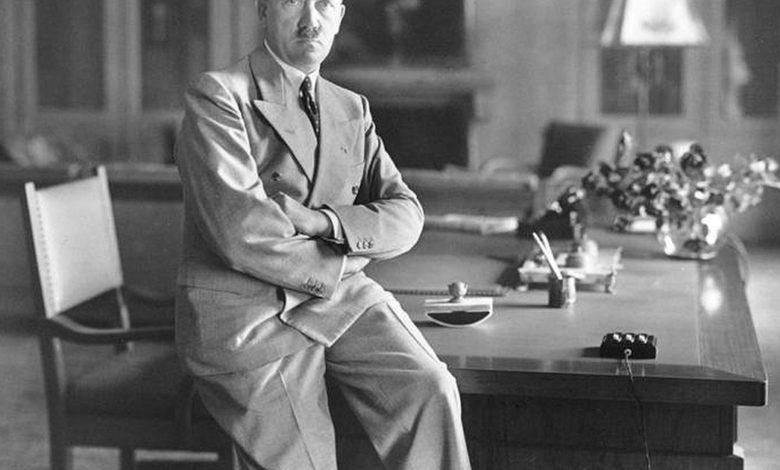
A former CIA agent claims that there is more and more evidence indicating that Adolf Hitler did not commit suicide in the Berlin bunker in 1945, but staged his death and managed to flee to Argentina, where he was sheltered by local authorities and supported in the attempt to rebuild a new Nazi empire.
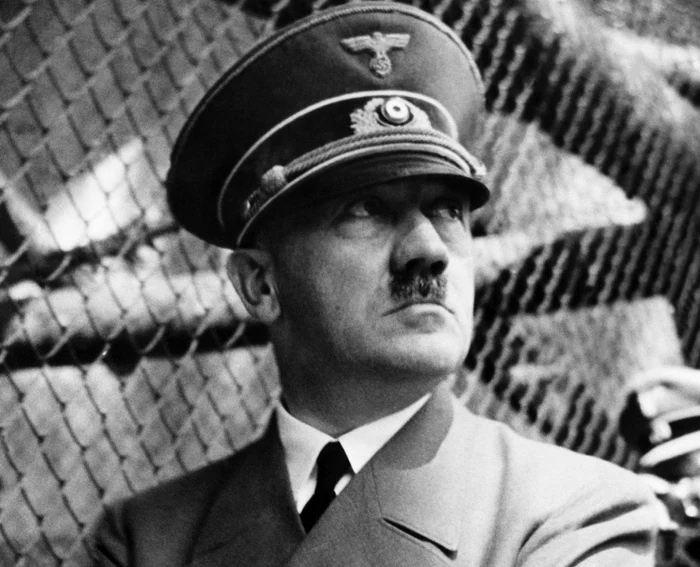
Photo shutterstock
Bob Baer, former CIA officer with more than two decades of experience in information, argues that the official version of history-that Hitler would have committed suicide in 1945-should be re-evaluated, as the Argentine government is to detect documents that could demonstrate links between the Nazi dictator and the South-American government.
Baer told the Daily Mail that the archives about the Nazis fled to Argentina after the war could reveal attempts to build a fourth Reich in South America and the involvement of Argentine officials in support of Nazis or money laundering schemes. It could also include evidence about the support offered by the regime of President Juan Perón to the Nazi former, including in the construction of a hiding place in the province of Misiones, discovered by archaeologists in 2015.
“A lot of money was spent for a complex with sanitary and electricity in the middle of the desert“, Baer told the Daily Mail, adding that Nazi objects were found in the area-including German coins during World War II.
“If you would like to hide someone like Hitler, there you would“Said Baer.
It is not known exactly when this evidence will publish the Argentine authorities, but the theory that Hitler would have escaped has been discussed over the years.
DNA confusion
Most historians agree that Hitler and Eva Braun committed suicide in Führer bunker in April 1945, while Soviet troops were approaching Berlin. Their remnants were kept until 1970, when the Soviet KGB destroyed those of Hitler, keeping only a jaw and a piece of skull, transported to Moscow.
In 1993, after the end of the Cold War, the Moscow authorities offered the public with a skull fragment with a bullet hole, claiming that it would belong to Adolf Hitler. Detailed tests performed in 2009 in the United States showed that the skull fragment belongs to a woman under 40.
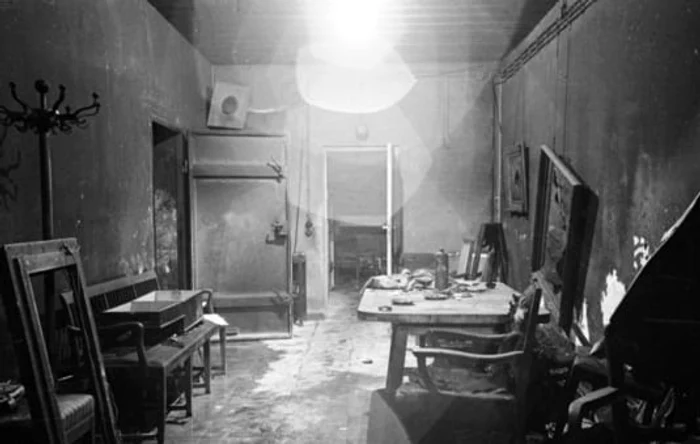
Image from Hitler's bunker
Meanwhile, thousands of Nazi war criminals – including Adolf Eichmann and the “angel of death” Josef Mengele – fled to South America.
Hitler's theories reappeared in 2009, when thorough DNA tests in the United States showed that the skull fragment kept in Moscow belonged, in fact, to a woman between the ages of 20 and 40.
Baer considers this confusion “one of the great mysteries of history to which we will never have a complete answer”.
The inferior mandible fragment has never been tested. He, together with the dental crown, represents, in the opinion of historian Ian Kershaw, the most important evidence of the death of Adolf Hitler.
Other CIA files declassified in 2017 contain a photo from Colombia, from 1955, who looked a man with a striking resemblance to Hitler. Another file, entitled “Hitler's hiding place in Argentina” from 1945, describes a hotel from La Falda, Argentina, owned by Hitler's supporters, where the Nazi leader would have hidden.
However, the CIA has also published an autopsy report that confirms Hitler's death. Baer says the simple fact that the agency investigated these tracks shows that Hitler's survival was taken into account at a high level.
“If, 10 years after the war, the CIA considers these reports worth investigating, it means that at the executive level of the US government there was at least a suspicion that Hitler could have escaped“, Baer shows.
Argentine President Javier Milei authorized the desecretization of the Nazi archives after a meeting, in February 2024, with representatives of the Simon Wiesenthal center. The archives target the about 10,000 Nazis and fascists who fled to Latin America after the war.
John Cencich, a former UN investigator for war crimes, who collaborated with Baer, is more skeptical. He believes that the refugee Nazis did not really approach the Reich reconstruction.
“Many of them still worshiped Hitler and maybe they thought he wasn't dead. But they were just former demoralized Nazis who lived in the past and had only been looking for safety, running away from justice“He explains.