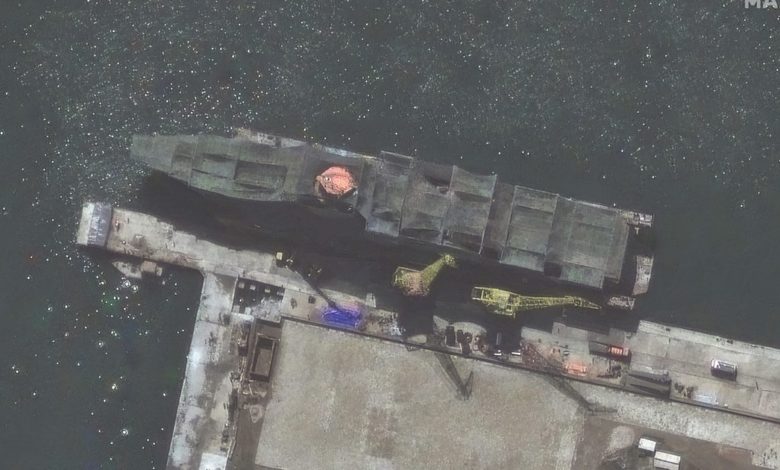
Photographs taken on April 6 by the American company Maxar Technologies depict the shipyard complex in NAMPO, located on the west coast of North Korea. The new ship stands at the waterfront, surrounded by equipment and building equipment.
Analysts from the Washington Think Tank Center for Strategic and International Studies, who were the first to publish photos, identified the unit as a rocket frigate. Near the ship you can see cranes, structural parts and supplies.
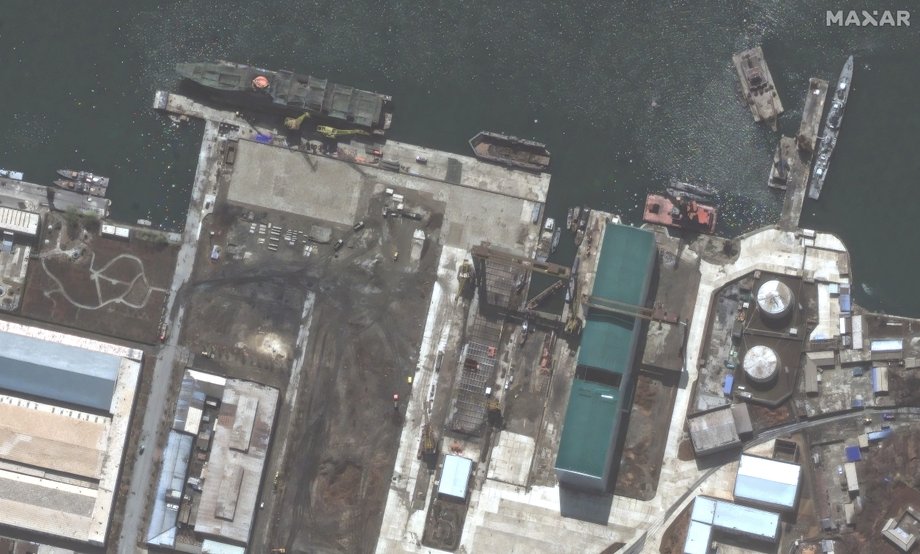
Review of the New North Korea Frigate in the NAMPO Shipyard.
|
Maxar Technologies
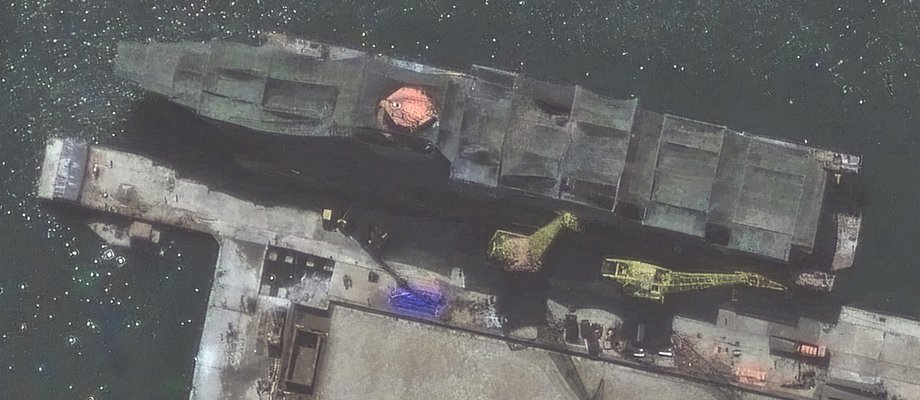
Close -up to the new frigate of North Korea in the NAMPO Shipyard.
|
Maxar Technologies
“The ship is currently undergoing a finishing phase,” wrote Joseph Bermudez Jr. And Jennifer Jun in the blog “Beyond the Pararallel”. “At this stage, equipment and armament are installed before handing over the frigate to North Korea Navy,” it was explained.
According to them, the unit was covered with a masking mesh to hinder the observation from the air. The country has been showing great sensitivity to foreign intelligence and satellite supervision for years.
The mesh prevents accurate measurements, but experts estimate that the ship is about 140 m long, which makes it the largest unit produced so far in North Korea. For comparison – it is about 12 m shorter than American Constellation frigate, the first of which is currently under construction.
Other analysts indicate that the new frigate – apparently one of the two units of this type – will probably be equipped with a vertical starter system (VLS), i.e. a set of launchers intended for launching bullets. This is a novelty in the North Korean fleet, which will increase its combat capabilities and will allow attacks for surface, land and air purposes.
These types of launchers are used in more technologically advanced fleets. For example: American Arleigh Burke rocket destroyers have up to 96 such tools, and cruisers even more.
Another satellite photo taken on April 6 by Planet Labs shows the ship from a different perspective. New photographs appeared several months after the North Kctv North Kctv television published photos of North Korea leader visiting the construction of the unit in December. Since then, Kim Jong Un has visited the Shipyard in NAMPO several times. It is not known, however, how close the frigate is to achieve full operational readiness.
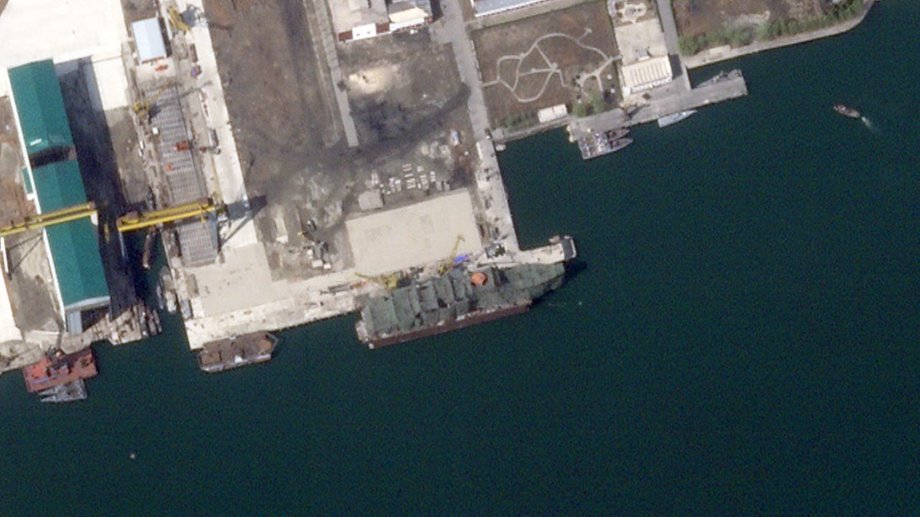
Another sight of the frigate in the Nampo shipyard.
|
Planet
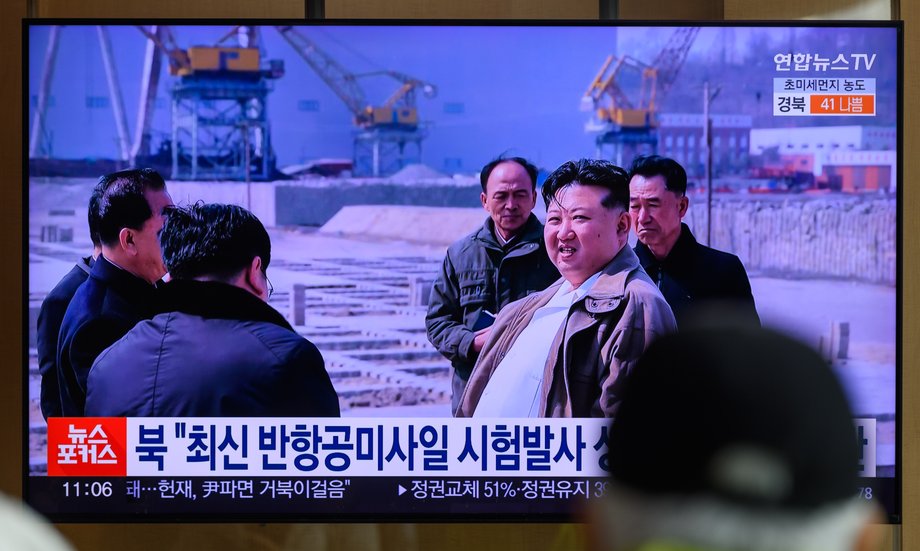
At the end of March, Kim Jong Un went to the Nampo shipyard.
|
Kim Jae-Han / Zuma Press / Forum / Forum Polska Fotographer Agency
In recent years, North Korea has clearly focused on the development of the armed forces, and puts special emphasis on the modernization of the Navy, especially the submarine. Two years ago, the country presented a new submarine equipped with rockets.
According to the report of the American Defense Intelligence Agency (DIE) from 2021, North Korea Navy has about 60,000. people and covers nearly 400 patrol cutters, 260 landing units, 70 diesel-electric submarines and 20 units of sea faces.
Dia estimates that despite the size, the North Korean fleet is mainly coastal forces – without the ability to act in distant waters or to projection of strength outside the region. Shipyards located on both coasts of the country rarely produce due to limited resources.
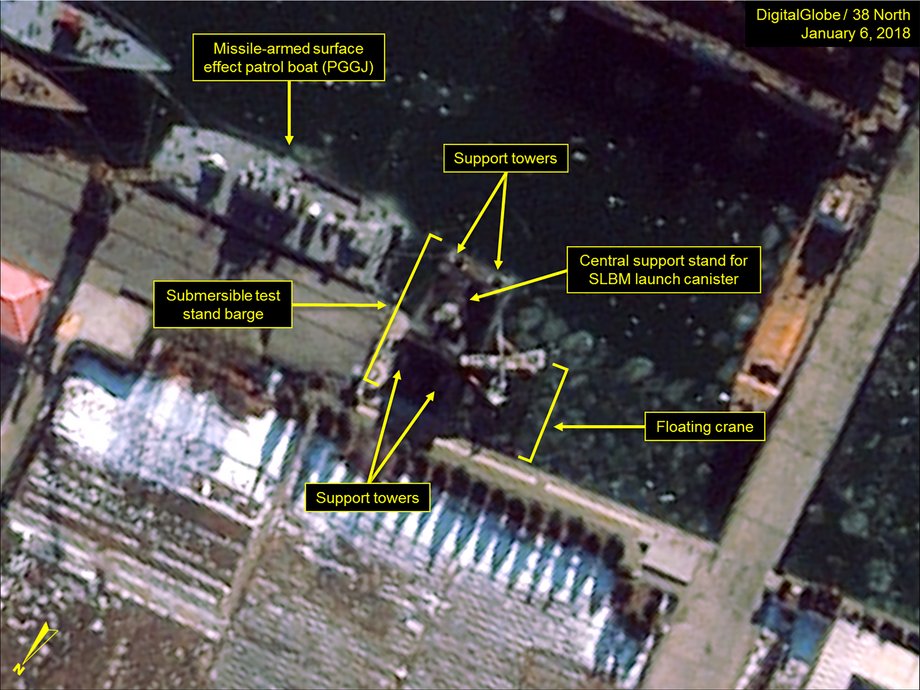
Work is underway on the ship's underwater test position visible in the Naval Shipyard NAMPO.
|
Digitalglobe via Getty Images / 38 North Via Getty Images / Getty Images
As noted by the CNN station, which also analyzed satellite photos, the new frigate seems more than twice as large as any other ship in the North Korean fleet.
Joseph Dempsey, a researcher from the International Institute of Strategic Studies in Great Britain, emphasized that North Korean authorities began to attach more importance to the development of the shipyard industry and the reinforcement of the jacket.
“Although the need to modernize the fleet is obvious, the decision to invest in large surface ships is more debatable, because North Korea does not show the real need or ambition to build a maritime force capable of acting on the high seas” – he wrote in a January blog post.
The article is a translation with American Business Insider edition.