A famous company, symbol of the Italian economy and culture, sold to an investor in Hong Kong


Biattti, the producer of the famous coffee makers in all the households in Italy and appreciated throughout the world, who has a production unit in Romania, has concluded a company's sale agreement to a company owned by a Chinese tycoon, writes Reuters, The Guardian and the Coffee Intelligence website. The news was received sadly by some Italians on social networks.
Founded in 1933 by Alfonso Biatti, an engineer who produced the first coffee maker in his Crusinallo, Piedmont workshop, Bialiatti will be bought by Nuo Capital, an investment holding registered in Luxembourg, who will pay 53 million euros for 78.6% of the shares.
Nuo Capital is led by Stephen Cheng, a member of one of the richest families in Hong Kong.
The transaction should end until the end of June, before launching a tender for the rest of the shares, at a price of at least 0.467 euros each, before the company is delistered from the Milan Stock Exchange.
The purchase is subject to the approval of the regulatory authorities, including the examination in accordance with the regulations that allow the Italian government to block or establish conditions for companies, writes The Guardian.
The transaction reflects a wider trend. Continental China companies purchase participations in important Italian companies, from Pirelli tire manufacturer to Ferretti yacht manufacturer.
Biattti has a production unit in Romania, in Plopeni, in Prahova county.
An Italian story
The story of Biatti began in 1933, when Alfonso Biatti created the Moka coffee maker, a product that became both a cultural symbol and a functional device for millions of Italians.
The coffee shop has democratized the espresso, bringing quality coffee in the usual Italian households, through this octagonal, cheap but elegant device.
“It is a method of preparation by Italian excellence, born in the 1930s and deeply connected to the home and work coffee rituals,” he explained for the Coffee Intelligence Massimo Battaglia, Research Coffee Leader at Accademia del Caffè Espresso.
Biatti faced difficulties during World War II due to the lack of aluminum, but was then revitalized by Alfonso's son Renato.
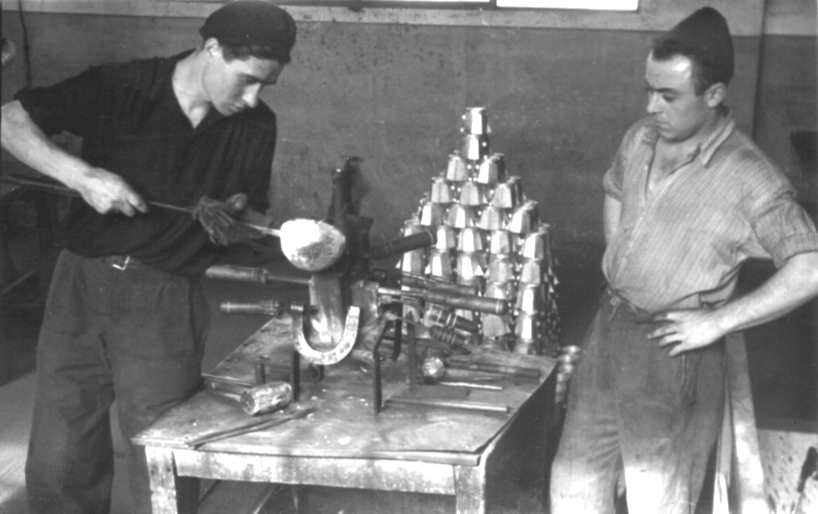
He transformed the coffee maker into a global symbol and also borrowed the image-transformed into a caricature printed on the side of the caftar.
Although other brands reproduced the coffee maker, a study conducted in 2010 showed that 90% of Italian households had a Biatti device.
The design, influenced by Art Deco and futurism, has remained almost unchanged over the decades.
The coffee maker, produced in over 320 million units, is composed of four elements of aluminum or steel, a gasket and a handle. The name “Moka” comes from the city of Portuar Mokha in Yemen, an important center for the export of coffee to the West.
The product has received international recognition and is now exhibited in the permanent collection of Triennale di Milano and Moma in New York.
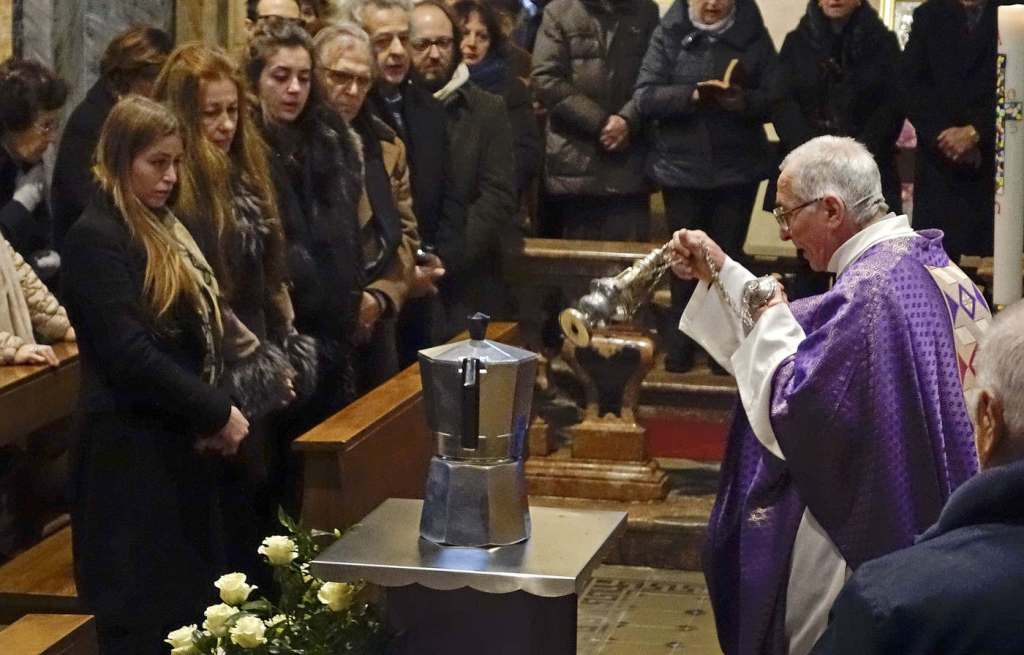
Renato died in 2016, his ash being buried inside a huge moka.
In decline
In the 1990s, the company passed into the hands of Francesco Ranzoni, which listed it on the stock exchange in 2007 and tried to extend it into new sectors, diversifying the production with cooking and home appliances.
Biatti has had difficulty in recent years due to reduced investments and competition made by capsule espresso makers.
Capsule devices, produced by giants such as Nespresso and Lavazza, offered comfort and variety, which resonated with young consumers. The longer coffee preparation ritual with the Biatti device has lost its charm for many, writes Coffee Intelligence.
The trend reflects an evolution towards comfort and personalization, capsule brands offering a variety of flavors and mixtures that respond to modern tastes – although they are rejected by purists. Lavazza, Illy and Nespresso have dominated this space, offering elegant devices and doses adapted to modern tastes.
Ironically, the “Made in Italy” coffee coffee has been mostly manufactured in China, only the final assembly being made in Italy. This strategy allowed Bialiatti to reduce the costs, but also undermined the premium reputation.
Meanwhile, competitors such as Alessi, who produces a stove espresso machine in the upper range, have gained ground among those consumers willing to pay more for the Italian handicraft.
Biattti expanded by opening stores in shopping centers, but business suffered during the Covid pandemic, but his adventure in selling kitchen utensils was a failure.
In 2024, the company registered a loss of 1.1 million euros and ended the year with net financial debts adjusted by EUR 81.9 million.
Egidio Cozzi, who will remain as executive director of Biatti after the purchase, said: “Today, Biatti is a more solid company, with a clear strategic vision and a world recognized brand.”
“Italy is dead”
The announcement of the transaction was widely reported in the Italian press with bitter titles like that of Rainews: “at Moka Paris Cinease” (“Moka coffee makers”).
The repubblica titled “Buon Viaggio Bialiatti, the hour of Omino, the Baffi Il Caffè you have cups” (“Adio Biatti, the little mustache will make coffee for the Chinese”).
A crying emoticon was the most used reaction to another article posted on the Facebook page of La Repubblica.
Also there, some commentators reacted with dissatisfaction. “Italy is dead,” said one.
“Another symbol of” Made in Italy “leaves, but I put in the government patriots who said” Made in Italy “in every five words,” commented another.
What is the Chinese company pursuing
What are the advantages for Hong Kong? The answer is in a mixture of strategy and economy. The East Asia region is trying to gain access to a premium market, by capitalizing on European brands, writes Coffee Intelligence.
Luxury Italian brands have a strong presence in China, especially in Shanghai. According to the consulting company in the field of Luxeco fashion, based in Shanghai, Bulgari, Gucci and Bottega Veneta are among the most sought after Italian brands, followed by Fendi, Max Mara and Valentino.
Through the purchase of Italian brands, writes Coffee Intelligence, Chinese companies get access to consecrated markets, a loyal customers' base and a quality reputation that Chinese brands are still trying to achieve. Italian companies, in turn, benefit from capital and Chinese distribution networks, which allows them to expand on the Asian markets of the middle class, rapidly growing.
Italy, which emphasizes crafts and luxury, is an important target for Chinese investors who want to associate with high quality products. And coffee is a very attractive sector.
Coffee consumption has grown vertiginously in China, and Shanghai is a city with a large number of coffee shops and coffee shops.
The trend is particularly pronounced in urban areas, where young consumers adopt coffee culture and stimulate demand for both instant coffee and premium preparation methods.
China has a huge potential for Italian brands. The Italian giant Illy is considering the Chinese market, and Lavazza intends to open about 1,000 cafes in China by 2028.
Politics and business
The purchase of the Italian brand comes in a delicate moment for the Prime Minister of Italy, Giorgia Meloni, explained Wolfango Piccoli, co-president of the consulting department on political risk at the Teneo research company, based in London.
Meloni will meet on Thursday with Donald Trump in Washington, in an effort to relaunch the US-EU dialogue in the middle of a commercial war. But Italy's relationship with China could be problematic.
“On the one hand, she aims to reset the relationship with China after the withdrawal of Italy at the” Belt and Road “initiative,” Piccoli told The Guardian. “On the other hand, she is eager to position himself as President Trump's favorite European partner,” he said.
While Donald Trump, involved in a commercial war with the whole world, has suspended many taxes, he kept those imposed on China, and some analysts believe this could bring China and Europe closer.
Spanish Prime Minister Pedro Sanchez even met with Chinese President XI Jinping in Beijing last week and urged a closer cooperation with China, in order to oppose “unilateral acts of intimidation.”
Rome, however, was away from his comments.
“The great confrontation is not between the US and Europe, but between the US and China,” said the Italian defense minister, Guido Crosetto, in an interview with Reuters.
Meloni is more than cautious about China, which he considers a strategic rival of the West. In 2023, she officially withdrew Italy from the Chinese initiative Belt & Road, Xi Jinping's emblematic project to develop international infrastructure.