The occupied territories remain of Russia, the sanctions are relaxed, and the accession of Ukraine to NATO is excluded, provides for a US -proposed plane

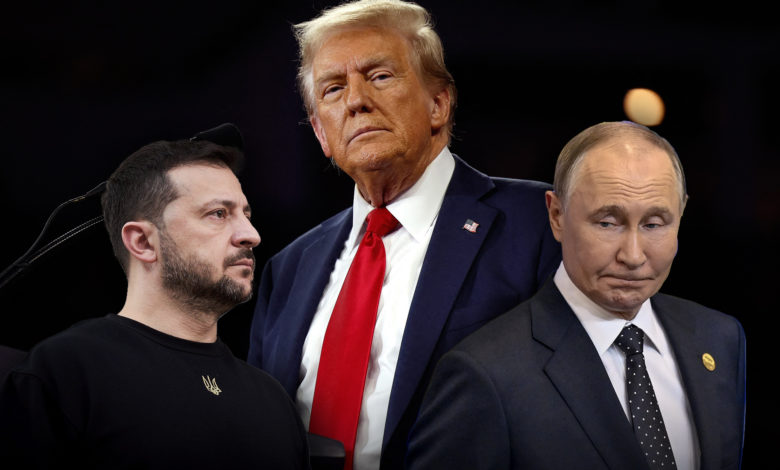
The United States has presented to European allies a plan to cease fire in Ukraine, which includes a potential reduction in sanctions imposed on Moscow and leaving Ukrainian territories under the control of Russian forces, reports Bloomberg on Friday, citing anonymity, official European officials familiar with this issue.
The proposal was presented during Thursday's discussions in Paris, in the context of the visit of the head of American diplomacy, Marco Rubio, discussions attended by officials from the UK, Germany, France and Ukraine, notes The Moscow Times and The Kyiv Independent.
According to the US State Department, the plan emphasizes the Washington's vision for a “lasting and lasting peace” and was shared with “all parties” following the recent discussions between the State Secretary Marco Rubio and the Russian Foreign Minister Sergei Lavrov.
Bloomberg writes that the US proposal would freeze the war along the current front lines, actually leaving the Ukrainian territory occupied under Russia's control.
It is unclear whether the United States proposes the recognition of the de facto control of the mocova over the occupied territories or the recognition of jure that they belong to the Russian Federation.
Also, the plan blocks Ukraine's request to join NATO, in exchange for lifting sanctions that have not been specified.
The framework proposed by the US does not constitute a final solution and would require further discussions with Ukraine, according to Bloomberg. Subsequent discussions are scheduled to take place in London next week.
One of the cited officials said for Bloomberg that European allies do not consider recognizing the occupied Ukrainian territories as being Russia.
Although the prestigious American publication did not specify what sanctions could be high, the Kremlin said that reducing sanctions is a prerequisite for restoring relations with Washington. In particular, Russian officials insisted on raising aviation restrictions.
Rubio's warning
Before leaving France, Rubio said that any future peace agreement could involve reducing sanctions and granted negotiators several “days” to determine if a cessation of fire is achievable. However, last month, the leaders of the European Union agreed to tighten the sanctions against Russia.
The head of American diplomacy has said that President Donald Trump is still interested in a peace agreement, but has many other priorities in the world and is willing to move on, if there are no signs of progress.
“We must establish in the following days whether (peace) is feasible or not, and if it is not possible, we have to go further,” because “the United States has other priorities,” Rubio said at Le Bourget Airport in Paris before climbing the plane.
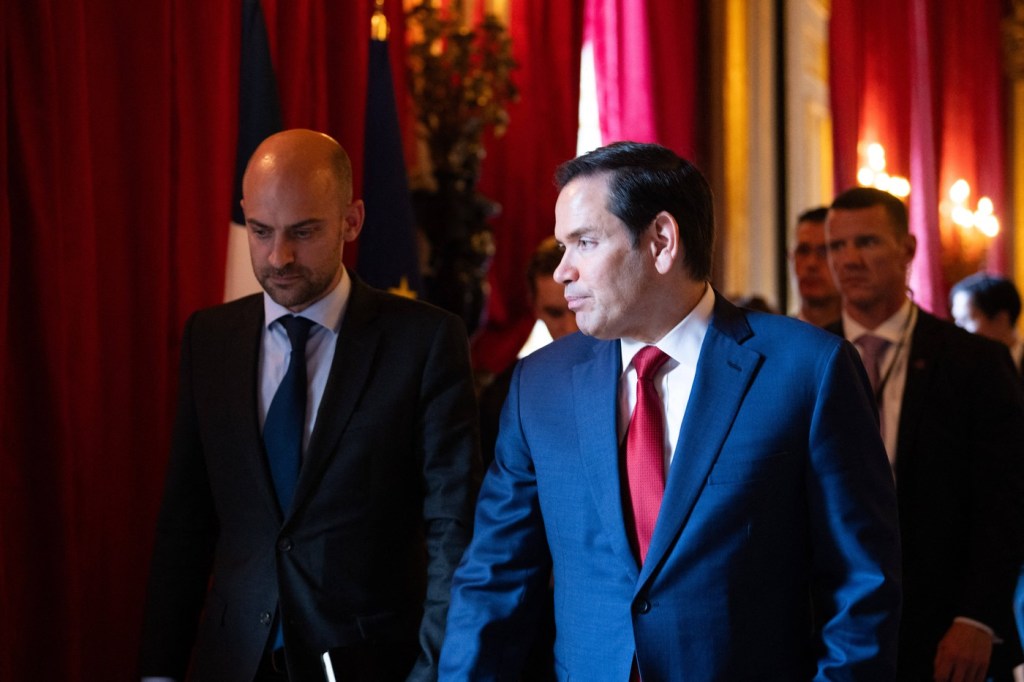 The US threatens that it will withdraw from negotiations for Ukraine if there is no progress. Rubio: “The United States also have other priorities”
“We will not continue with this effort weeks and months in a row. Therefore, we must determine very quickly now, and I mean a matter of days, whether or not this is achievable or not in the next few weeks.
Marco Rubio believes that London, Paris and Berlin could help and make things advance. “I think the UK, France and Germany can help us, they can make things advance and bring us closer to a solution. We have found their very useful and constructive ideas,” said US Secretary.
After returning to power, in January, US President Donald Trump took an unexpected approach by Russian President Vladimir Putin and claims to be trying to get a quick armistice in Ukraine, but so far the negotiations have been passing, according to AFP.
The Kremlin admits the “difficult” stage of the negotiations
Kremlin spokesman Dmitri Peskov acknowledged the “difficult” stage of negotiations on Friday, but said that Moscow remains open to dialogue and that he would defend his interests.
He also criticized the discussions in Paris because they contained what he called “calls to continue to militarize Europe and Ukraine instead of looking for solutions.”
Trump's emissary evokes the status of “five territories”
President Trump's special emissary for Russia, Steve Witkoff, who also participated in the Paris discussions, suggested that a potential peace agreement could focus on “five territories”.
Witkoff, who met Putin at St. Petersburg on April 11, described the meeting as a productive one, specifying that the Russian president expressed his wish for “permanent peace”, although “it took us some time to reach” at that point.
“This peace agreement refers to these so-called five territories,” Witkoff said on Monday, April 14, for the American Television Fox News. “But it is much more than that. I think we could be about to achieve something that would be very important for the whole world,” added President Trump.
Although Witkoff did not call the territories directly, he seemed to refer to Crimea, the peninsula illegally attached by Russia in 2014, and to the partially occupied Ukrainian regions – Donetk, Luhansk, Zaporojie and Herson – following the invasion. Moscow annexed the four regions in 2022.
Also, the US emissary alluded to a wider strategic ambition related to business incentives. “I see a possibility of remodeling the relationship between Russia and the United States through very convincing commercial opportunities,” Witkoff said. “This provides real stability to the region,” he said.
Zelenski's position
On Friday, April 17, Ukrainian President Volodimir Zenski accused Witkoff of spreading Russian propaganda and that he has overcome his duties by discussing the Ukrainian territory, in peace discussions, on indirect channels with Moscow.
Zelenski has repeatedly stated that Ukraine will not recognize, regardless of what a possible peace agreement will look like, the Ukrainian regions of Russia.
Bloomberg officials have also said that if Russia does not agree to stop battles, negotiations are in vain. They added that it is essential to be offered to Ukraine security guarantees so that an agreement can be reached.
The US and Ukraine agreed with a complete ceasefire on March 11, but Russia rejected it. In contrast, Ukraine and Russia, through US mediation, agreed on March 25 to stop attacks on energy infrastructure and Black Sea struggles. However, the two parties have been accused since then, systematically, of violating this partial armistice.
Follow the latest evolutions of the War in Ukraine LiveText on HotNews.ro