The worldwide world order. How could Trump, Putin and Xi reconfigure the map of global powers

The resumption of the dialogue between US President Donald Trump and the Kremlin leader, Vladimir Putin, takes place in a moment of high geopolitical tension, in which the Ukraine war becomes more and more a piece in a global repositioning game.
In parallel, China is increasingly asserting its intentions to model the world order in its own terms, which makes the current dynamics, sometimes remind of the moment-the post-war turning point where the future of Eastern Europe was decided above the ends of those who were going to live it.
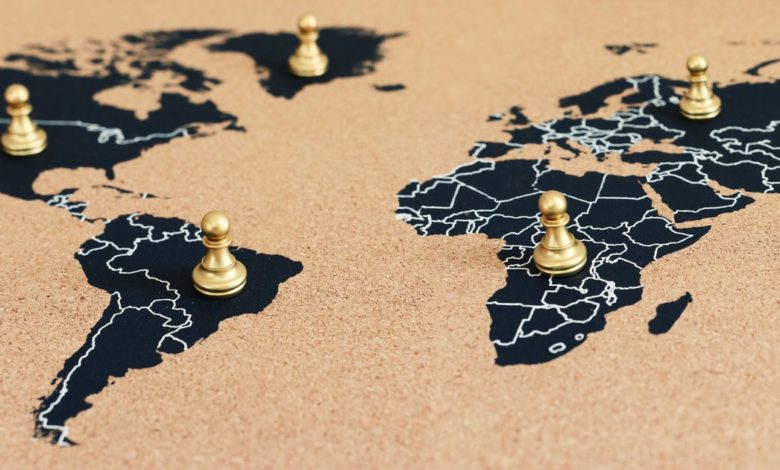
A recent material published by Newsweek visually surprises this new possible global scenario, in which Washington, Moscow and Beijing divide, tacitly or explicitly, the spheres of influence – a logic that seems to ignore the lessons of the past and the foundations of international law.
A new Ialta? Ukraine becomes exchange currency
Recent diplomatic meetings, including Trump's call to Putin and US negotiations in Saudi Arabia, have generated a temporary ceasefire and an agreement on the attacks in the Black Sea area. However, in the absence of real guarantees for the sovereignty of Ukraine, these discussions risk gaining the dangerous connotation of an agreement between the great international actors to the detriment of the smaller states.
Vessela Tcherneva, Deputy Director of ECFR, points out that this approach reminds of the 1945 conference: “Ialta was about the great powers that decided the future of Eastern Europe. Now, we see the same type of logic applied to Ukraine. To decide on Ukraine without Ukraine means, in fact, to decide on Europe without Europe.”
Eastern Europe between US indifference and Russia's ambitions
The position of the Trump administration, focused on strategic insulation and repositioning resources in front of China, seems to leave Eastern Europe in a security vacuum. JD Vice Vice President and the Secretary of Defense Pete Hegseth sent clear messages: Ukraine will not return to the 2014 borders, and European states must invest more in its own defense.
This approach was received favorably by leaders with pro-Kremlin sympathies in the region, but generates anxiety in the pro-European capitals. Tcherneva observes that Russia strengthens its influence not only military, but also ideologically, by destabilizing democratic discourse in countries such as Slovakia, Bulgaria, Republic of Moldova and even Romania.
In recent months, several protests have taken place in the region against governments suspected of approaching Moscow. In Slovakia, a law on NGOs, similar to the one on “foreign agents” in Russia, caused extensive demonstrations. In Serbia and Georgia, the opposition accuses the slip governments towards authoritarianism under the umbrella of Russian influence.
Central Asia: Russia loses land in front of China
If in Eastern Europe Russia still maintains a significant influence, in Central Asia, Beijing seems to advance methodically. Xi Jinping's first external visit after Pandemic was in Kazakhstan – a strategic signal, given the presence of a great Russian minority in the north of the country.
Mongolia, energy dependent on Russia and Economic on China, received Vladimir Putin, despite the international arrest warrant issued by the CPI. It is an example of precarious balance between geopolitical constraints and internal development needs.
Professor Stefan Wolff warns that the relationship between Russia and China is not an equality, but of increasing dependence on Moscow towards Beijing. “If Russia does not obtain a favorable agreement with the US in Ukraine, it will sink even more in the asymmetrical relationship with China,” he explains.
Latin America and US withdrawal strategy
Against the background of tensions with China, Trump seems determined to reaffirm his domination in the western hemisphere. Initiatives such as the possible acquisition of Groenland or the control over the Panama Canal shows a geopolitical vision focused on reaffirming American sovereignty in front of economic rivals.
However, China's more and more active presence in Latin America complicates Washington's plans. Beijing consolidated economic relations in the region question the US ability to restore their control in the area without an indirect confrontation with China.
In parallel, tensions in East Asia, especially those related to Taiwan and the South China Sea, increase the pressure on the American administration to define a firm position against China's military ambitions. Wolff believes that a tacit understanding could be reached in which the US will accept China's dominance in the region, in exchange for preserving stability in other hot spots.
To a multipolar world or to a world without rules?
The current reconfiguration of force relations on the global stage no longer has the predictable character of the Cold War. Instead of a binary logic, a fragmented world is outlined, in which the rules are negotiable, and the small states can become, again, collateral victims of the ambitions of the great players.
In this context, the lack of a common European project and the absence of a firm commitment from the US to its allies risk creating a dangerous power emptiness. Ukraine is just the first test. And its result could become a precedent.