The effects of lies: “The misinformation against vaccination in girls started on television in Romania, long before Facebook.” A doctor explains why vaccinations have reduced and show what danger awaits us

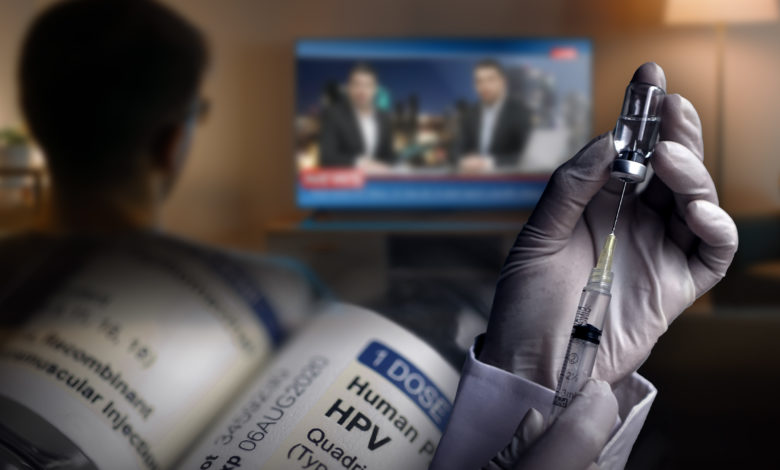
42,205 Romanians between the ages of 19 and 45, out of a total of 2.8 million women, have been vaccinated against the HPV virus after December 1, 2023-since the Romanian state decided to offer the compensated vaccine of 50% for women in this age group. Dr. Gindrovel Dumitra recalls that the false myths against the vaccine are not the production of the digital era, they have come in a long time.
- The number of women who die of cervical cancer in Spain is twice as lower than in Romania.
- The article is part of the PULSE project, an international journalistic consortium in which Hotnews is a part and providing the public documented and diverse perspectives, with information from several countries, about issues of great public interest. The article was written by Alina Neagu, along with Lola García-Ajofrín (El Confidential-Spain), Maria Delaney (The Journal Investigăs-Ireland), Krassen Nikolov (Mediapool-Bulgaria), Marina Kelava (H-ater.org-Croatia) and Iev Kniukštienė (Delfi-Lithuania).
Why failed the campaign started in 2008, when only a few thousand girls got Anti HPV? Why do we have a few tens of thousands of vaccinated women today? Dr. Gindrovel Dumitra remembers that “first, it was very important the way he debuted that campaign, because, at that time, we were talking about a vaccine that had appeared for the first time in Romania.”
“We woke up at once with an avalanche of unverified information that was taken over by the press. At that time there was no Facebook or it was a little used. Practically, the audio-visual press was the law regarding the transmission of information. Well, if on the television they said that in America, I could not know how much, there was no more than the information. Instinctive, but protective for their children, which from my point of view is as natural as possible, ”says the doctor.
The state -acted professionally against lies
“What was missing at that time was the inability to react of the state. And I say the state, not necessarily of the professional area, because, theoretically, the state already, in one way or another, had managed until then a process of vaccination that went naturally, without special efforts from the authorities-the efforts were only in our office, Since then it has overwhelmed us, it has been over our ability to answer ”, recalls Gindrovel Dumitra.
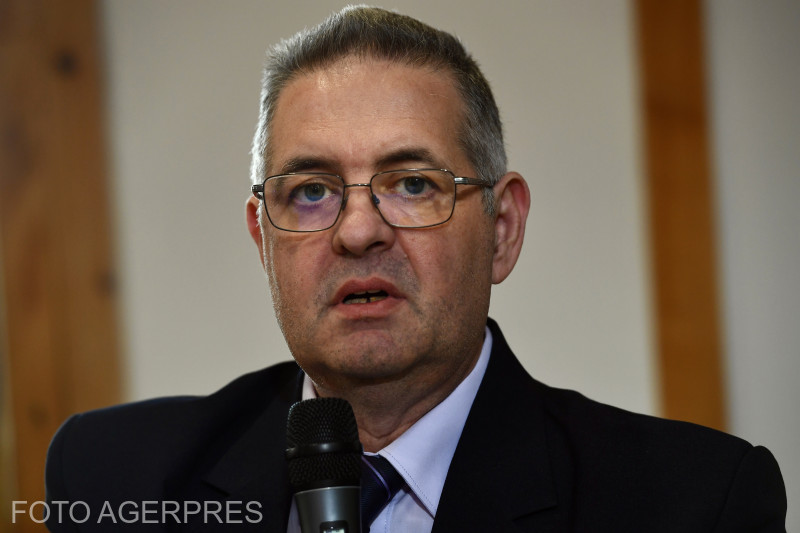
Then, the efforts to resume the vaccination against HPV started in 2013, “when we, at the National Family Medicine Society, made the first vaccination program in which we addressed, at that time, through a few components: first, information offered to family doctors from several counties to know how much the questions can be asked.
Sometimes there were requests without being honored
“Basically, we tried to come up with answers for all the myths that were, at that time, in circulation. So that my colleagues could inform the parents of the little girls who were eligible, who could be vaccinated, and further to collect requests from those parents, to address to the public health directions,”
“I remember that at that time approximately 6,000 requests from my colleagues in the country were gathered, applications that have never been honored. Those little girls for whom the parents have submitted the application were not even vaccinated through a national program,” says the coordinator of the family vaccinology group in Romania today.
It was only in the years 2017-2018 “I found an agreement at the Ministry of Health and I resumed this effort from 2013-2014, together with the Ministry of Health. I had a program to prepare my colleagues, again I updated the information, because things have evolved until now, and starting with 2017, they started to be collected.” Statistics show that mortality will increase, in the conditions of reducing vaccination. It's exactly the fear of the World Health Organization.
WHO has developed a strategy to eliminate cervical cancer
In 2018, the World Health Organization adopted a global strategy for 2020-2030, which aims to speed up the elimination of cervical cancer.
The global strategy has as objectives:
- 90% of girls should be completely vaccinated with HPV vaccine until the age of 15.
- 70% of women are subjected to a high performance test for detecting cancer or pre-cancerous lesions in the cervix up to 35 and again up to the age of 45.
- 90% of women identified with cervical diseases to receive treatment (90% of women with precancerous lesions and 90% of women with invasive cancer).
Australia is the first country in the world to announce that it would completely eliminate cervical cancer cases by 2035. Australia has invested 48 million euros in the cervical cancer screening program and anti-HPV vaccination.
Croatia vaccinates from the age of 9
In Croatia, anti-HPV vaccination programs have been available in some cities since 2077, but a national free vaccination program has been introduced in 2019.
In Croatia, vaccination is free for all teenagers from the eighth grade and up to young people aged 25. Upon request, vaccination can be done from the age of 9.
Nearly 300 women in Croatia are diagnosed with invasive cervical cancer in a year, according to data from the Cancer Register of the Public Health Institute in this country. Over 100 women die annually because of the disease. Croatia has a population of about 4 million inhabitants.
In Lithuania, half of women diagnosed with cervical cancer die. The same as in Romania
Lithuania vaccinates children for free from the age of 11 – girls from 2016, and from 2023, and boys.
This country does not provide free or compensated vaccination for adults, but adult women are advised to go to tests to the gynecologist annually.
Lithuania is one of the European countries with the highest incidence of cervical cancer and mortality caused by the disease. In a population of 2.8 million inhabitants, 400 women are diagnosed annually with cervical cancer, and 200 of them die because of the disease.
Ireland vaccinates both girls and boys, and has a vaccination recovery program and at maturity
Ireland introduced, in 2010, the vaccination against the HPV virus of 12-13 years in the national vaccination program. Later, he expanded vaccination to young people up to 18 – girls and boys.
Since 2023, Ireland offers a vaccination recovery program for women up to 24 years old and men up to 21, who have not been vaccinated in adolescence.
And the vaccination program in Ireland was in a deadlock in 2016-2017, against the backdrop of false information on social networks.
The results of the cervical cancer screening program in this country have shown that anti-HPV vaccination has significantly reduced, in recent years, the appearance of pre-cancer lesions in young people up to 25 years old.
This year, the Minister of Health in Ireland announced a financing of over 500,000 euros for the plan for the elimination of cervical cancer, until 2040.
The number of women who die of cervical cancer in Spain is twice as lower than in Romania
Spain was one of the “pioneers” of the HPV virus vaccination, which it has introduced in some regions since 2007, and in the rest, since 2008.
Initially, the vaccine has been recommended for teenage girls, and from 2024 the boys are vaccinated. However, Catalonia was the first region to introduce vaccination for boys, since 2022.
It is estimated that in Spain live around 18 million sexually active women, over the age of 18, of which about 2 million are HPV carriers, and about 400,000 could have pre-cancer lesions.
Each year, around 2,000 cases of cervical cancer are diagnosed in Spain, and over 800 women die in one year-half-half compared to the figures in Romania.
Spain does not have a vaccination program for adult women, but has introduced a cervical cancer screening program that addresses all women between 25 and 65.

The PULSE project is a European initiative to promote cross-border journalistic partnerships, co-financed by the European Commission (DG Connect) within Multimedia actions by Grant Agreement LC-0272862. HotNews.ro collaborates in the project with other prestigious publications in Europe: Delfi (Lithuania), Deník Referndum (Czech Republic), the largest Austrian newspaper Der Standard (Austria), some of the largest publications in Greece – Efsyn, El Confidential, Spain, the largest Polish newspaper Gazeta Wyborcza, the oldest analytical and information site. MediaPool, one of the largest HUVG HUVG and Italian newspaper with economic profile for 24 hours, one of the oldest and most powerful publications in the peninsula.
Three renowned transnational media organizations-OBCT (Italy), N-OST (Germany) and Voxerop (France) will coordinate the project activities.