China and US chess games. Three scripts of an expert in geopolitics

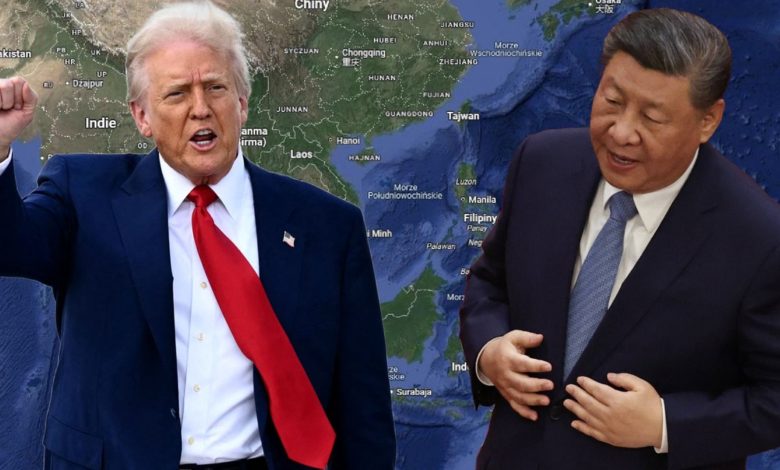
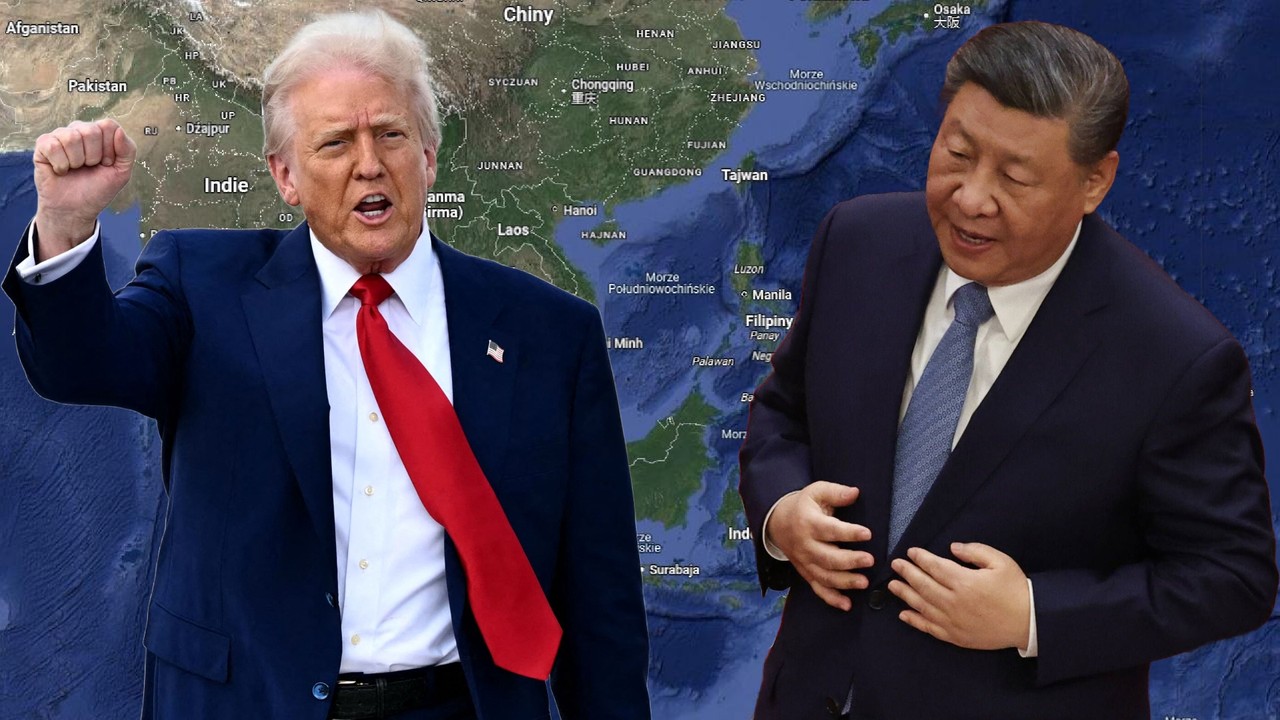
The leaders of the Southeast Asian countries are afraid that the struggle for hegemony in the Pacific may destroy the hopes for regional growth, stability and prosperity. In a globalized world will remain waiting for the domino effect.
One of the scenarios assumes an explosion of a substitute conflict escalating into unknown sides. And the Indo-Pacific region is also the fifth largest economy, and its node of marine trails transports a significant part of world energy and trade. So there is something to fight for. Dr. Prashanth Parameswaran, an expert on the region from the American center of Wilson, presents three forecasts about what may happen soon.
“This competition … is a challenge for peace and stability, which are at the basis of the pursuit of growth and prosperity,” said Malaysia Prime Minister Anwar Ibrahim in a recent speech, referring to the effects of competition between the United States and China in Southeast Asia. Anwar's comment-made at a time when Malaysia exercised annual rotation in the Association of Nations of Southeast Asia (ASEAN)-is only one of many.
Southeast Asia is the third largest cluster of people in the world. This region is also the fifth largest economy and its The node of sea trails transports a significant part of world energy and trade. Fears that the new competition of great powers can inhibit economic growth is not unfounded.
The leaders of Southeast Asia have been repeating for years that in a multipolar world in which many powers coincided in the region, their agenda matters and would prefer to avoid choosing between the United States and China.
This first country has long been a security supplier and an investor, and the second has become the main trading and development partner in the last two decades. As the Prime Minister of Vietnam Pham Minh Chinh once put it: “In the case of competition, it must be healthy and even … in a world full of turbulence, strategic competition and many choices, Vietnam does not choose any side.”
Next to the South China Sea there is a gate between the Indian Ocean and the Pacific Ocean there is the Indo-Pacific artery-the Malakka Strait. Straits are also important: Lombok, sundajska and Wetar
However, officials from Southeast Asia are increasingly aware that in practice both superpower will use their pressure to affect the calculations of regional countries.
American officials tried to push Malaysia to exclude the Chinese company Huawei from the 5G network, while Beijing's benefits in Cambodia caused that the country canceled military exercises with the United States.
The nations that have gained in so -called changes in the supply chain “China+1”, such as Vietnam, are subjected to increasing control, because they serve as bypassing in third countries than real economic intermediaries.
These tensions intensified with the new president in the White House. In the first quarter of US President Donald Trump's administration, e.g. visa restrictions on Thai officials were imposed in connection with the deportation of Uvelin to China. Singapore has also been “awarded” due to the potential redirection of chips to China to join the Chinese company Deepseek dealing with artificial intelligence.
Just a few weeks after getting to know the results of the US election, the leading Chinese diplomat told the countries of Southeast Asia that among “commercial intimidation”, which hinders regional supply chains, “it is obvious which choice is really consistent with countries and people in this region, and which force moves contrary to the historical trend.”
Three scenarios
Southeast Asia countries are under growing pressure to adapt to the new reality
Looking to the future, the first scenario that is most likely Further intensification of the US-China competition in Southeast Asia. As part of this scenario, both the US and China will probably continue to press on individual countries of Southeast Asia to adapt to their interests in strategically important sectors, including defense, critical minerals, artificial intelligence, undersea cables and semiconductors.
However, as the Singapore Prime Minister Lawrence Wong noted, such sector risk reduction, which begins in areas such as advanced technologies, can easily transfer to wider economic interactions and lead to “more fragmented and separated world economy” region to get closer to the advanced world.
Indeed, one of the main economic advisors of President Trump said at a conference in June last year that the world can be divided into three colorful buckets in geoconomically: red (enemies), green (friends) and yellow (uninvolved). For many people in Southeast Asia, this characteristics recall memories of intensive cold-war conflicts, marked by regional divisions and substitute wars in this area.
A replacement war in Southeast Asia
The second scenario, which is less likely, is Competition between the USA and China, which turns into a real conflict in Southeast Asia. The most likely inflammatory point for the region is the Chinese-Filipino saber paddle in the South China Sea. Filipino officials for defense have repeatedly repeated that China's possible actions, such as imposing air defense identification zone or limiting flight freedom, would cause manila and similarly thinking countries to “counteract” Beijing activities with the help of previously agreed “emergency means”.
The future escalation of tensions could provoke the reaction of the United States as part of the American-Filipinian military alliance. The Philippines are to be presided over by ASEAN in 2026, placing the South China Sea at the center of the Regional Agenda.
The growing aggression of China towards Taiwan is another cause for concern. Although Taiwan is geographically more distant than most Southeast Asia as an inflammatory point, one of the estimates predicts that war may reduce the gross regional domestic product by over 20 percent. and cost a global economy $ 10 trillion (38 trillion PLN 393 billion). The wave effect would go beyond economics, probably causing a resettlement or imprisonment of hundreds of thousands of migrating employees from Southeast Asia in Taiwan.
The US-China competition is weakening
The third scenario, which is the least likely, assumes that Competition between the United States and China will significantly decrease. This scenario is difficult to imagine in current circumstances, taking into account the state of relations between Washington and Beijing. However, it is not impossible.
Some officials from Southeast Asia are afraid that a change in US foreign policy towards a more global approach, not the “Asia” strategy, may lead to a reduction in the attention of the dedicated Southeast Asia. Such a change can cause the US to be more busy managing issues in regions such as Europe, North America and the Middle East.
This approach would probably narrow the attention of Washington to the closest US partners, such as the Philippines and Singapore, as well as several so -called “pendulum states”, such as Indonesia and Vietnam. This, in turn, could strengthen China's impact in a wider region, especially in smaller countries such as Cambodia or Laos.
Another path may include better relations between China and the United States through transactions, even if they are far from extremes, such as the condominium G2, which has long been afraid. It could at least temporarily cool the tension on the US-China line or resist existing barriers that facilitate coexistence and reduce the risk of open conflict. Some officials from Southeast Asia point out that more based on specific issues Cooperation could at least discharge some of the growing tensions in US-China relationsan example of which is a common interest in combating giant cheaters networks in the Mekong region.
Which of these scenarios will be implemented will depend on several variables. In a speech delivered on a recently key regional forum, general secretary asean Kao Kim Hourn said that a coincidence of disturbing forces, including geopolitical competition, requires “far -sightedness, adaptive abilities and decisive actions.”
The scope at which the countries of Southeast Asia will be able to meet these requirements will be a key factor affecting the way they will adapt and manage various aspects of the US-China competition in the region in the coming years.
Prashanth Parameswaran is an employee of the Wilson Center and the founder of ASEAN WONK. He analyzes foreign policy and security in Southeast Asia and the Indo-Pacific region