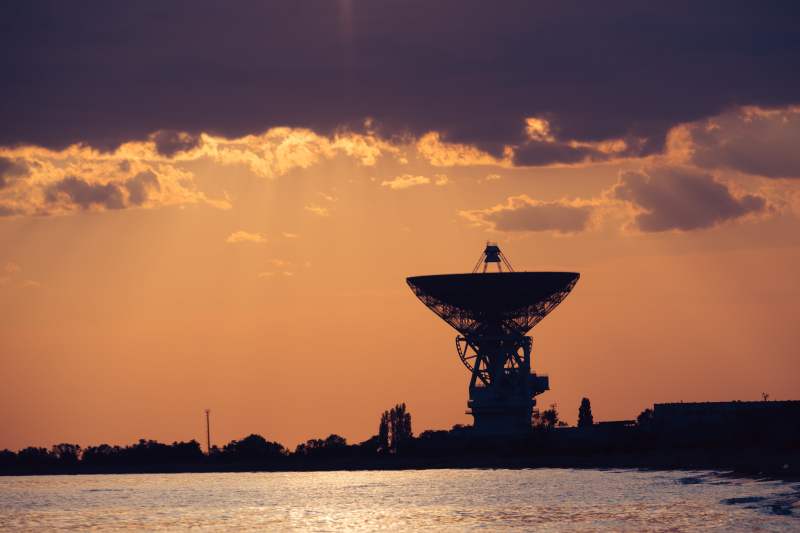
RT-70 YEVPORTORIE RADIOTECOL of CRIMEEA, PHOTO: Shutterstock
The Ukrainian defense forces destroyed a huge radiotemscope in Crimea, a powerful planetary transmitter used to support missions in the distant space and to send messages to extraterrestrial civilizations, Gizmodo reports.
Ukraine destroyed the RT-70 Yevpatoria in a drone attack to prevent Russia from using it for military communications purposes, according to space.com.
The Russian defense forces had recently performed modernizations of the radiotelescope to support the attacks on the Ukrainian territory, but the 70 -meter parabolic antenna was built by the Soviet Union to study the planets Venus and Mars and to communicate with the space probes in the distant space.
The Ukrainian armed forces published at the end of August a video recording with the moment of the attack, but it has only now drawn the attention of specialized technology sites, reminiscent of the fascinating history of the radio.
Radiotecopul was built during the US and USSR space race
The RT-70 was one of the largest radiotecopes in the world. Built in the 1970s, it was capable of transmitting and receiving signals for space experiments, including those carried out by the famous (search for extraterrestrial) program.
The telescope was used to send more messages with the hope that they will be received by extraterrestrial civilizations. Between 1999 and 2003, the RT-70 was used to transmit two sets of interstellar messages to the close stars, within the Call cosmic experiment.
In 2001, a group of Russian teenagers used the telescope to send the “Teen Age Message” signal, a series of interstellar radio transmissions to six sun -similar stars. In 2008, the RT-70 was used to convey a high power message to Gliese 581C, a super-earthly exoplanet-larger than the Earth, but smaller than the gaseous giants such as Jupiter and Saturn.
The message, entitled Suggestively “A Message from Earth” (“A message from Earth”), contained 501 images, texts and songs chosen by a competition.
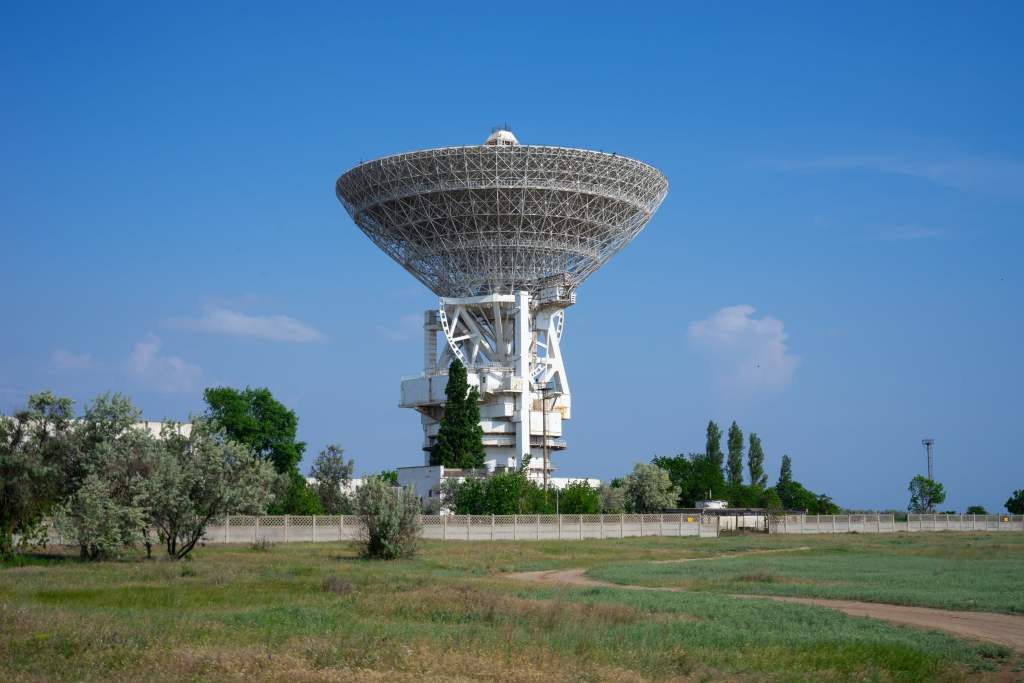
In addition to trying to contact extraterrestrial intelligences, the RT-70 has also been used to support more space missions in the Soviet era, such as Venera, Vega and Phobos, intended to explore the planets Venus and Mars.
The former head of Roscosmos Dmitri Rogozin reminded Venera missions in 2020, when he said that Venus is a “Soviet planet”.
Russia, however, announced last month that it postponed until 2036 the new mission she planned to explore Venus, Moscow's attempt to relaunch in the space race suffering a major regress in August 2023. The automatic probe then collapsed on the surface of the Earth's satellite after its engine did not stop for time for a time.
RT-70 is under Russian control since 2014
As for the RT-70 YEVPATORIEI radio, it was used as part of Mars Express and Rosetta missions of the European Space Agency.
The radio was under Russian control since 2014, when the Russian troops entered Crimea and Moscow illegally annexed the peninsula. According to Space.com, Russia would have used the telescope to improve the accuracy of its Blonass satellite navigation system, similar to the American GPS.
The large -scale invasion of Ukraine, triggered by President Vladimir Putin in February 2022, caused major losses for Ukrainian research facilities, according to a recently published report in Nature Astronomy magazine.
A separate UNESCO report of 2024 has estimated that $ 1.26 billion is needed to restore only public research infrastructure in Ukraine.