The bane of entrepreneurs around the world is rapidly rising labor costs. In short, it can be said that this is the sum of all expenses that the company must incur to be able to employ and maintain an employee. What does it look like in practice? Detailed calculations on Tuesday were presented by the European Statistical Office (Eurostat).
In the second quarter of 2025 Labor costs per hour increased in the European Union by an average of 4 percent. compared to the same period of the previous year. The costs of hourly salaries themselves increased in a year by about 4.1 percent, while non -wage costs – by 3.8 percent.
See also: Changes on the Polish labor market. Economists indicate whether there are reasons for concern
From quarter to quarter you can see a tendency to inhibiting the rate of labor costs. The summit from recent years took place in the first quarter of 2024, where they grew with almost 6 % dynamics. However, the increase in costs is more painful for companies than in the years before the pandemic of coronavirus.
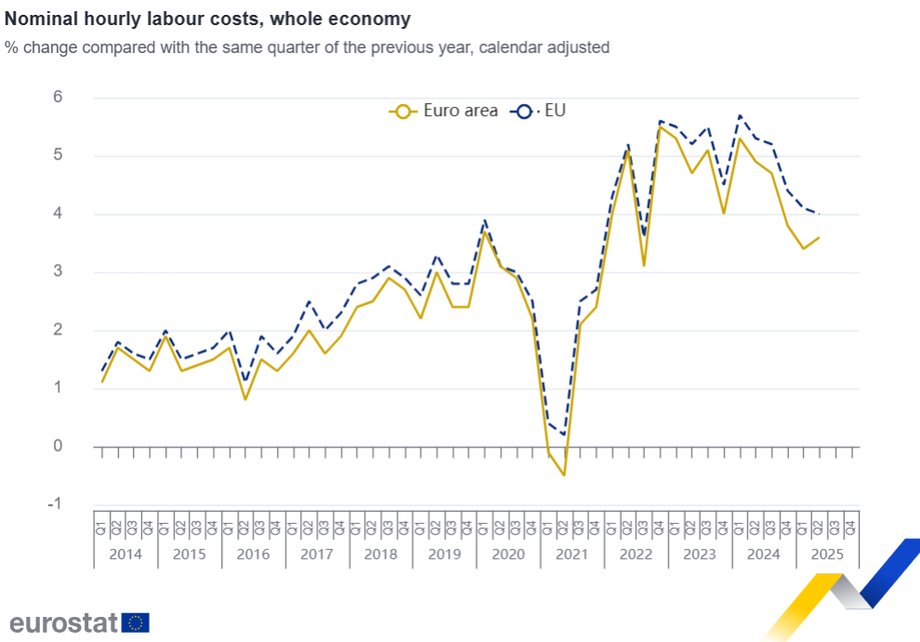
Annual rate of labor costs in the euro and EU zone
|
Eurostat
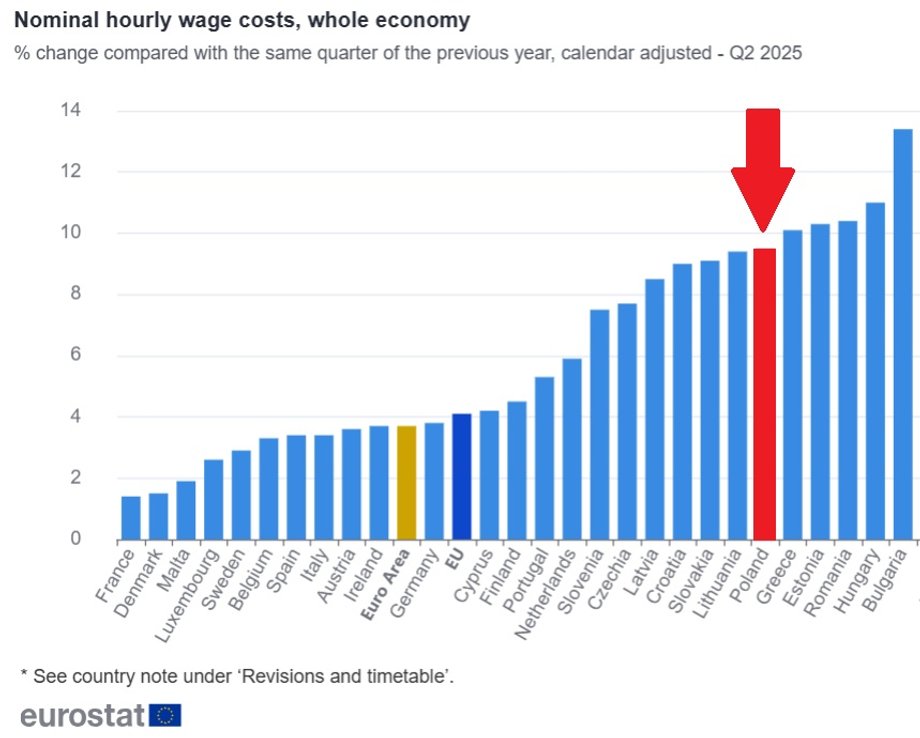
In the second quarter of 2025, compared to the same quarter of the previous year The highest increase in the costs of hourly salaries in the entire economy was recorded in Bulgaria (13.4 percent) and Hungary (11 percent). Three more EU Member States had an increase of 10 percent. or more: Romania, Estonia and Greece.
Labor costs in France (by 1.4 percent), Denmark (1.5 percent) and Malta (1.9 percent) were slowly increasing.
Labor costs in Poland compared to other EU countries
How does Poland fall on this background? NThe country is among the countries with the fastest increase in labor costs. In the Eurostat ranking, we are on 6th place with a level result 9.5 percent. Lithuania has almost the same statistics.
|
Eurostat
Compared to the average in the EU in Poland, labor costs have increased twice as faster. On the one hand it is Signal to catch up with wealthier countries and improve the situation of employees, which increases their purchasing power. On the other hand, it is A challenge for companies, especially those competing with the pricebecause higher employment costs can reduce their cost advantage and lead to automation or transferring production where work is cheaper.
See also: Over 60 percent companies have a problem with payments from its contractors [BADANIE]
Such a trend is a natural element of economic convergence, but it requires a simultaneous increase in productivity so that it does not weaken the competitiveness of the Polish economy.