
September 14 15:40
Specialists of the Krasnoyarsk Scientific Center of the Siberian Branch of the Russian Academy of Sciences presented the results of a new promising study.
They said that bacteria were separated from the soil in the vicinity of Krasnoyarsk, unique that in the process of vital activity they accumulate inside polyhydroxycanoats – a valuable biodegradable polymer, an analogue of polypropylene. Moreover, from the point of view of nutrition, these bacteria are very unpretentious – they can consume fats from fish production waste.
Bacteria that could produce polymers were also known to science. The difficulty of using this phenomenal feature of microorganisms was that their natural strains have low efficiency. They grow slowly, poorly process fat and give out a modest amount of the final product.
Materials on the topic
However, Krasnoyarsk researchers managed to select and grow a option that most effectively consumes fats using the selection method. The strain created by scientists has a set of enzymes that allow you to successfully break down complex fats from fish waste, without requiring them expensive preliminary processing. At the same time, the strain is able to synthesize polymers of various chemical composition.
As explained at the Institute of Biophysics, which was engaged in this project, bacteria effectively process more than 80 % of fat secreted from sprat and mackerel, and produce up to 70 % (from the total mass of bacteria) of biodegradable plastic. This is the best result of those that were previously known to science.
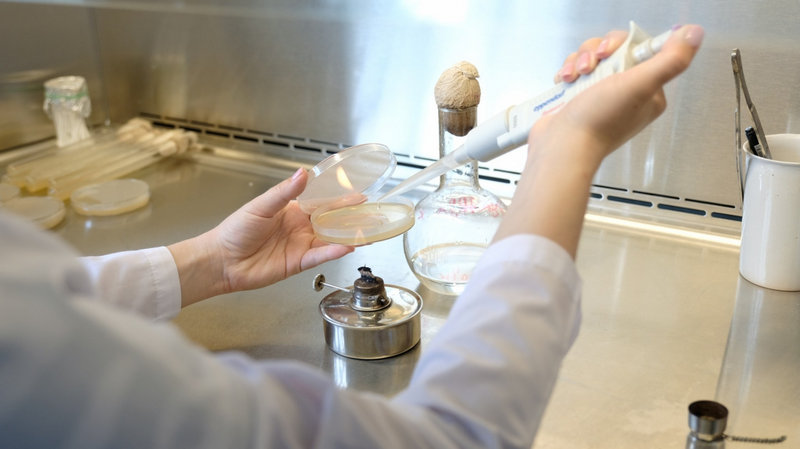
In addition, experts found out how to manage the properties of the material received. By adding various substances to the nutrient medium, they “forced” the bacteria to produce different types of plastic: from highly critical thermoplasts to elastic rubber -like polymers. This expands the potential sphere of use of the final product.
The institute is confident that receiving bioplasty from waste is one of the promising areas in the fight against pollution of the planet. It solves two problems at once: it reduces the level of environmental pollution and gives a “green” alternative to traditional plastic. According to the results of the study, scientists received a patent for the invention.
“This strain not only solves the problem of waste, but also produces a demanded product – biodegradable polymers with given properties,” comments on the head of work, doctor of biological sciences Tatyana Volova, head of the laboratory of the Hemo -Autrofic biosynthesis of the Institute of Biophysics of the SB RAS. – Such studies are the basis for creating fundamentally new, closed production cycles, when the waste of one industry becomes raw materials for another. The introduction of such technologies will not only reduce the cost of the production of “green” plastic, but will also create opportunities for the disposal of large -capacity waste of fishing industry with benefit, closing the production cycle. ”
Links on the topic:
- Krasnoyarsk scientists revealed biomarkers of the progression of aggressive oncology