Flowers 2025: The day when the flowers catch a voice and faith blooms. Traditions and superstitions to Orthodox and Catholics: How do you bring the spor in the house

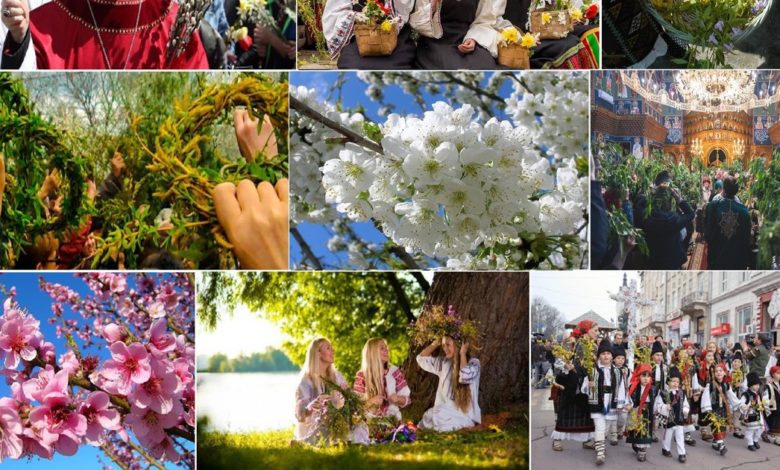
This year, the Flowers – the holiday that marks the beginning of the big week and, by default, announces the Easter – the same day for both Orthodox and Catholics: April 13, 2025, a calendar coincidence that adds depth to a day already full of symbols.
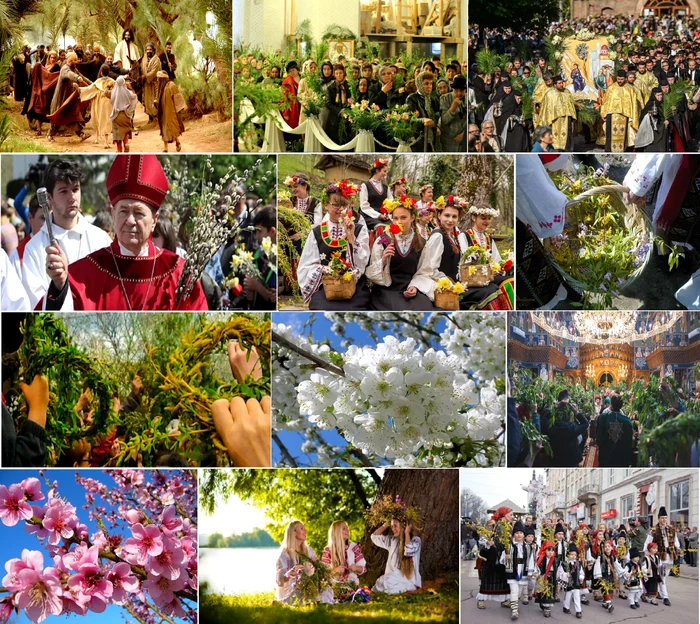
Traditions and customs of flowers in Orthodox and Catholic Christians in Romania collage
It is, perhaps, the perfect time to rediscover what this holiday means, not only from the religious perspective, but also through the habits and magic that have transformed it into a deeply rooted ritual in the soul of the Romanian village.
What does the flowers for Orthodox and Catholics mean: the meaning of the Sunday of Flowers
The Sunday of Flowers is the moment when Jesus entered Jerusalem riding a donkey (Asin), and the crowd met with finical branches (palm according to other translations) and laid clothes on the road, thus creating a kind of symbolic carpet, as a sign of respect and worship. It was the image of a humble king, who came to bring peace. Behind the exuberance of the crowd, however, was a prerequisit of the passim that would follow.
In Orthodox, the holiday is known as the Sunday of Flowers and is the sixth Sunday of the Great Lent, having a strong spiritual load. In the churches there are passages about the entry of the Lord in Jerusalem, and the believers come to sanctify willow branches, symbol of gentleness and rebirth.
In Catholics, it is called Dominica in Palmis, but also the Sunday of the passions, because the Liturgy includes the reading of the Gospel that encompasses the entire account of the passions of Christ. Unlike Orthodox, the Catholics celebrate Flowers by emphasizing the dramatic side of the big week, right from this day.
Central symbols of the Sunday of Flowers
The Sunday of Flowers is marked by symbols that reflect both religious traditions and elements of nature and life, each having a deep significance in the context of this holiday.
Green branches-Salcia replaces in the East-European countries the finical branches mentioned in the Bible. Salcia is the symbol of flowers, the resurrection of nature and eternity.
The flowers originated in the Roman goddess of flowers, flora, and in Romania the holiday was also associated with the flower as a symbol of life.
At the same time, it is also the onomastic day of those who bear the names of flowers, adding a light dimension to the holiday.
Romanian customs of Flowers. Differences between Orthodox and Catholics
Although the flowers have the same Christian significance – the Lord's entry into Jerusalem – the customs differ considerably between Orthodox and Catholics. Beyond religious services, this day inspired special traditions, still alive in Romanian villages, in which nature, symbols and faith are interwoven in a ritual of spring.
Traditions to Orthodox: Romanian spring rituals – Flowers and willow branches
In Romania, the Flowers are celebrated with a great variety of traditions, and in Orthodox, customs are deeply anchored in religious and popular symbols. From the consecration of the willow branches, symbol of the resurrection, to the belief that flowers can bring luck and accomplishments, these practices reflect the strong connection between the sacred and the traditional Romanian folklore.
Flowers are also one of the few Sundays in Easter or Great Lent when the Orthodox have a fishing, which adds a holiday and cheerful note among the believers.
Also, in the Romanian Orthodox tradition, it is accustomed that the flowers will be given to the souls of the deceased, a habit similar to other important religious holidays. Usually, coils, fruits, drinks and food, bread and baked pies in the house are given, but also money or other gifts, in certain areas, to help the poor or needy. This habit has the role of bringing a blessing and expressing an act of charity, in the spirit of the holiday. The gifts and help offered to those in need are seen as a way of living in harmony with religious teachings, in a period of reflection and preparation for Easter.
Ethnographers have documented various popular beliefs that give this day a unique character in each region of the country, but which maintain a universal significance, related to the preparation for Easter and to celebrate the entrance of Jesus to Jerusalem.
South and Muntenia: Holy Salcia brings bear, protection and plenty
In the south of the country and Muntenia, the holy willow branches are brought home and placed at icons, gates, gardens or orchards, believing that they bring protection and plenty. The young girls put branches under the pillow, thus hoping to dream of their bear.
In the same area, in the past the habit was practiced “Lăzărelul”specific and Dobrogea, in which a group of girls, one of which dressed in the bride, caroling the houses interpreting a scene on the death and resurrection of Lazăr. This ritual was considered to bring fertility and prosperity for the community.
Moldova and the “broom of road”
And in this area, Salcia, a plant with deep significance in the traditions of flowers, is used for the protection of housing and to ensure a rich harvest. The housewives in Moldova keep the branches sanctified at icons or used to smoke (or “burn willow branches”) houses, driveing away the misfortune and evil spirits.
According to a legend, the Mother of God, on her way to Jesus crucified, was helped by a willow that bent her branches to support her to pass a water. As a sign of gratitude, the Mother of the Lord blessed the willow, and its branches became a sacred symbol, being brought to churches throughout the country on the day of Flowers.
Today, in some villages in Moldova, the symbolic custom of the “sweep of the road” is still practiced, which reminds of the layers of the mantles in the path of Christ. This ritual has the role of welcoming and reverence the coming of Jesus.
Ardeal and Maramureș: Salcia – symbol of hope and resurrection
The holy willow is taken to the cemetery and placed on the crosses of loved ones, as a symbol of hope in the resurrection. In some villages, women and girls interweave willow wreaths, which they keep throughout the year.
In these regions, Salcia had not only a symbolic role, but also one related to love and health. For example, the young girls put a clean shirt and a mirror under a grafted hair, and the morning of the flowers used them for rituals meant to bring luck in love and health. It was believed that the mirror “Loaded” He had magical powers in the charms of love.
Bucovina and Saints Misnii: Remedy for sore throat and symbol in beekeeping
In Bucovina, it is believed that the swallowing of the sanctified chains on the Sunday of Flowers (the last Sunday of the Easter Post) protects against neck pain and inflammation at the muscles of the grump or tonsils.
The sanctified masters, together with the willow branches, are kept throughout the year in the form of weddings, placed at the eaves of the house or the stables. In the case of the bad weather (zloata, lightning or hail), a willow branch is placed on the fire, and the smoke that is released is considered to drive away the darkness and to mitigate the enemy of the time.
In addition, the grinders are also used on hives, in the belief that they will bring a richer honeymoon harvest.
Banat and Crișana: Blessed willow, shield against illness and bad weather
And in these areas, some of the holy willow is preserved to be burned in case of illness or adverse weather. In Satu Mare, it is believed that the holy willow branches protect the houses from lightning and hail.
In other villages, on the eve of Flowers, in the past, the girls prepared an infusion of willow, basil and threads from the tassels of a nipple. With this water, they were washed on the head in the morning of the flowers, then throwing the liquid at the root of a fruit tree, saying: “How beautiful the flowering hair is, so beautiful to be; as people look at a flowering hair, so they look at me.” This practice had the role of ensuring their beauty and attraction in front of the flames.
Traditions to Catholics of Flowers in Romania
In the Catholic communities of Transylvania, Banat and Bucovina, very beautiful rituals are preserved:
- Processions around the church with willow branches, singing “Osana, the son of David”;
- The holy branches are then kept in houses, icons, for blessing and protection;
- Sometimes, the old branches are burned, and the ash is used on Wednesday, the following year, at the beginning of the Catholic Passover.
Less known things and flower superstitions
Flowers are, as mentioned before, a holiday with deep meanings and fascinating traditions. Within it there are also a series of superstitions on the less known flower Sunday, which adds mystery and charm. These popular beliefs reflect the connection between daily life and ancient customs, offering a special size. Here are some of them:
“I speak” flowers – It is said that, on the night of flowers, the flowers get a voice. Whoever hears them has no more to live. This rare faith is part of the symbolism of flowers as bridge between the worlds.
A capricious day – The weather time is considered a sign for how Easter will be. If it is cold or it is raining, it is expected to be changed and Easter.
Who washes on the head on the day of flowers risk whitening – This is a widespread superstition in the south of the country. However, in other areas it is believed that it is good to wash on this day on the head with holy basil.
The holy willow is cure – It is believed that the branches of holy willow, if they are put in the water water of the children or touched by the sick, bring health.
Does not sew, it does not wash – The work on the day of flowers is considered a sin.
And these superstitions, transmitted from generation to generation, remind us of the popular traditions that have deep roots in the Romanian culture and continue to enrich the flower feast.
Flowers: More than flowers. A lesson about rebirth, patience and hope
Although they precede a tragedy, the flowers remain one of the brightest holidays in the Christian calendar. They carry with them the perfume of flowers, but also the silence before the sacrifice.
It reconcile the sacral with folklore, superstition with hope, and teaches us that, even in the moments of sacrifice, there is always a promise of rebirth – of nature, life and our spirit.