All the planes of an important airline remain on the ground because of the flight attendants strike


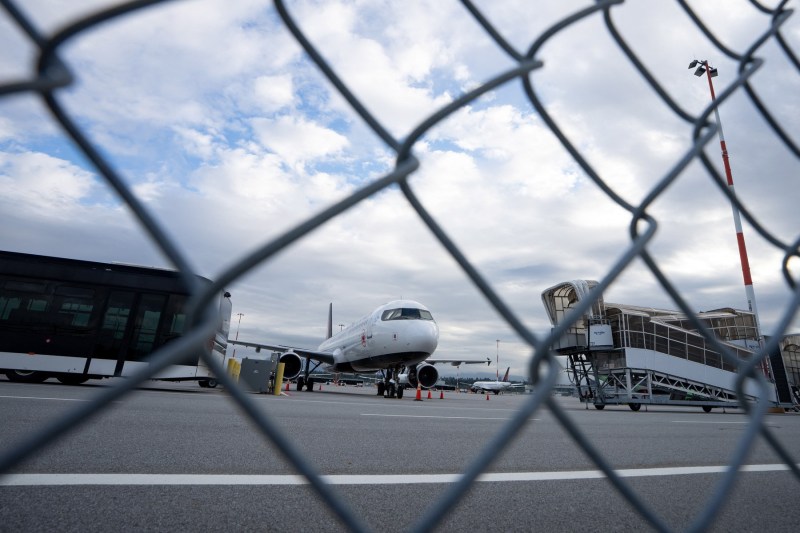
Air Canada aircraft, photographed on August 17 at Vancouver International Airport, Photo: CP / Abaca Press / Profimedia Images
The Air Canada fleet, made up of hundreds of planes, remained on the ground on Monday morning, after the accompanying companions on strike refused a return order supported by the Government and asked the airline to return to the negotiation table, reports Reuters.
The air carrier that normally transports 130,000 passengers daily and is part of the “Star Alliance” alliance of airlines, had planned to gradually resume operations on Sunday evening, after a Council for Work Relations ordered the union to return to work and accept the mandatory arbitration.
The union said “no”, generating an almost unprecedented confrontation with the Canadian government, which had requested the issuance of the order return to work.
The Canadian Union Union of Public Employees – Cups), which represents 10,000 members of the cabin crew from Air Canada, pleaded for a negotiated solution, saying that the compulsory arbitration would diminish the pressure on the airline.
What are the airline employees in Canada
The accompanying companions are on strike for better salaries and to be paid for the work performed on the ground, such as boarding passengers. Currently, they are paid only when the plane is moving. Many Canadians expressed their support for their claims on social media.
Cupes invited Air Canada to return to the discussions to “negotiate a fair agreement”, declaring that the order to put an end to the strike is unconstitutional. The airline has announced that it will postpone the plans for the resumption of operations, initially provided for Sunday, until Monday evening, and described the attitude of the union as an illegal challenge of the Labor Council.
The options of the Canadian government to put an end to the strike now include the request of the courts to impose the return order to work and the request of an accelerated hearings. The minority government could also try to adopt a law that requires the support of the opposition and approval in both Houses of Parliament, on vacation until September 15th.
“The government will be very reluctant to act too hard, because, in Canada, the Supreme Court has established that governments must be extremely cautious when withdrawing the right to strike, even for workers in the public sector that could be considered essential,” said Dionne Pohler, a professor to resolve disputes at Cornell University.
Another option is to encourage negotiations, Pohler added.
The Canadian government did not respond to the requests to make comments.
Flying companions of some US airlines have already obtained similar clauses
Travelers at the weekend at Toronto Pearson International Airport said they are confused and frustrated about the time they will be able to fly.
Italian Francesca Tondini, 50, told Reuters that she was supporting the union, even though she didn't know when she could return home.
“They are right,” she said, smiling, pointing to the companions on a strike.
In the latest contractual negotiations, the accompanying companions in Canada and the United States have asked to be paid for all hours worked, including tasks such as boarding passengers.
The new employment contracts from the American Airlines and Alaska Airlines legally oblige companies to start the payment of the accompanying companions from the moment the passengers embark.
The members of the Cabin crews from United Airlines, who rejected a preliminary agreement last month, also request a similar provision.