Disappearing Russian towns. This data will not like Putin

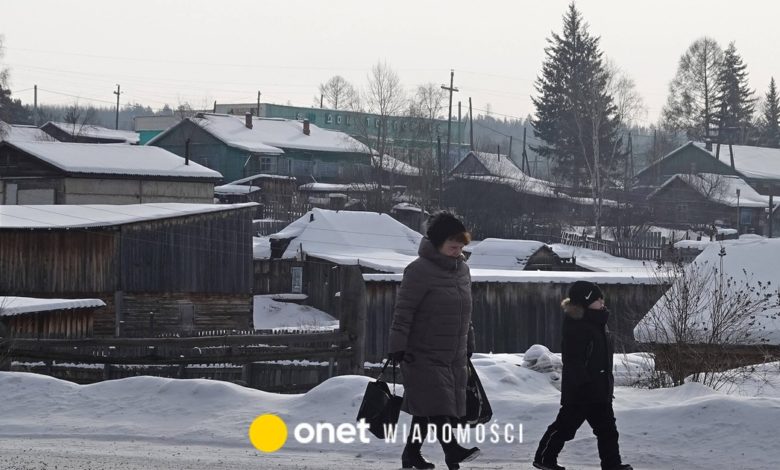
According to a study conducted by the Russian Presidential Academy of National Economy and Public Administration (Ranepa), these cities, inhabited by a total of about 3.4 million people, They have lost a total of 314,500 inhabitants over the past decade.
The most vulnerable communities are located in northern regions dependent on coal, metallurgy and forestryas well as in distant peripheral settlements that are struggling with limited local resources and low access to external investments.
The study emphasizes particularly difficult conditions in the Bryan, Nowogrodzki, Kirów and Krasnojarski Districts. “Industrial crisis and continuous population drift towards larger urban centers increase the risk of completely disappearance of the towns” – scientists warn.
Continued article under video material
The most threatened are the więchnij tagił in the Swierdłów region, Trubczewsk in the Bryan region, Inta in the Republic of Komi, Kiem and Miedwieżjegiersk in Karelia and Torżok in the Twerski District, all of which of which recorded a sharp decline in the population. Even in economically stronger regions, peripheral cities, such as Roszal (Moscow region), Ocha (Sachalin), Porchow (Pskov region), Włżżje (NiżnonowoGrodzki District) and Nolinsk (Kirów region) were marked as threatened.
This decrease is caused by such factors as Loss of jobs, emigration of young people, closing key employers, aging infrastructure and insufficient investments.
“It's hard to talk about attracting young people back”
Legislators admit that many small cities suffer from falling municipal services, poor transport and access to healthcare and unreliable telecommunications, which discourages young professionals from staying or returning after studying elsewhere.
In cities such as Totma and Kargopol, each of which has less than 10,000 residents, Local residents say the city budgets are too limitedTo repair roads, bridges or buildings, leaving residents to patch the infrastructure independently with improvised materials.
– the outflow of the population continues, Especially in northern territories, such as the Irkutsk region – Aleksander Jakubowski, a member of the State Duma Civil and Housing Committee told the journal. – Where there is no jobs or basic infrastructure, it is difficult to talk about attracting young people back.
His colleague Vladimir Koszelew agreed, noting that it would be extremely difficult to save small cities without improving the quality of life and creating real economic opportunities.
Saving every town is “too expensive and inefficient”
– younger generations want competitive salaries, access to culture and the benefits of modern life – says Irina Mironowa, director for the development of federal programs at the “Skołkowo” Moscow Business School.
Falling demand for coal and other raw materials – both in the country and on foreign markets – He also dealt with the future of mining citiesadds Mironowa. Saving every small city is “too expensive and inefficient”, he emphasizes, and the government must admit it.
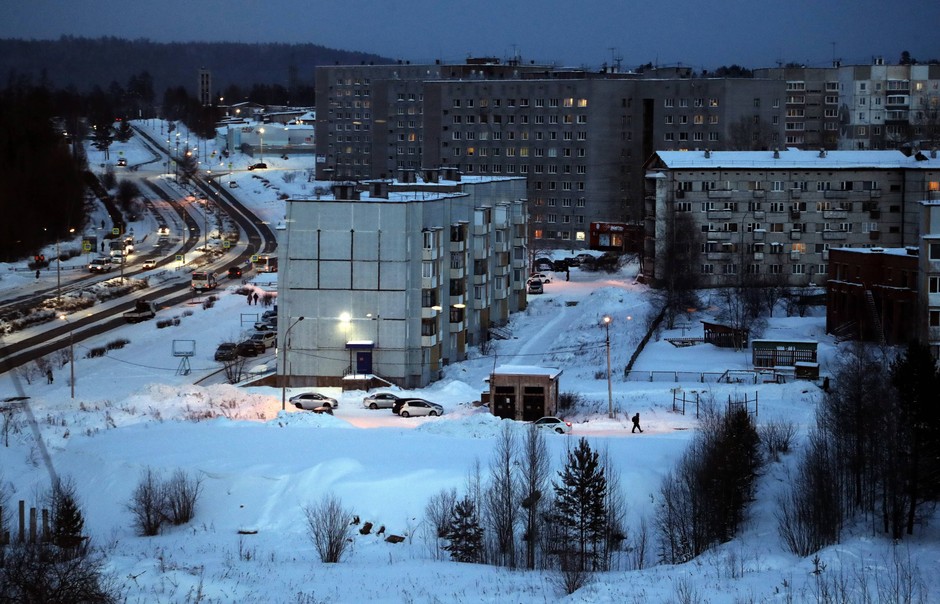
Blocks in the Siberian town. Illustrative photoEPA / Maxim Shipnkov / PAP
There are 1120 cities in Russia, of which over 70 percent is classified as small or medium. The federal government has allocated 4 billion rubles [ok. 180 mln zł] for their support in 2025.
The authorities are currently developing General plans to direct investments and infrastructure development in 106 of these cities. The proposed strategies include the development of industries with favorable market conditions, promoting suburbanization near the main cities and encouraging to voluntarily change to better communicated urban periphery.