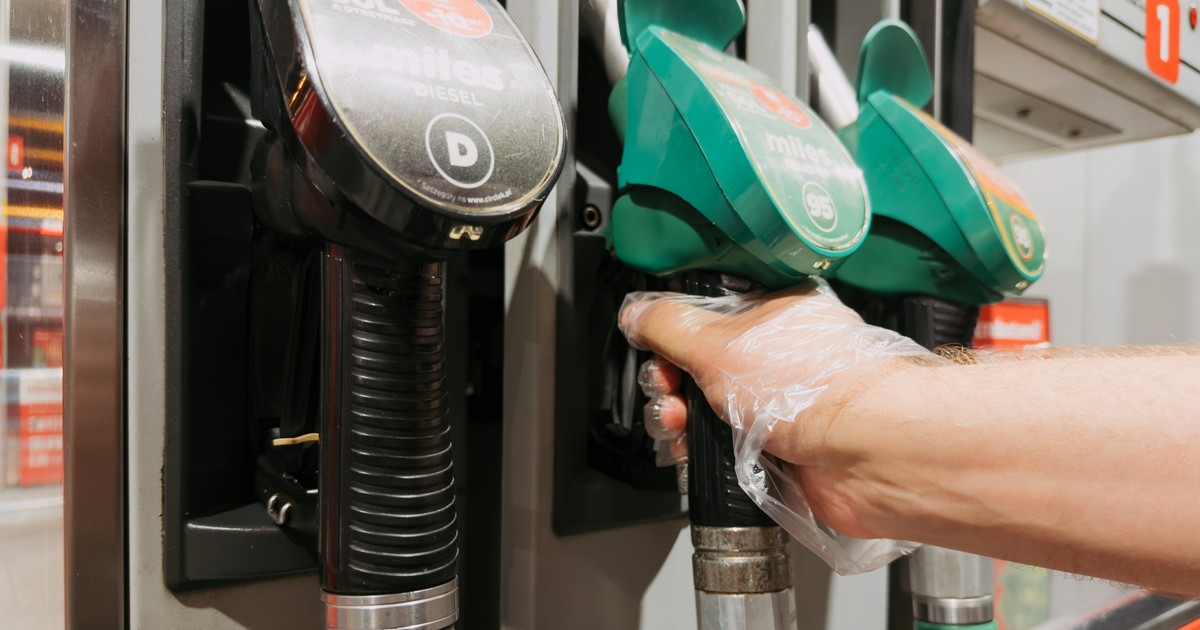
Ban on internal combustion engines in 2035? “Europe has completely lost in regulations”


The automotive industry increases the pressure to the European Union to bear the ban on the sale of flue cars. The head of Porsche, Oliver Blume, announced that the manufacturer of sports cars will develop combustion models until “Far 1930s” The 21st century, in turn, BMW, Oliver Zipsse, once again in favor of milder EU regulations.
Arnd Franz, head of Mahle – a company employing 67,000 employees and reaching EUR 12 billion in revenue – he cites the study of the European Association of Automotive Suppliers, according to which Net 280,000 are threatened. jobs – approx. 20 thousand of them in Mahle itself.
Welt: The EU ban on selling new internal combustion cars has already been set from 2035, but the sale of electric cars is weakening. How do you refer to this?
Read also at Business Insider
Arnd Franz: Our entire industry has invested huge funds, and now the factories are empty. In Mahle, we must even liquidate workplaces that were intended for the production of components for electric vehicles. This is disappointing, but it is also a kind of test of reality for Europe.
What do you mean by that?
Electromobility is a foregone conclusion – also for Mahle. But Europe must decide whether to keep one of its key technologies or give it to other markets. This decision, whether we will still produce internal combustion engines in Europe in the future, is now standing in front of us – and it will be of key importance for companies such as Mahle.
What does it mean for your company if the EU regulations are not alleviated?
Then we will consider suspending development and even substitute investments in Europe for highly effective, sustainable internal combustion technologies.
How many jobs would be at risk?
Two -thirds of our 30,000 jobs in Europe depends on internal combustion engines.
After all, they can be switched to electromobility.
Electromobility, in general, with the same number of cars produced only needs one fifth employees compared to combustion drives. This means that four -fifths of employees would have to go to completely different industries or product areas. It's unreal.
All great suppliers in Germany are under pressure. Mahle's profitability, after years of loss, is positive again, but still low compared to other industries. How big is the need for restructuring?
Our department of internal combustion engines is healthy like never before. We must limit it only because of the regulation. Mahle has also invested a lot in electromobility and developed ready -made products – we focus on electrical engines and charging technologies. The whole industry must be able to deal with a lack of acceptance from consumers today. This is a double challenge: we still do not earn on electromobility, and at the same time we must – for political reasons – limit production capacity for internal combustion engines over the next 10 years.
Even with the ban on the sale of exhaust gas in the EU, you can produce them in Germany for export, e.g. to America or Asia.
Certainly not. This is not competitive. In Germany, we have the highest costs of energy, work and taxes. In addition, there is infrastructure that requires repair and still huge bureaucracy. Without the domestic market for internal combustion engines, we will not produce them in Europe.
Do you believe that you will convince Brussels with such a warning? After all, the purpose of the regulators is the end of internal combustion engines.
This is not a threat, but a logical consequence of today's regulations. And these regulations will fail. A meaningful approach cannot only rely on analyzing emissions from the exhaust pipe, but should take into account the entire chain of values. Only on the basis of electric cars it is impossible to reduce the broadcast of road transport to zero by 2050.
What conclusions do you draw from it?
I am in favor of changing the course – towards technological neutrality. We need competition between electric cars, hybrids and exhaust gas supplied with renewable fuels to find the best technical and economic solutions that will also be acceptable to consumers. The bans do not match either the interests of Europe or our European values.
Two or three years ago, many manufacturers said that a hard ban would help them in a smooth transition to electromobility.
I have always considered it an illusion. It was only a matter of time when there was a confrontation with reality. Now she came earlier than expected. The consumer should also have a free choice after 2035.
At the expense of predictability for your industry.
The last two years have shown that this alleged predictability was only a piety. Europe implements the strategy alone, which is not found anywhere else in the world. As Mahle, we want to continue to deliver globally to all manufacturers, so we still have to develop all driving technologies. Europe should think about whether it still wants to play a dominant role. Because this is not once and for all: China is already in electromobility.
Do you imagine that Europe remains with old internal combustion engines and China is building innovative electric cars?
NO. Europe has a chance to produce electric cars competitally. But this is a mistake that Europe gives up internal combustion engines – and thus from its global advantage, on which hundreds of thousands of jobs depend.
Until when do you need brightness?
As soon as possible – at the latest in the next 12 to 24 months.
How much do you believe that your industry will be able to get Brussels to change your mind?
I'm not an optimist. Until now, there are no serious signals that the regulations will be softened. There is generally talk about technological neutrality, but this does not translate into real actions.
Not without reason: in two years the price of CO2 emissions for fuels is increasing. Whoever will buy a combustion car today may not be able to refuel it later.
Even at very high fuel prices in Europe, diesel cars are clearly cheaper to use today than electric ones. If renewable fuels are not taxed like fossil fuels, it may remain so. The batteries make electric cars expensive. So far, it has not been proven that an electric car in Europe is cheaper than combustion.
German manufacturers advertise new models designed for electromobility from scratch – better batteries, software, coverage. Is it just marketing?
NO. It's good that there are progress. But there are still many problems: the charging network develops only where you can earn on it. Currently, almost every new charger brings losses – because most of the time stands unused. We still have a lot to do in terms of battery life, vehicle costs, infrastructure availability, residual values, charging speed. Europe should not impose one technology in advance. It won't work. Even China doesn't do that.
However, regulations from Brussels have a higher goal: climate protection.
That is why we should make the internal combustion engines to be climate. Apart from Europe, this is happening – the participation of biofuels is growing significantly. Brazil has been doing this for decades, now India joins. E20 was introduced almost overnight, i.e. fuel with 20 percent. The addition of biocomponents, for millions of cars. Only Europe only focuses on batteries.
However, there are justified concerns about biofuels that consume valuable crops. After the war in Ukraine, the slogan appeared: food instead of fuel.
In Brazil, less than 1 percent agricultural space is used for sugar cane cultivation for ethanol. Research on plants for crops in dry areas is underway. Agave is great for ethanol production.
The right amount of biofuels until 2035 is still a dream, while the development of the charging network is already happening.
Many studies show that biofuel production capacity is enough for road transport. The question is: do we want to achieve decarbonization with all available means – do we put everything on one card, despite the fact that electric cars do not meet expectations yet.
You want the market to decide. But today almost nobody demands biofuels.
Because they simply are not on offer. There is no E20 at stations in Germany. This can be changed if there is a political will. Many cars are already adapted to E20. We need adjustments that will attack the source of the problem: fossil fuels – not the drive technology itself.
And what next?
Renewable fuels powered by renewable fuels should be considered climate. We also need hybrids. At Mahle, we offer a new, very efficient Range Extender for electric cars – it is an internal combustion engine that charges the battery while driving. Fear of the range disappears – you can travel over 1000 km. In China it is already a standard – and is classified as an electric car. Hydrogen is also necessary. Especially carriers will benefit, because the cost of a truck with a hydrogen engine is much lower than the battery. From the 1930s, the fuel cell will also be competitive.
Do you still drive a combustion car?
No, I am happy to test new technologies and drive an electric car on 800 V – also because I can afford it. But my wife doesn't like to ride it: she hates charging breaks. Everyone has their own reasonable requirements and technological preferences.
The above text is a translation with German portal Welt