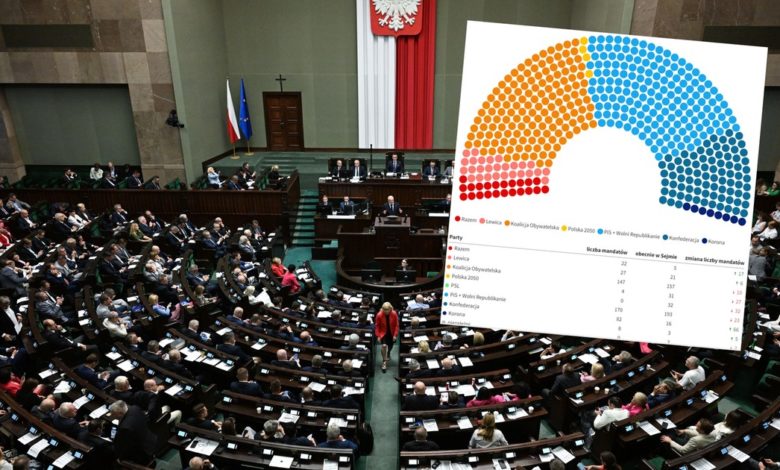
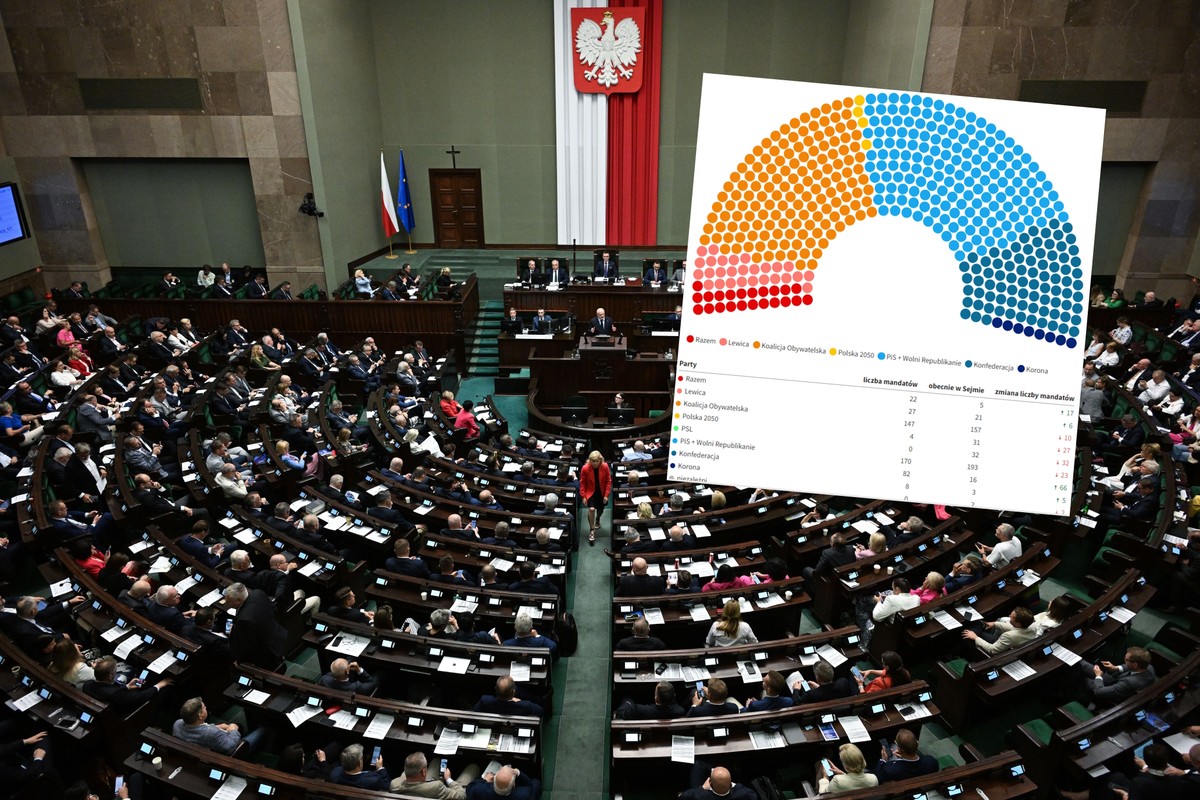
These are the results of the IPSOS studio poll for TVP Info and TVP 19:30. The previous election survey of this studio for TVP was in April, so comparing, you can observe changes on a scale of over three months. And so support for PiS increased by 2 percentage points, KO fell by 4 percentage points, and the confederation fell by 3 percentage points.
In the case of the latter, the result could have been influenced by the confederation of the Polish crown Grzegorz Braun, which received 5 percent. In the survey, in April, it was not asked about it.
In the Ipsos survey, two left -wing parties, i.e. the left and together they obtained 6 percent. support. In turn, Poland 2050 had the same support as Korona, i.e. 5 percent. PSL was slightly under the electoral threshold with a result of 4 percent.
The coalition of the KO and the Confederation would not have enough deputies
In the case of such election results, PiS would win about 170 seats, and KO 147. Comparing with the current composition of the parliament, paradoxically, although PiS wins in the survey, he would lose 23 seats. KO would be poorer by only 10 seats, but current coalition parties would lose.
PSL would not enter the Sejmthat is, his 32 current MPs would have to look for classes outside of politics, and Poland2050 would lose 27 seats.
The biggest winnings compared to the current state would be: a right -wing confederation, which would arrive 66 MPs compared to the current state and the leftist party together with the profit of 17 seats.
The potential PiS coalition with the confederation would have 252 votes in the Sejm in 460 in total. Most would not have a confederation coalition with KO with 229 votes and two additional voices would be needed.
63 percent would go to the election urns. respondents. 29 percent He would stay at home, and 8 percent He doesn't know yet what decision he would make.
The survey was carried out using the Mixed Mode method (Cati and Cawi) on July 24-25. The study was carried out at a national representative sample of 1,000 adult Poles. The number of interviews by phone and online is 50 percent. During the study, the distribution of basic demographic features such as gender, age, education and place of residence was controlled.