The island of sins. Why do we look fascinated at the disintegration of others and what the “love island” says about ourselves

Defrite, betrayal, vanity, impulse, envy … not a paraphrase of original capital sins, but a summary list of ingredients underlying one of the most watched TV shows in Romania: «The Island of Love».
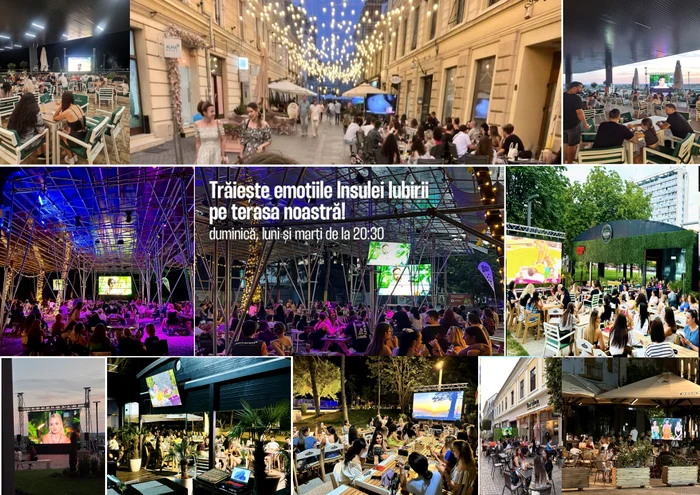
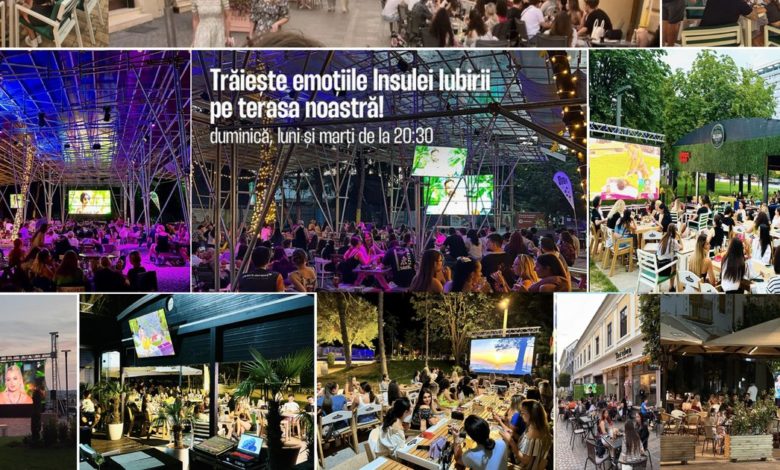
“Love Island”, consumed collectively: a social phenomenon pursued and commented on terraces Facebook collage
In a society that declares that it values family values and intimacy, the success of a show based on temptation, sex and infidelity, at first glance, a paradox. But, as the sociologist Gelu Sunday explains, for “Truth”is a paradox only apparently: “We look not only for what we see, but for what we feel. Whether it's curiosity, hidden appetite, feeling of superiority or pure fun. The show of relationships destroyed on Thailand tells us more about us than about protagonists.”
«The Island of Love» It is a combination of reality show and modern burlesque theater. A world in which sins become a show, and the feelings – consumption goods. And that's why it attracts: because it shows us the unseen face of our own humanity.
The full show: sin with sin, emotion with emotion. The story behind the success
Sociologist Gelu Sunday explains the success of the controversial TV show as on a “cocktail” in which all human weaknesses are mixed with no filtering effort: “In reality, the show activates in us all human emotions and sins. That's why it attracts us. Because it is with drama, with intrigue, with sexwith a joke, with muscles, with nudity, with tears and humility. All the sins are there: pride (exaggerating their own value and contempt towards others), envy (look what the bastards do, but we also enjoy their unhappiness), greed (after success, after notoriety, material advantages: they went to Thailand to make money, I do not make money, (impulsive actions, affecting human relationships), tricks (they stay there, the bastards, in Thailand, beautiful, for free) … everything. Touches all the emotional strings. “
From the banal voyeurism to the social comparison, from the illusion of intimacy to the masked moral judgment, «The Island of Love» It is less a competition of love and more a human theater, in its gross forms.
After all, the show works as a kind of “Soup, but also emotional valve” of first time. It's not just reality but also “Catharsis” (emotional release through art or show). The audience is not only to find out who cheats on who, but to consume, behind the screen, a show in which every sin becomes recognizable.
Our Phariseism of all evenings
The success of the show says less about protagonists and more about the public. In the sociologist's opinion, the show is successful because it allows us to judge without risks: “We are good those, they are the strangers. It's a type of Pharisees that we like. We like the funerals, we like the weddings, we like the scandal. We look because those parts we never recognize publicly.”
The moral appearance is just a veil – we laugh, but we recognize ourselves. In a way, «The Island of Love» It is not a deformation, but an amplification of reality. And what we show with the finger on the television we often find in our own lives: in intimate behaviors, in hidden desires, in the way we react to temptation.
Public: between Voyeur and Judge
Contrary to expectations, the public of this reality show is not homogeneous, not one unitary, marginal or “Unducinated”. Most commonly has the same old curiosity: to see what the neighbor is doing “After the curtain”to pull with the eye “Through the keyhole”. Only the curtain became a screen, and Voyeurism was elevated to entertainment.
“It is that pleasure of looking over the fence, as we were doing when we were little, at the wedding in front of the block or at the dead man. Only today the fence is the TV screen or the tiktok. says the sociologist.
From corporatists with doctorates to students or pensioners, the public finds in this type of entertainment a valve – an escape without risks, in which he can be witness to the mistakes of others, but especially he may feel a reconfirmation of his own “Normalities”.
In short, we like to be witnesses to the disaster of others, sometimes because it gives us relief – “Look, others give it to the bar ” -, sometimes because we reconfirms our choices: “I would never go there!”. But also because that part of us who wants a drama without personal consequences is satisfied.
“Those tattoo and those tattooed”: the new masks of the society
In reality says the sociologist, the reality show is “More than Voyeurism”: “The fact that the show is not knowing how many edition, that it has stinging audiences, that it is a phenomenon, that Reservations are made in the cars As you see with friends … it's more than Voyeurism. He's a guy of collective harassment. It is like in the old days, such as the theater with Mărioara and Vasilache, during Alecsandri. And they only brought the metechnics of the society at that time. “
Only, Vasilache was “Ţiganu '”because you couldn't laugh at anyone, and today, “Those are tattooed and those tattooed.”
“The show takes you from the media of the society and takes you to an extreme area, very visible to all the prejudices and stereotypes we have in front of the current generation … it is not about the” traditional family “, but it is about the family from our times-of” those without God “notes the sociologist Gelu Sunday.
The characters and typologies are carefully chosen and the selection is not random: “It is clear that there is also the hand of psychologists, and sociologists. So, we are not necessarily an exaggeration directed for the show, but of putting the light on one side of the society, as it happened with Mărioara and Vasilache, with Mascăriciu and the Burless Theater. I do not think that everything that existed in the society.
It is an image of a part of society placed under the magnifying glass, “Because we, the others, who are not a part of the respective society, have a false sense of superiority – and look, and laugh. Not to laugh, but to feel better.”
A lesson if we choose to see it
Although the show is built on emotional exaggerations and artificial tensions, it does not only offer a show, it can also work as a form of learning-if viewed with a critical eye.
“It can be a lesson about what the appreciation, sincerity, loyalty means. About how poleia does not mean value. And about the fact that you are not the only one.”says Gelu Sunday.
A lesson about what vulnerability, fidelity, superficiality or self -sabotage means. “It can be a lesson about what you need and what you do not have to do in a relationship. About appreciation, about valorization, about respect.”adds the sociologist.
But these conclusions do not come by themselves. Without discernment, everything remains at the level of fun with cynic accents. Without the right glasses, it is only a show, not reflection.
The mirror we look at – and we hide
«The Island of Love» It is not about love, but about people-confirms the sociologist Gelu Sunday, thus strengthening the ideas and an interview with psychologist Keren Rosner, also published in “Truth”.
It's about how we turned emotions into the show, vulnerability in exchange currency and mistake in audience source.
Looking at the right eyes, the show can also become a mirror. «The Island of Love» It is practically the mirror in which some laugh, others recognize themselves, some look to compare, and others – maybe – just because they don't know what to believe. The others change the channel.
Maybe the real question is not “Why do we look at the shows like this?”CI: What do we see about ourselves, while we look at others?