

In a block apartment in Pitești, on the fourth floor, two cups of coffee are steaming on the table. Irina and Mihai, married for 27, look empty, each with his thoughts. For good months, their discussions have been transformed into long silence, and the common plans have evaporated with the economies. Mihai was left without a service in the pandemic, and Irina, an accountant at a small company, can barely cover the invoices.
The quarrels have multiplied, but the divorce has only been a murmur for now. They put the house for sale, but from the money they hope to get the rest of the credit taken from the bank. If I divide two more to be, they would reach them for a maximum of six months of rent. “We have nowhere to go, we have no money to divide the house, we do not have the courage to take it from the end,” says Irina.
Statistics do not tell the story behind closed doors
The figures clearly show: in the last seven years, the number of divorces in Romania has decreased to a historical minimum – just over 20,000 per year. At first glance, you would say that the Romanians became more “familiar”.
In reality, many remain together not from love, but from the impossibility of separating. The real estate crisis has blocked couples in apartments that they cannot sell without loss, and the costs of a divorce – from lawyers, to two rents – are prohibitive for many.
When the economy goes wrong, the divorce becomes a luxury
Logic and studies say that the lack of money leads to quarrels, and the quarrels of divorce. But reality is more nuanced.
Studies show that during periods of recession the divorce rate decreases. Not because people would be happier, but because separation suddenly becomes a luxury.
“I wanted to divorce three times in the last two years. But when I saw how much it costs to rent a studio, to pay food pension and to divide the furniture, I said it was better. We made every corner in the house and we are waiting for the storm,” Radu says, 42 years old.
The paradox of postponed happiness
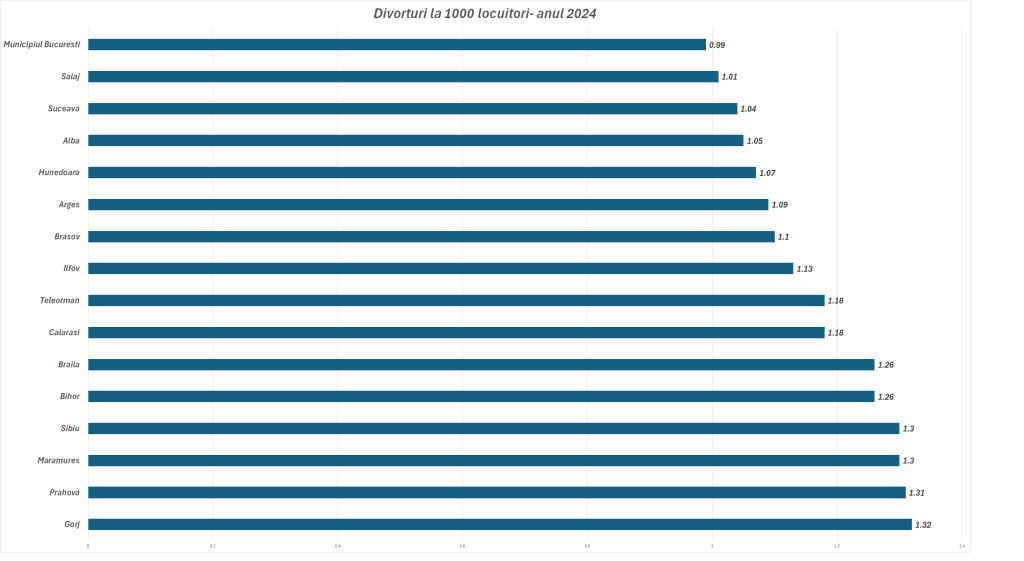
A smaller number of divorces does not mean more happy couples. The statistics do not surprise the reality behind the closed doors: sometimes the crisis holds the united families, but not necessarily happier. In Gorj, Prahova or Maramureș, the divorce rate (the number of divorces in thousands of inhabitants) is higher than in other counties, but also here, many postpone the decision, hoping for better times.
Who divorces and when?
Most divorces take place in the first 10 years of marriage. Among men, most divorces take place in the age group 45-49, while in women the “divorce” age is 35-39 years old, the National Institute of Statistics shows. Last year, almost 500 marriages ended after less than a year.
Interestingly, the number of those who divorce after 20 years of marriage exceeds that of those who separate after 15 years of living. It's like, after two decades of compromises, some decide they have nothing to lose.
Romania: Divorce between tradition, pragmatism and survival
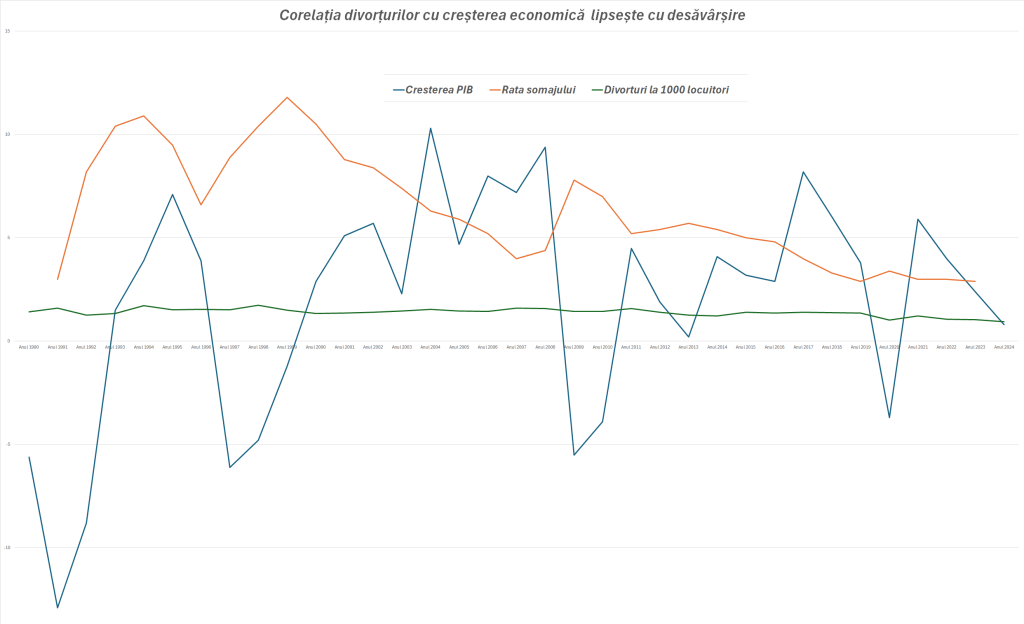
Unlike other countries, where divorce increases in periods of prosperity and decreases in recession, in Romania the divorce rate has remained relatively constant, regardless of seizures or economic boom.
The explanation is related to the social structure: the family and social pressure for maintaining the marriage is still strong, especially in the rural area. In cities, where financial independence is higher, divorces are more common, but at national level the differences are compensated.
Long -term analyzes show that the divorce rate has remained relatively constant or has evolved independently of major economic cycles, such as seizures or periods of economic growth
Unemployment does not significantly influence
Although unemployment can affect the financial stability of a family, there is no evidence that the variations of the unemployment rate at national or regional level would cause significant fluctuations in terms of divorces.
In Romania, unemployment mainly affects young people, but the divorce decision is more common in middle ages, when economic stability is usually greater
Administrative costs and barriers also play a role: in times of crisis, divorce becomes a delayed, not annulled decision. The main reasons for divorce remain personal – infidelity, violence, incompatibility – not economic. Only a small part of the separations are directly motivated by financial difficulties.
Conclusion: In Romania, divorce is not only a personal decision, but also an economic, social and sometimes survival. Until then, Irina and Mihai, Radu and his wife, and thousands of Romanians, drink their coffee together, each with his thoughts, waiting for life to give them, at least once, the right to a true choice.


