In search of the army of the future. Neutral Switzerland wants to arm

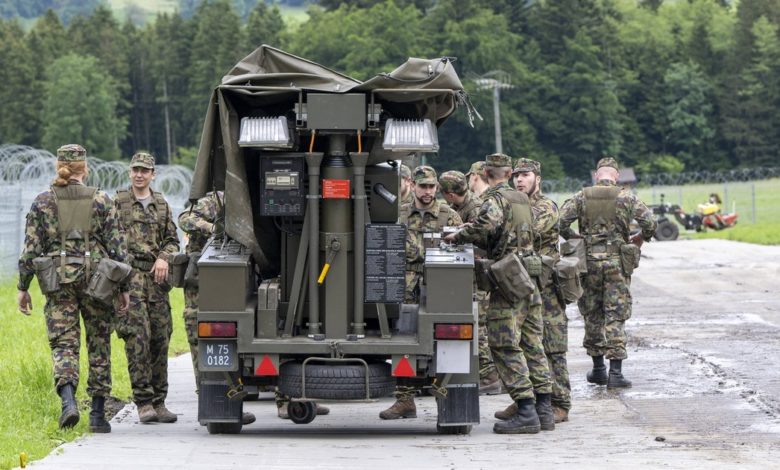
Since the invasion of Russia to Ukraine, the world has been armed massively. At the same time, under the rule of Donald Trump, American security guarantees for Europe become fragile, and global tapping saber has become acceptable again. The safety situation has deteriorated – which also affects Switzerland as a small neutral state.
The Swiss Parliament decided to gradually increase military expenditure from the current 0.7 percent GDP to 1 percent until 2032 Opponents of arms say it's too much. His supporters – that still too little.
Compared to other countries, the planned expenses are relatively low, even if the calculations of Switzerland are more conservative. From the end of the Cold War, savings have been made to defense, And many army systems are outdated. Recently, the research conducted by SRF drew attention [szwajcarskie media publiczne — red.]. They showed that in an emergency armed forces they can defend only 20 percent. airspace.
However, the planned rearming is under a huge question mark. Neither the right nor the left knows exactly what the army wants to spend an additional billion. The new head of the Defense Department, Martin Pfister, also left this question unanswered at his first press conference. According to a survey conducted by “Beobachter”, Swiss parties are completely divided as to what the ability to defend should look like.
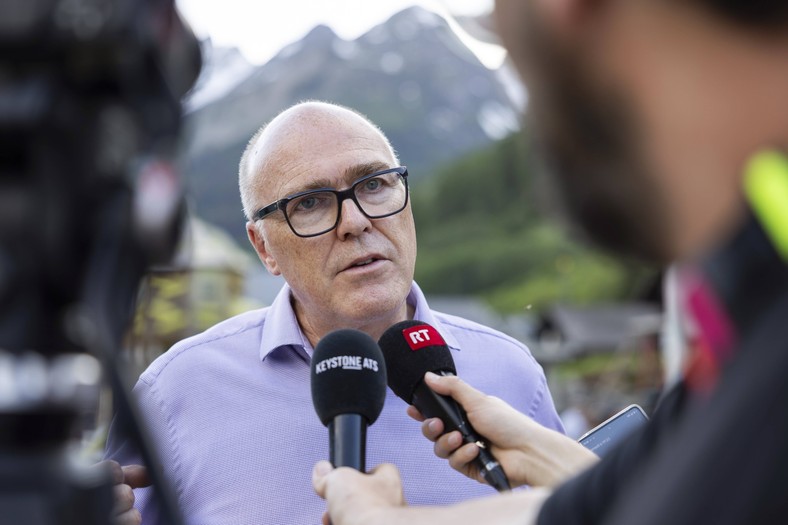
Martin Pfister, head of the Federal Department of Defense, Population Protection and Sport
“Switzerland currently has no supreme defense strategy,” writes a liberal FDP. This accusation can be heard from left to right. Until now, the Defense Department has not explained to the parliament in a transparent way, what funds he intends to use to develop what abilities. According to the green-liberal party (GLP), the army always maintains that the order plan is available, “But no one has seen him yet”.
The Department of Defense denies this statement and writes that the army has a coherent strategy for the coming years. The parliament also approved it in December along with the armed forces' disposal at 2024. In this announcement, the department states that The army should be “focused on hybrid conflict management, threat from a distance, and in extreme cases to a total military attack”. So a bit of everything.
Since so far military reports are too vague and insufficiently harmonized, the parliament asked the Federal Council for a general political strategy. It is to be published this year.
Social democrats, green and GLP call the army to focus on real threats instead of the armored war. “Priority should be defense against cybernetic threats and protection of critical infrastructure,” writes the Social Democratic Party. On the other hand, the center party wants “both threats related to the conventional high -intensity conflict and cyber attacks”. In turn, the right -wing SVP wants to be prepared for “The most dangerous scenario”, or Russian tanks on the Swiss border. He calls for more “combat tanks and more resources for indirect fire support”.
Switzerland will not be able to afford everything. In connection with Mauro Mantovani's military expert calls for the priorities of existing threats: – Strict threat analysis would probably show that resources in the airspace and cyberspace should be treated priority.
Because not everything can be financed, a political decision should now be made. Where does Switzerland want to closely cooperate with neighboring countries, the EU, NATO or other constellations? From left to right, all parties call for closer cooperation and stop doing everything yourself. Except for the right -wing SVP. She wants Switzerland to be “independent of defense.”
Safety gap in the middle of Europe
The Federal Council has repeatedly been in favor of increasing the “ability to cooperate”. It is not clear, however, what it specifically means. All parties call on the government to introduce improvements in this area. Switzerland is surrounded by NATO countries and is a gap in the security policy in Europe. Because It spends much less on reinforcements herself, it has already been criticized by neighboring countries as “parasite“.
Central parties can imagine more intensive cooperation with NATO, provided that it includes joint exercises, training and interoperability, i.e. technically effective cooperation. But All parties reject joining the military alliance. Through its current initiative of neutrality, the right -wing SVP warns against “creeping access to NATO”. He tells “Beobachter” that Switzerland must be “independently capable of defense.” Social democrats, in turn, criticize the fact that the US, as the largest NATO member under Trump, threatens even other NATO countries – currently Denmark – annexation of territories.
For liberals, Switzerland depends on NATO support in the event of a threat, for example in the field of anti -cancer defense. Centrum parties perceive a better “interoperability” of the army with neighboring European countries as an important next step. Instead of NATO, new bilateral and regional cooperation with third countries can also become important. Daniel Mokekli, head of Think Tanku at the Center for Security Studies at the Polytechnic in Zurich, in an interview with “Beobachter” mentions “Third countries”, such as Great Britain, Norway and Türkiye.
It is needed Cooperation in the field of cyber security, protection of critical infrastructure, defense against air attacks and terrorism. Social democrats call for “strengthening the UN and OSCE (organization of security and cooperation in Europe) for” strengthening the collective security institutions “. On the other hand, the right is opposed to increased integration with the EU.
Centrum parties are in favor of partnership in the arms industry in combination with export restrictions for EU and NATO partners. This should enable partner countries to relevee weapons – currently to Ukraine. Otherwise, Switzerland would be excluded from the European weapon market, warns the center of the center. The right also calls for softening export restrictions to reduce dependence on other countries.
Social democrats reject this as a threat to human rights. In their opinion, even export regulations should be tightened to prevent abuse. The Greens also oppose the relaxation of the rules. Domestic armament should be limited to the necessary minimum, to maintain purchased materials and independent ammunition production.
The parties' statements reflect the fundamental Conflict between orientation on NATO and the leftist priority of civil cooperation. Sectoral partnerships could be a compromise – e.g. cybernetic cooperation with the EU while interoperability with NATO in the field of air defense.
Who will pay for it all?
Even intensive cooperation does not protect against huge additional costs. Last year, the federal government spent almost 6 billion francs [ok. 27 mld zł] on the army, i.e. by 4.4 percent more than in the previous year. Planned increase to 7.4 billion francs [ok. 34 mld zł] Until 2028 it will be An additional burden on federal finances. How will this be financed? It's still unclear. And controversial.
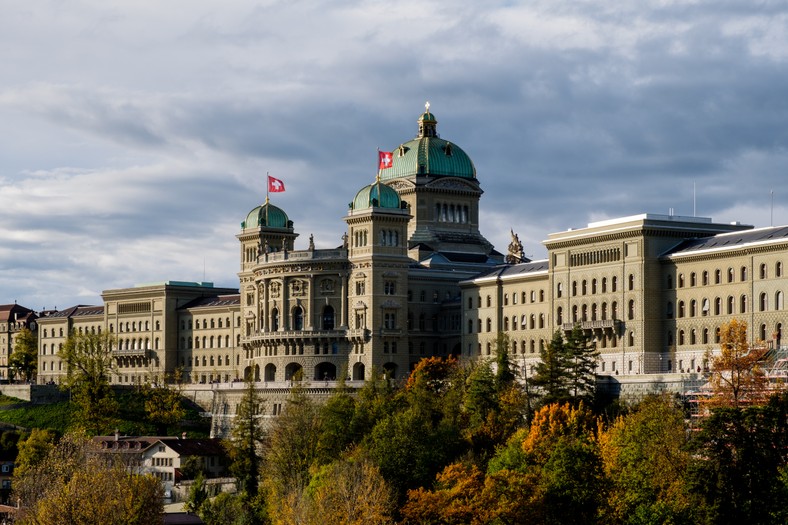
Bundeshaus in Bern, seat of the Swiss Parliament and Government (Federal Council). Illustrative photo
On the one hand, the debt brake obliges the federal government to maintain a sustainable budget – although Additional expenses are possible in extraordinary situations. On the other hand, in the coming years of Switzerland, there is a structural deficit of up to 3 billion francs [ok. 13,6 mld zł]. So how are additional expenses for the army to be financed?
The right and liberals focus on redistribution: cuts in developmental aid areas, foreign payments and migration. In return, taxes should not be raised. Centralists flirt with tax on financial transactions. Turning of securities and derivative instruments should be taxed for military expenditure. Social democrats see a chance in taxation of higher income and the second pension pillar.
On the other hand, the Federal Council would like to reduce the predictable structural deficit in federal finances using a savings package worth 3.6 billion francs [ok. 12 mld zł]. So -called However, the 2027 aid package is highly controversial. E.g. Public and tuition transport are to become more expensive, and additional childcare or refugee integration will no longer be financially supported. University research will also have to settle for smaller money.
Cities, associations, farmers, enterprises, assistance organizations and cultural workers indicated the reasons why savings should not be introduced in their region during consultations on the aid package. Now the Federal Council must prepare a project for parliament containing savings.
Theoretically, these funds could be implemented at the beginning of 2027. However, the package is subject to an optional referendum. This means that voters will finally have to decide whether they want to do Savings in other areas in exchange for higher expenses for the army. Where it should happen – and for what idea of security.