Greece sends its war vessels to Libya in the middle of tensions with Turkey. The main reason for the mission

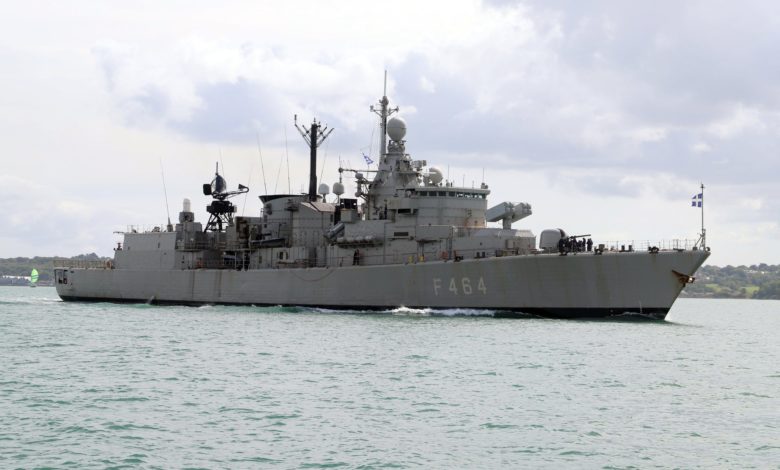
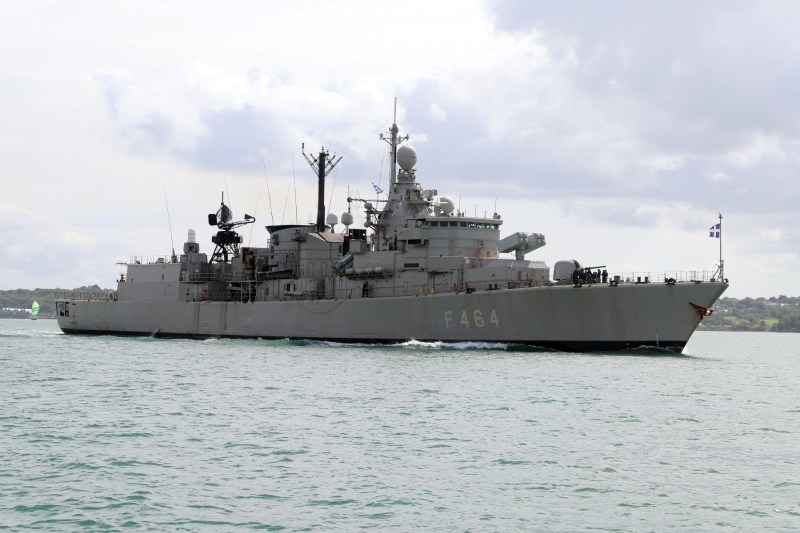
Illustrative photography – the frigate of the Greek Navy F464, HS Kanaris, in the Solent Strait, off the island of Wight, on August 4, 2024. Photo: Alan Spencer Photography / Alamy / Profimedia
At least two frigates of the Greek navy were dislocated in the international waters off the Libya, in an action meant to stop the illegal immigration in Greece, according to information obtained by the English edition of the Elene Kathimerini publication.
The main mission of the ships is to locate the small boats and boats with which traffickers try to cross the Sea of Libya, boats carrying hundreds of people to the small island of Gavdos and to Crete.
After detecting suspicious activities, the frigates will inform the competent Libyan port authorities, responsible for flow management. Due to the large size, frigates cannot intercept traffickers.
However, the choice of the two war vessels was made for practical reasons, as they have sensors and radars that can detect the boats from a great distance, just before they enter the area of responsibility of the Greek Coast Guard.
In addition, they can remain at sea for longer periods of time and, unlike coastal guard ships, the surface units of the navy can easily operate in international waters, acting as a discouragement factor.
By this measure, Athens also consolidates its military presence in a crucial region for the country's national interests, especially at a time when Ankara tries to resume the proximity to Tripoli after a controversial Turk-Libyan memorandum ended six years ago.
The announcement of the Greek prime minister
On Monday, on June 23, Greek Prime Minister Kyriakos Mitsotakis announced that Greece will send two frigates and another ship to the Libyan territorial waters to discourage migrants from reaching its southern and Gavdos southern islands.
In the announcement made last week, Mitsotakis did not give details about the role of ships and did not explain what they would do, but said that the measure will be coordinated with the Libyan authorities and the rest of the European forces operating in the area, Reuters reported at that time.
In recent months, the number of migrants who arrive at sea in northeast of Libya has increased, trying to pass in Europe, mainly from the Middle East and North Africa, including the war-devastated Sudan. Over 800 migrants had tried to reach the Southern Islands of Greece in recent days.
Mitsotakis told Greek president Constantine Tassoulas that the issue was discussed in a national security and defense council, which took place on June 22, and that the situation is alarming.
“I asked the Minister of Defense (…) to make sure that the ships of the Greek navy are dislocated to the Libyan territorial waters to send a preventive message (…), namely that traffickers will not decide who enters our country,” he said.
The ships were going to leave Greece in the coming days, two government officials familiar with the issue said last week.
Greece is a favorite entrance gate to the European Union for migrants and refugees from the Middle East, Africa and Asia since 2015, when almost 1 million people have landed on its islands, causing an unprecedented humanitarian crisis. Since then, the flows of migrants in Turkey have decreased significantly.
In recent years, Greece has registered an increase in Libya arrivals, including Sudanese citizens fleeing Egypt, as well as a multiplication of the number of people with EGRPTEAN citizenship or those coming from Bangladesh, and Athens and Cairo have recently discussed the issue of growing migratory flows.
Greece and Libya are currently trying to repair their relations that have deteriorated following the agreement signed in 2019 between the Libyan Government and Turkey.
At that time, Turkey and the internationally recognized government in Tripoli signed an agreement on the delimitation of the maritime border between the two states, as well as an agreement on military cooperation, documents about which the authorities in Ankara said they were signed to protect Turkey's rights.
Greece reacted immediately, claiming that the agreement on the maritime border is absurd, as it ignores the presence of Crete between the coasts of Turkey and Libya.