
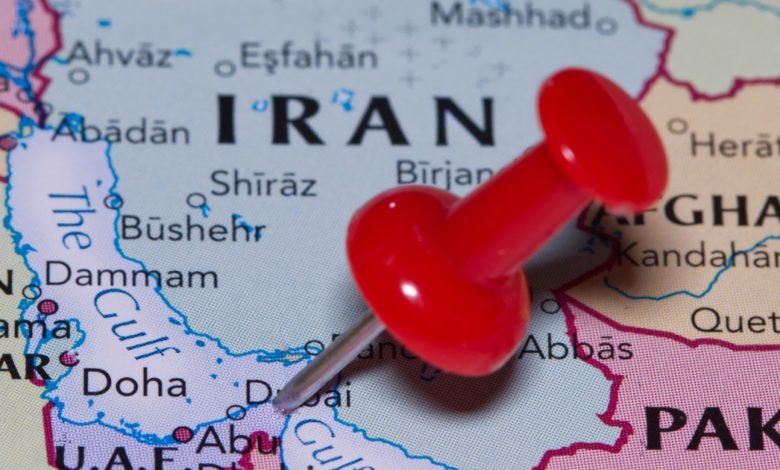
Iran in the past threatened to close the Strait of Ormuz, but he never realized this threat before. It would not only be a disaster for global trade and the risk of drastic growth, among others fuel prices, but also “economic suicide” for Iran himself, which the American Secretary of State Marco Rubio emphasized in an interview with Fox News. Why is this place between the Persian Gulf and the Bay of Oman? From an economic perspective, there are few points on the world map of such a strategic importance.
See also: The US attack on Iran and the risk of closing the Strait of the Ormuz. What can happen?
An expert on the closure of the Strait of the Ormuz: Iran cannot afford it
The strait is located between the Persian Gulf and the Bay of Oman and separates the United Arab Emirates and Oman from Iran. In the narrowest place it is 33 km wide, and the sailing trail is only 3 km wide. Its maximum depth reaches 220 m. According to the American Energy Information Agency (EIA), about 20 million barrels of crude oil flow through the strait, i.e. about one fifth of the world production. As a result, the “bottleneck” is transported most of the oil from Saudi Arabia, Iran, the United Arab Emirates, Kuwait and Iraq.
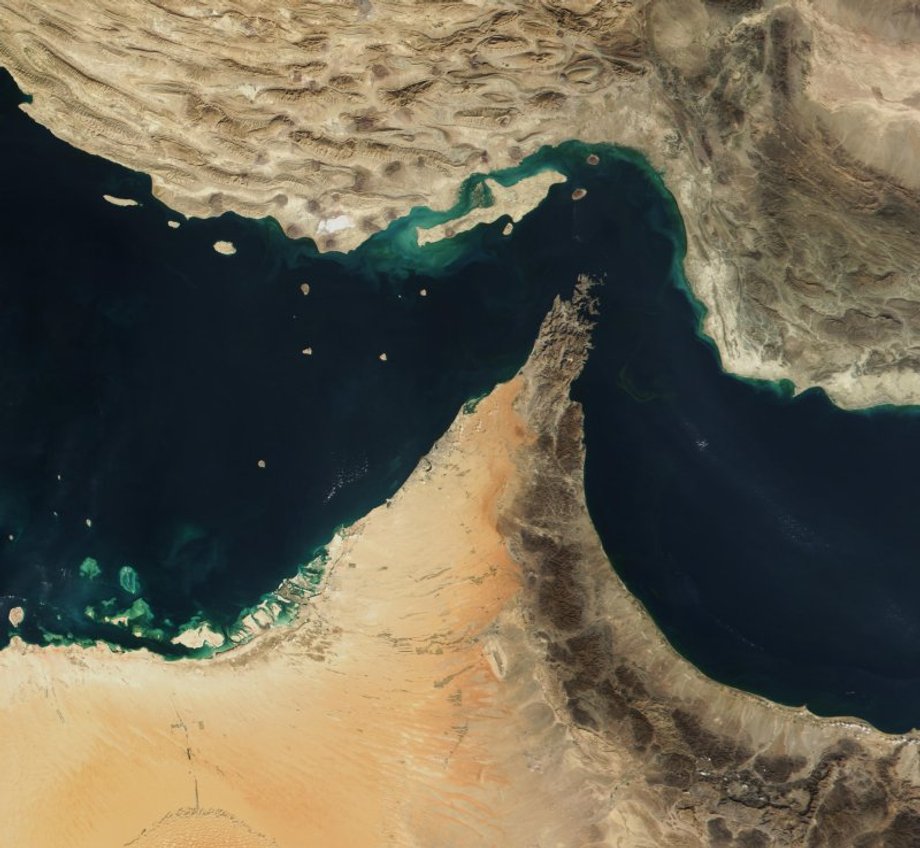
Strait of ORMUZ – satellite photo
Closing the strait would cause a sharp increase in crude oil prices with an almost immediate inflation effect in the USA and around the world. As CNN Rob Thummel from the Tortoise Capital investment company said, Potential disruptions on the Iran -controlled maritime trail can cause oil prices to $ 100. for the barrel (at the moment the price ranges from $ 58 to approx. $ 75 per barrel). “The functioning of the Strait of the ORMUZ is absolutely necessary for the health of the world economy,” he emphasized.
However, this would also be an act aimed by the Iran authorities to his own country. Iran himself uses this gate and – what is important – the closing of Ormuz would threaten to draw into the war of the Persian Gulf, which would be forced to protect their own interests.
See also: China reacts to the US attack to Iran. The diary warns against the crisis
China may be one of the greatest victims of a possible Iranian decision. This country buys almost 90 percent Iranian oil exports. In the first quarter of this year, China brought 5.4 million barrels a day through the Strait of Ormuz, while India and South Korea imported 2.1 million and 1.7 million barrels a day respectively, according to EIA estimates. This is several times more than the import of oil from Europe or the USA.
As CNN Mohammad Ali Shabani, an Iranian expert and editor of the AMWOW information service said, control over the Strait of Ormuz gives Iran “the opportunity to cause shock on oil markets, raising oil prices, winding inflation and refraction of the Trump's economic program.” Other experts, however, reassure that this is a “distant risk”, because the presence of a strengthened US maritime fleet is a deterrent, but also a reacting tool.
“Iran has a lot to lose and very little, if at all, to gain, trying to close the Strait,” said CNN Vandana Hari, general director of Vanda Insights, who tracks energy markets. She added that Iran could “not afford” that his neighbors from allies turned into enemies.


