China video is preparing to inaugurate one of the most impressive infrastructure projects and arouse a new controversy: is it really the highest in the world?

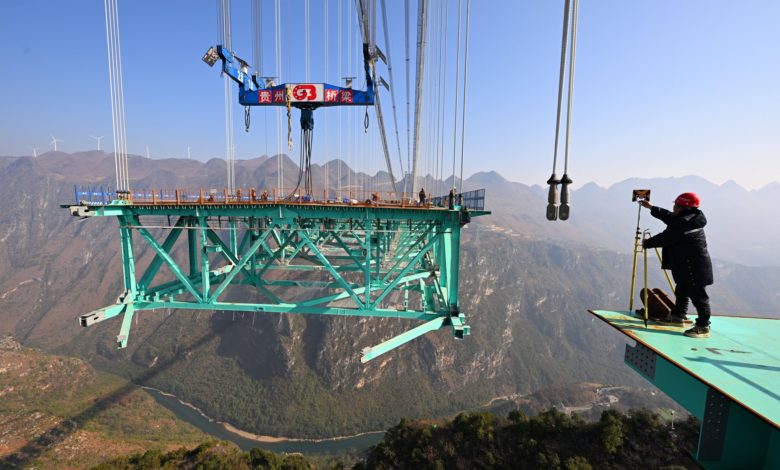
“China will inaugurate the highest bridge in the world,” the international press is titled on a project that would be ready this summer. But does the China Viaductul Millau project in France really detach?
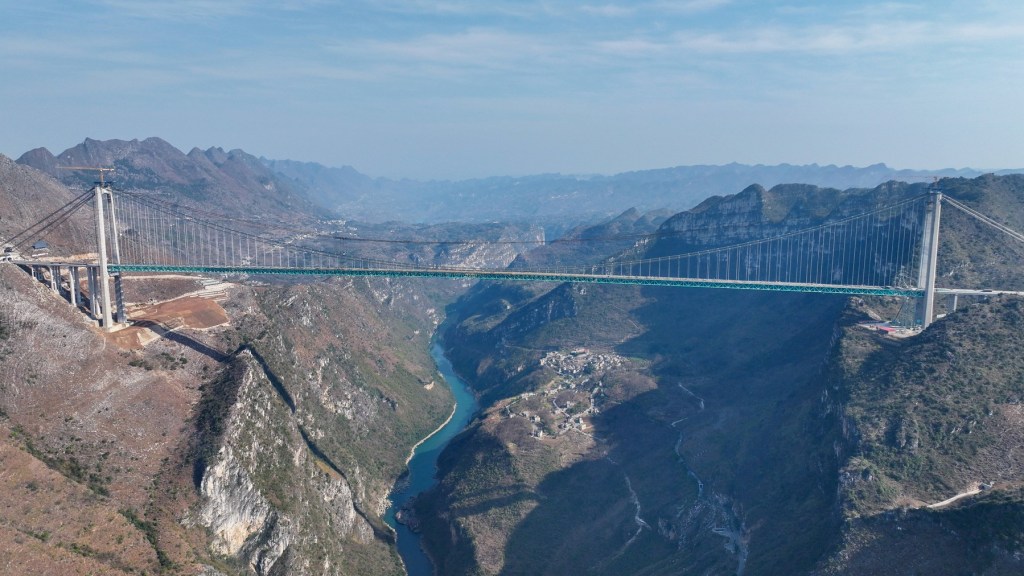
Huajiang Canyon Bridge is a suspended bridge that is currently under construction in the Chinese province of Guizhou, over the Beipan River.
The bridge contains really impressive standards. It has two 262 -meter huge pillars from which a 2,890 -meter long metal board is suspended.
The central opening of the bridge is 1,420 meters. For comparison, the central opening of the famous suspended Golden Gate bridge in San Francisco is 1,280 meters.
But the figure with which the strongest stands out, and which places it in the first place in the world is another: the maximum height from the bridge platform at the ground level (water) – 625 meters.
CNN writes that practically under the bridge the famous skyscrapers empire state building in New York could be erected and there would still be almost 200 free meters.
Similarly, the BBC relates about the bridge and writes that under the Chinese bridge it would easily fit the Eiffel Tower, with about 200 meters extra.
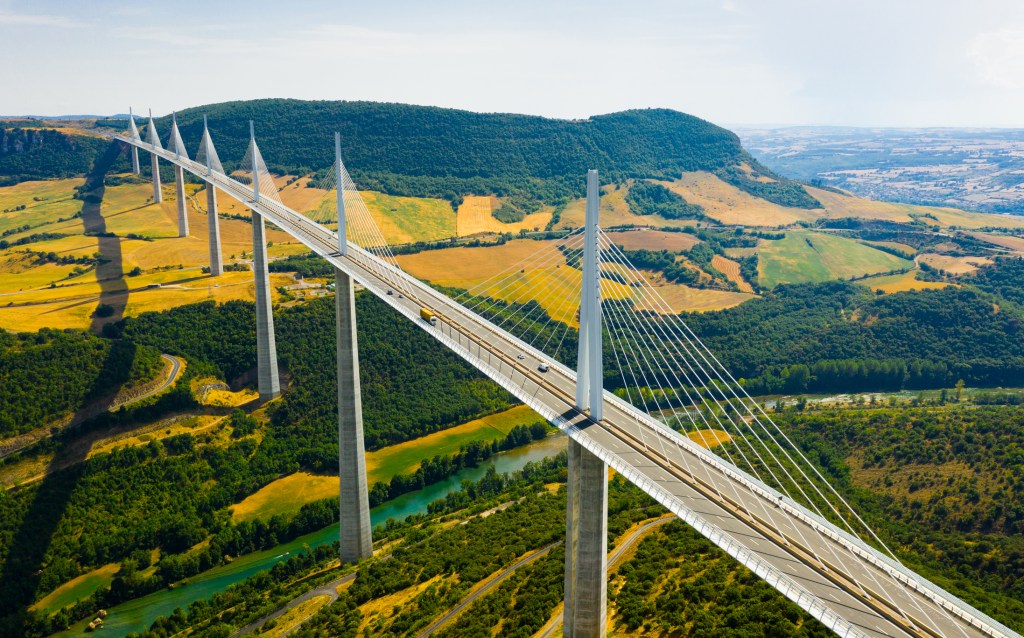
Both great publications, however, continue and make a questionable statement: that Huajiang Canyon Bridge will detonate from the top of the highest bridges in the world the famous Viaduct in Millau, France.
It is true that the distance below the bridge of 625 meters is much greater than the distance below the famous bridge in France (270 meters), but another figure makes the Milluau viaduct still the record holder for the highest bridge: the structural height.
The controversy also appears here. In the world of infrastructure enthusiasts and large engineering works, there are often two distinct tops when discussing the “highest”.
When it comes to buildings, the top of the highest differs if we discuss the structural height (which may also include antennas or towers included in the strength structure of the clouds-see the Petronas or Taipei 101 towers) or the real height from the base to the roof itself.
The same is true of bridges, the “height” can be measured in two ways:
- structural height -from the ground/water base of the pillar to its tip, practically the real height of the actual structure. The top here.
- the height of the platform towards the soil – which is measured from the level of the bridge tab to the ground or water level below, practically the free height below the bridge (vertical gauge). The top here.
The Millau viaduct remains the highest bridge in the world as a structure
The Viaduct in Millau will remain, practically, after the inauguration of Huajiang Canyon Bridge on the top of the highest bridges in the world after the structural height. The highest pillar of the Millau viaduct has 343 meters, compared to the 262 meters of the Chinese bridge.
From the point of view of the height of the platform towards the soil, Huajiang Canyon Bridge will become, indeed the highest bridge in the world, exceeding another bridge (Duge Bridge-565 meters), built “near” 200 km over the same Beipan river.
Moreover, in the top of the highest bridges in the world after the height from the ground to the platform, from the first 30 positions no less than 26 are from China.
A one -hour road reduced to just a few minutes
The Huajiang Canyon Bridge is scheduled to be open to vehicles in June 2025, according to the latest information in the Chinese press quoted by the BBC. The construction of the huge bridge lasted three and a half years, the works starting in January 2022.
Chinese authorities hope it will make the Guizhou region more accessible. The province is located in a mountainous area of China, located 1,300 kilometers west of Shenzhen. Almost half of the top 100 the highest bridges in the world are in the province of Guizhou.
Currently, crossing the Huajiang canyon takes about an hour of driving on roads with many coils, but with the open traffic bridge it is estimated that the travel time will be reduced to just a few minutes!
“In other parts of the world the construction of such a project would take much longer”
Mamdouh El-Badry, a professor of civil engineering at the University of Calgary, told Newsweek that, despite the complexity of the construction at this height, the bridge was still completed much faster than a project of this dimension in the Western countries could have been ready.
“In other parts of the world, a project of this major would usually last between five and ten years from the beginning of the works to the completion, depending on the environmental factors, policies and logistics,” El-Badry says that in China, less attention is paid to aspects such as environmental analyzes or local opposition.
Like other structures of this dimension, the Huajiang Canyon Bridge bridge is a suspended bridge, the main bridge being suspended by the vertical straps (tirants) of main cables that are pulled from one side over the two central pillars.
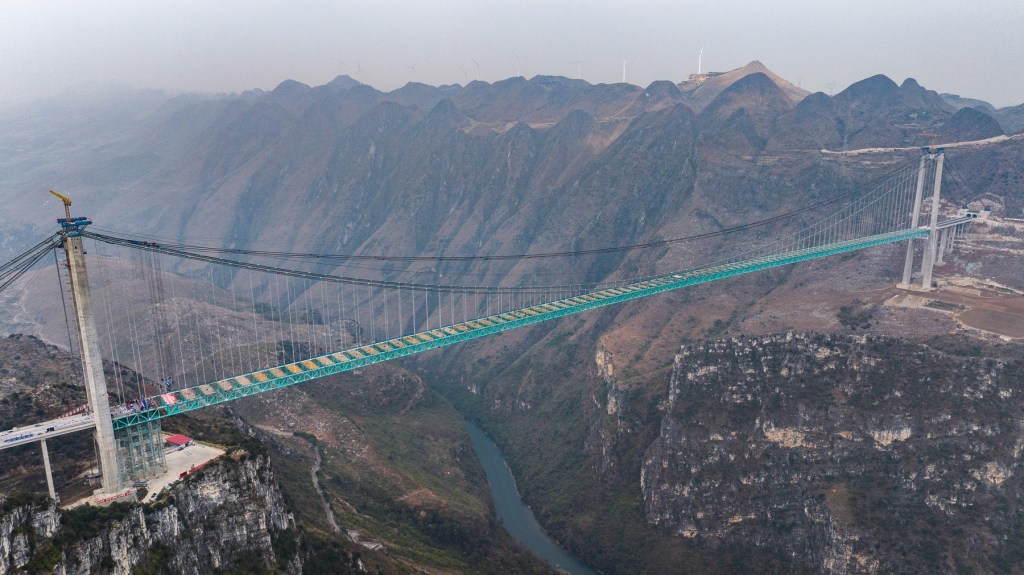
Professor El-Badry appreciated that the altitude of the structure meant that wind resistance was probably an additional problem in construction.
“This required high towers and a very long main opening, which led to huge structural requests,” El-Badry said. “Working on such heights requires innovative construction methods that are probably based on cable cranes, modular bridge sections and high precision anchorage,” said the teacher.
“Despite its size, the bridge has a thin profile and an elegant design, which reduces wind resistance and the use of materials and minimizes the visual disturbance of the canyon environment,” El-Badry said.