Since 2000, the prices of residential real estate in Switzerland have increased more than twice – by as much as 128 percent. Analysis of the IAZI real estate consultant for Gazeta Handelszeitung, in which all over 10,000 were checked. city residents, talks about even more extermal cases. The Swiss, who bought apartments at the turn of the millennium, are rich today.
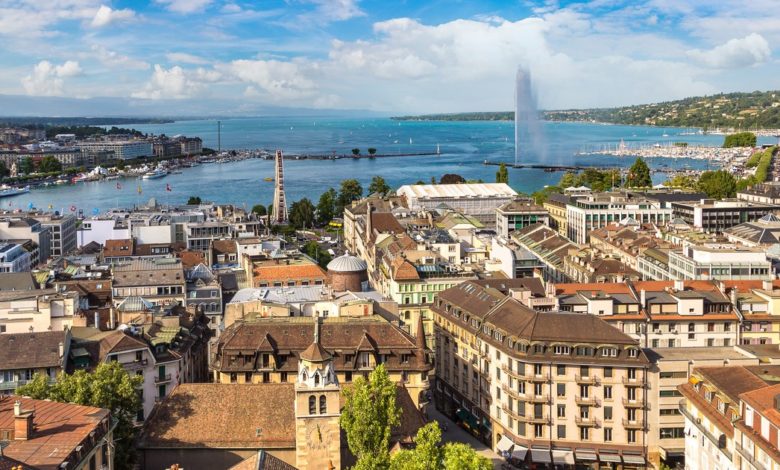
The development of the situation in Carouge. There Prices have increased more than four times: single -family houses in the suburbs of Geneva are worth 345 percent today. more than in 2000, the house, which at the turn of the millennium cost 645 thousand. Franks (at the current exchange rate PLN 2.9 million), is now worth about 2.87 million francs (PLN 13 million). Thanks to this, the city ranks first among municipalities where prices have increased the most in the last 25 years. Once underestimated suburb of Geneva, it has become a municipal center: young, fashionable, close to the center. The demand is high and the supply is small. The vacancy rate is only 0.33 percent. This means that who wants a flat must pay – and that's a lot.
In Geneva itself, prices increased by approx. 282 percent.
A single -family house costs almost four times more today than it used to be. The combination of an international climate, limited building surface and stable demand makes the Geneva market real price generation razor.
The city was in third place in the list of the most expensive properties Zug: Over the past 25 years, single -family houses prices increased here by 270 percent, and apartments by 316 percent. Tax policy, an economic boom and an exclusive atmosphere make this canton a paradise for the rich, which exerts appropriate pressure on the market.
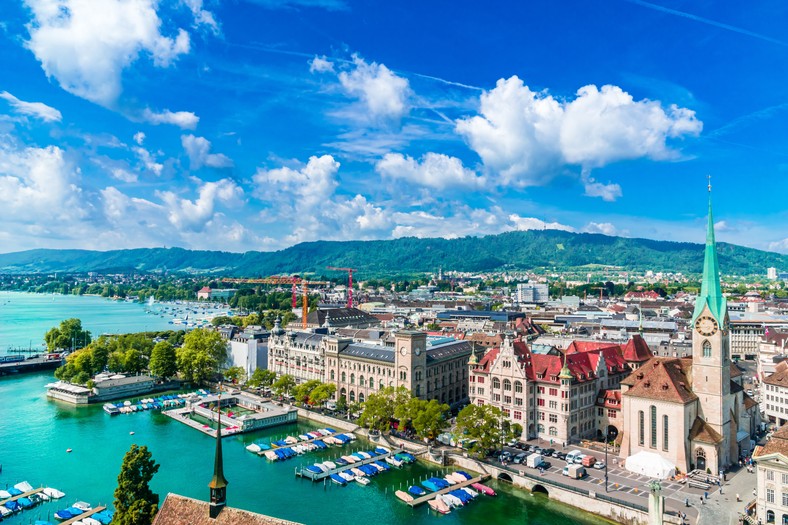
Compared to this, Zurich seems almost mild. Single -family houses in the city are “only” by 239 percent. more expensive than 25 years ago. The one who purchased over two decades ago has a future today. There is still in fifth place Zollikon. The house here costs on average as much as 3.41 million francs (PLN 15 million). Thus, Zollikon is now the most expensive city in Switzerland. What connects most of these boom places? They lie in the immediate vicinity of the lake or a large center. Prices are high, but the demand is even higher, which can be seen from an extremely low vacancy rate.
Continuation of the material under the video
Elixir of the life of the real estate market
– This is one of the longest growth trends in history – says Donato Scognamiglio, president of the board of Iazi. – Whoever bought at the turn of the millennium today is rubbing his hands – he adds. The causes of prolonged price increase are diverse. First of all: Switzerland is an immigration country. From 1956, with few exceptions, a high migration balance of tens of thousands of people was recorded each year. – The increase in population is the elixir of the life of the real estate market – says Matthias Holzhey, a real estate specialist at the UBS financial enterprise. At the same time, the growth rate could not keep up with construction activity.
It has long been forgotten that crises may occur on the market. 30 years ago, real estate was not a safe investment. The market was then in a deep crisis: in the years 1989–1998 the prices of single -family houses fell by approx. 25 percent, and ownership apartments by approx. 22 percent. It was a bitter time for the owners: concrete suddenly ceased to be synonymous with safety.
Since 1998, the situation only improves, despite all financial and economic crises. The Swiss real estate market has become for investors money for money. Especially compared to other investments. From January 1, 2000, to this day the Swiss SWISS Market Index (SMI) stock index has gained only 44 percent. The much wider Swiss Performance Index (SPI) came out much better, achieving a result of 170 percent. Even better results were achieved by investing in gold. While in 2000 an ounce of gold cost 300 francs (PLN 1.3 thousand), currently its price is 2666 francs (PLN 12,000). This means that it has increased eight times.
Nevertheless, real estate investments have one a decisive advantage over gold and shares: Investors can achieve their dream profit with a small capital capital – thanks to the effect of the financial lever. This mechanism means that the profit from the invested equity increases above disproportionally (as long as the income or increase in the value of real estate is higher than the financing costs).
Streetflash / Shutterstock
Zurich, illustrative photo
Safe marina
Thanks to own capital of only 20 percent. Prices of real estate buyer benefit from a full increase in the value of the house. For example, a person who bought a house in Carouge in 2000 had to spend only 129 thousand. Swiss francs (PLN 588 thousand) of equity. 25 years later, sales brought a profit of approx. 2 million francs (PLN 9 million). In this way, the equity invested in the property gained 1475 percent.
Are such dream profits still realistic today? For buyers, entering the market has become more difficult. Prices are high, regulations for banks more stringent, which hinders access to mortgage loans. The average annual gross income of the family with children is currently about 150 thousand. Franks (PLN 684 thousand). As UBS recently calculated, only 31 percent Swiss can afford a property with four or more rooms. Even with a higher income of 200,000 Franks (PLN 912 thousand) only 49 percent He can afford his own home.
So is the investment in concrete gold still profitable? – Low interest rates in Switzerland are a stimulus for the real estate market – says Iazi Scognamiglio expert. – Whoever buys a ownership apartment today has lower housing than in the case of renting a comparable premises – he adds.
Ursina Kubli, real estate specialist at Bank ZKB, is similarly optimistic. – Real estate is and will remain a safe haven. A deficiency of apartments on the real estate market will deepen properly, which should lead to a further increase in prices – he explains. Matthias Holzhey from UBS also assumes maintaining the rate of real estate prices at 3.5 percent in 2025. So the boom will not end for a long time.
I’m Ashley Davis as an editor, I’m committed to upholding the highest standards of integrity and accuracy in every piece we publish. My work is driven by curiosity, a passion for truth, and a belief that journalism plays a crucial role in shaping public discourse. I strive to tell stories that not only inform but also inspire action and conversation.