The phenomenon of unstoppable that grinds the Sarmizegetusa Regia. The temples of the Dacian capital, built on “moving land”

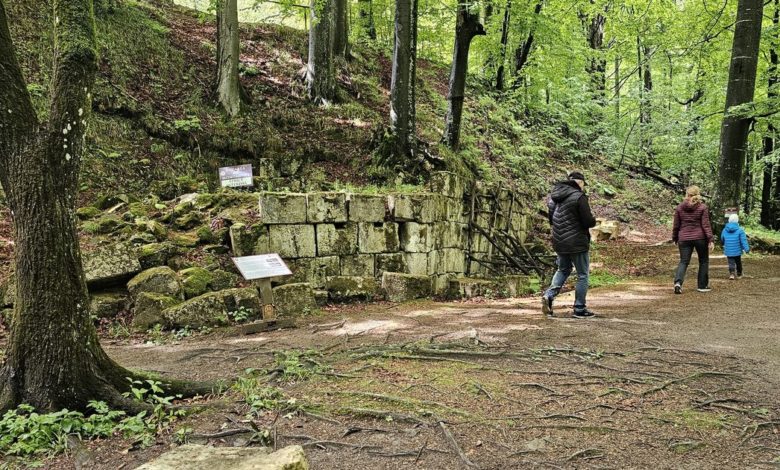
The landslides caused significant damages at Sarmizegetusa Regia, being favored by the soft soil, secular trees, heavy rainfall and wet climate. Many of the vestiges of UNESCO site are in constant danger, and the measures taken to stop erosion have aroused controversy.
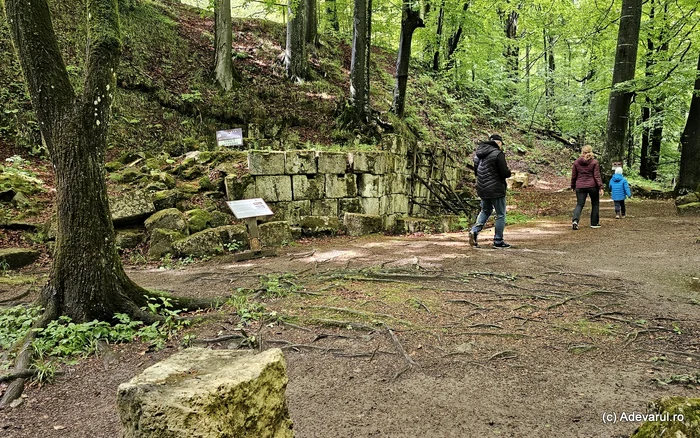
The pentagonal temple, with a wall supported to prevent slip. Photo: Daniel Guță. TRUTH
Sarmizegetusa Regia (video) goes through wide transformations, some meant to reduce the risk that its monuments will be affected by land and erosion slip.
But the soft and shattering soil of Micașist (which would make the construction of “Dacian tunnels”), the secular forest that spreads its roots under the vestiges and the abundant rainfall makes the success of such measures.
The fortification, completed with gabion
The restoration work of the ancient fortification in the UNESCO archaeological site is approaching the end, two years after their beginning, and in the following days the last interventions will be completed. These works have changed, at times, the appearance of the monument.
The project aimed to “correct” the way in which the fortification of the Dacian fortress was restored in the 1980s. The layers of blocks from Podeni limestone were removed, placed over the ancient walls to raise the east and west gates, and the walls of the military enclosure were repaired.
The reduced hardness and the high porosity of the Podeni stone favored the deterioration of the added blocks, and the ancient walls were also affected by the instability of the land, the weakening of the emphasis and by the nearby trees – factors that led to the collapse of several blocks of stone.
“A critical situation was registered with the western and east gates, where the decision to raise additional assistance and to introduce quantities of land between the two parameters generated increased pressures on the vertical areas. Some of the blocks have already fallen, others being in imminent danger of collapse.”showed the specialists in the historical-archatectural study of substantiating the interventions from Sarmizegetusa Regia.
The restoration and conservation works of the fortification cost over 2.2 million euros and were financed by the Hunedoara County Council, with the support of the EEE grants 2014-2021. Reaching almost the end, the interventions significantly changed the appearance of the two restored gates, after eliminating the stone blocks added in the 1980s.
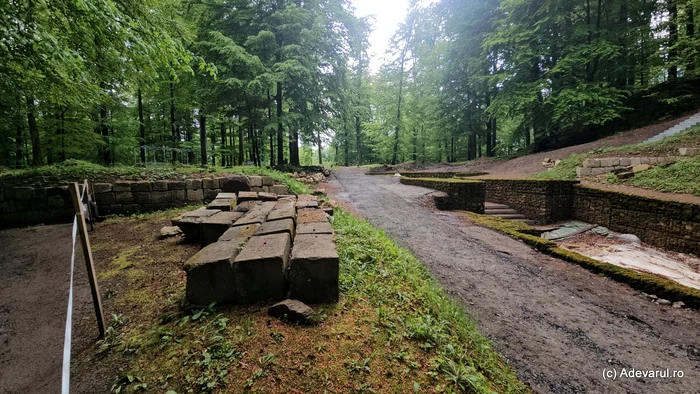
Gabions at the entrance on the ancient road. Photo: Daniel Guță
In the case of the Eastern Port, the works were more complex and included the installation of natural stone gabions in the vicinity of the paved wall. The location of these structures has aroused controversy, due to the new appearance of the area, but the specialists explained that the solution was necessary to prevent landslides and to protect the paved road, as well as the monuments in the area.
“Over time, these gabions, which will protect the ancient paved road, will be grasped, and their visual impact will be greatly diminished.”said Alin Ţambă, vice -president of the Hunedoara County Council.
Paved road and XA terrace enters the site
New gabions will be used to prevent landslides on the terraces in the sacred premises of the Sarmizegetus, where the eight ancient temples are located. In the following days, the works will begin at the Large Andesite Temple, located on the 10th terrace and it is affected by the reduced soil stability.
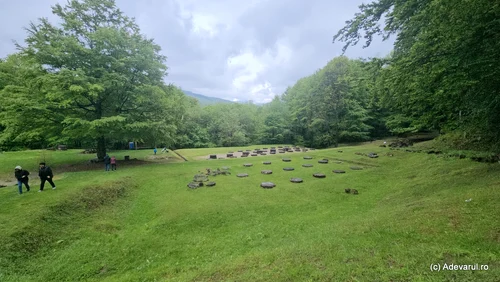
Image 1/14:
Sarmizegetusa Directed by Photo Daniel Guță Adevărul (110) JPG
This temple will be restored through a project estimated at 7.5 million lei. In parallel, works meant will be carried out to stop the process of degradation of the structures on the XA terrace – bells, Andezit drums, limestone blocks and support walls – which occupy an area of 3,187 square meters.
The project includes, in addition to the works of consolidation and conservation, and the restoration by anastillosis of one of the ancient columns of the temple, using original fragments at different points in the site.
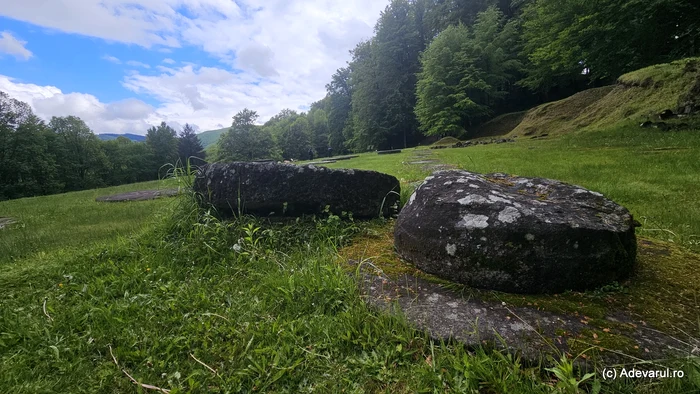
Remnants of columns on the XA terrace. Photo: Daniel Guță. TRUTH
Also this summer, the paved road from Sarmizegetusa Regia could enter the site. It was included in a restoration project worth 6.5 million lei, financed by the Hunedoara County Council through the program “Stamp of historical monuments”, coordinated by the National Heritage Institute. The project mainly provides for the extraction of stone blocks from Podeni – used in the early 1980s for completing the road – and slowing the degradation process caused by natural phenomena and the accumulation of water under slabs.
“The proposal to restore the paved road concerns a minimal intervention on the monument, which includes preservation and stopping works of the degradation of the slab and the structures in the market area, as well as the removal of the completion material introduced in the restoration of over four decades, and the introduction of a support layer that will enhance the original components” “shows the initiators of the project.
Sarmizegetusa Regia sits on moving ground
Sarmizegetusa Regia is on a low stability soil, which is soaked in heavy rains and destabilized by the forest vegetation, thus affecting the integrity of its monuments.
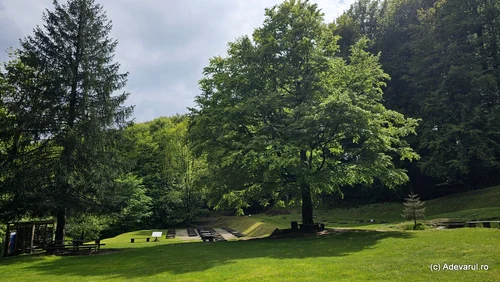
Image 1/17:
Sarmizegetusa Directed by Photo Daniel Guță Adevărul (14) JPG
During the extensive restoration work from the early 1980s, the builders tried to prevent landslides by strengthening the terraces in Sarmizegetusa Regia, lifting of iron-concrete support walls and making a drainage system. But the project, interrupted after a year, was never completed.
Over time, the Dacian capital continued to be affected by landslides and soil erosion, caused by heavy rains (20-40 l/sqm) and melting snow.
“The problem of landslides caused by the rainwater was tried to be solved in the 80s of the last century, when the whole site was proposed a system of drains and channels to direct the waters. The lack of maintenance and the impossibility of realizing the whole project have determined the inefficiency of the proposed system,” It is shown in the historical-archatectural study conducted by the National Heritage Institute (INP).
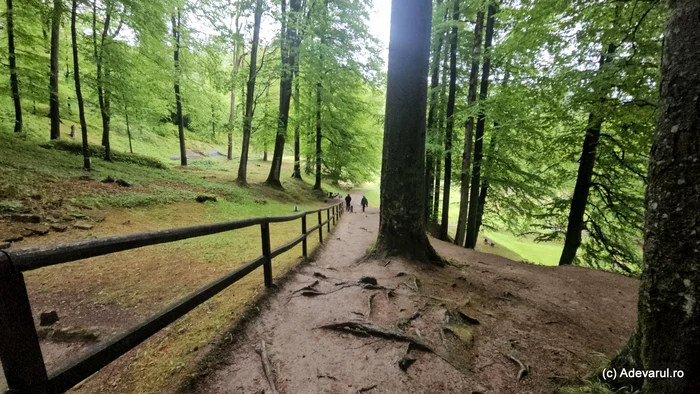
The ancient paved road. Photo: Daniel Guță. TRUTH
According to the specialists, the efficient drainage of the rainwater on the entire surface of the site (the military and the sacred area) is difficult to achieve, due to the depth for excavations, the intersection with the archaeological objectives, the high costs and the need for permanent maintenance.
“The infiltration of the water in the emphastern of the ancient walls have caused frequent collapse of the parameters-a visible situation along the fortification, but also in the case of the support walls in the sacred enclosure”the INP study also states.
The pentagonal tower, under the pressure of nature
Plow water infiltrations have directly affected the archaeological ruins and triggered landslides that led to several limestone blocks from the support wall of the XA terrace. The pentagonal tower, revealed in the 1960s, was also severely affected by landslides and tree falls.
“Currently, the state of degradation of the monument is accentuated. The landslides (still active), the rainwater and the roots of the nearby trees create constant efforts in the walls of the former tower, which led to the collapse of two asses.”, It is shown in the same study.
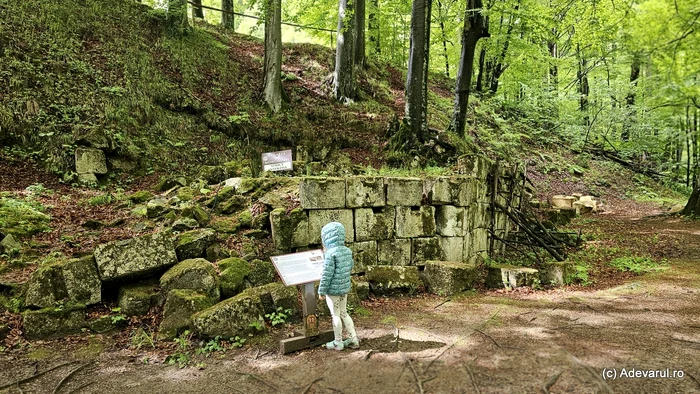
The pentagonal tower. Photo: Daniel Guță. TRUTH
The paved road was initially discovered in the 1950s, then in the 1970s, but each time its components deteriorated quickly, once they were exposed to the weather.
“The revealed portion of the paved road that connects the fortress to the sacred enclosure is unrecognizable: the limestone slabs of the pavement have been largely eroded by water”, note the historian Hadrian Daicoviciu in the 1970s.
The drainage done during the works of the 1980s did not prove effective for the restored ancient road, and considerable areas under its pavements continued to puddle, grinding the stone blocks.
In 1980, it was decided that a portion of the road investigated in the archaeological campaign that year would be left under the ground, considering that this measure would contribute to better preservation.
And in the area surrounding the archaeological site, the landslides changed the relief. In 2016, in the vicinity of the parking lot near Sarmizegetusa Regia, the heavy rains caused a landslide that led to the complete blocking of the road and a portion of the pedestrian alley to the fortress. The phenomenon was repeated in the following years, in the area at the foot of the fortress.