The terrible slaughter that ended World War II in Europe. The cruel revenge that shook the Balkans

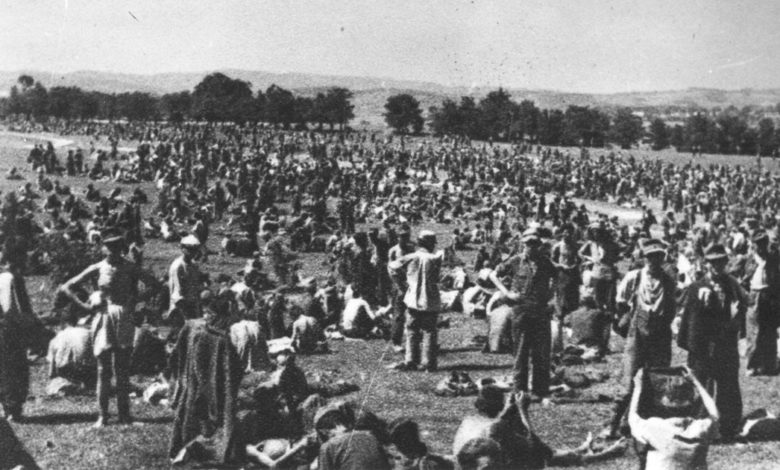
The last battle of World War II, on the territory of Europe, was given on May 15, 1945. It was a true massacre, in which those who came to conquer the peoples of the old continent, followers of extremism and ethnic purges, were merciless.
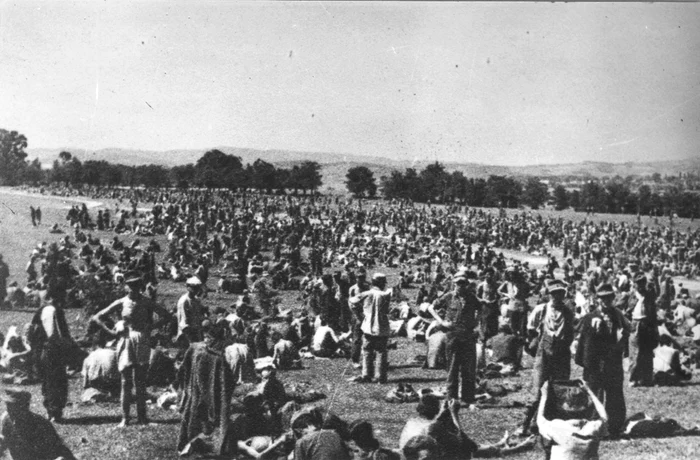
German, Croatian and Slovenian soldiers captured photo wikipedia
On May 7, Nazi Germany has totally and unconditionally surrendered. For the German armies, but also for those of the axis allied states, a counter-chronometer fight for survival began. Those who had come to conquer the peoples of Europe and commit crimes in the name of extremist ideologies, sought mercy and escape into the hands of enemies in the West.
The last battle on the territory of Europe, in which the armies of the axis were involved in Poljana (Slovenia today), on May 15, 1945, more than a week after the surrender of Nazi Germany. The struggle ended with a terrible massacre, a symbol of ferocity and destructive capacity of the most terrible conflict in the history of mankind.
Genocide and terror in the Balkans
The last battle of World War II took place on the territory of Slovenia, today, and involved several forces of the axis against the Yugoslav army. This territory was a sensitive area of the great war. In 1941, Yugoslavia was invaded by Nazi Germany and its Alitia, Italy, Bulgaria and Hungaria, countries dominated by fascist regimes. Poorly equipped and attacked from all sides, Yugoslavia surrendered after only 11 days. Hitler decided to divide Yugoslavia between the states of the axis. This is how the independent state was born Croatia (known as NDH), led by the ultranationalist Ante Pavlevic, the leader of the fascist Ustaše group. In the occupied territory, the Yugoslavs were organized in armed by the partisans.
On the one hand were the citizens, Serbian monarchists, and on the other side the communist supporters of Josip Tito. Despite the ideological differences, both groups have collaborated in the fight against Hitler's puppets and especially to defend the genocide committed by Ustaše extremists against Serbian, Jewish and Roma. Since 1943, the bands of Serbian partisans have been recognized by the Allied troops. In the occupied territories, the fascist regime of the Croatian independent state, through its extremist Ustase group, ravaged.
Those who did not support the regime were marginalized and the population considered “element-indescribable” was effectively subjected to extermination. It is estimated that Ustase killed over about 400,000 Serbs, 30,000 Roma and around 40,000 Jews. In 1941, in the village of Jasenovac, on the territory of Yugoslavia, an extermination camp was arranged, in which many ethnic Serbs, Roma and Jews were lost, under the coordination of Ustase. Under Hitler's oblique, fascist regimes sowed terror in the Balkans. All those considered “undesirable elements” by the puppet leaders of Nazi Germany were harassed, deported, exterminated.
Last Battle of World War II in Europe
At the beginning of 1945, the lot of the war returned the wheel to Europe. The powers of the Axis, in front of Nazi Germany, were as defeated. From the west the American and British troops came and from the east the Soviet roller had triggered, and nothing seemed to be able to sit down. Mussolini was killed by the partisans, Hitler committed suicide in his bunker, and on May 8 the unconditional surrender of Nazi Germany came into force. The German and allied troops, scattered through Europe, woke up in a deadly trap. Those who decided the fate of millions of people, just four years ago, were now hunted and were forced to fight for survival.
The purpose of the military columns of Nazi Germany, but also of the Croatian extremist units, was to force the exit from the areas controlled by the Yugoslav partisans, but also by the Red Army, to Austria, where the British troops were. The Germans and Croatians were aware that if they became prisoners of the Yugoslav army, they would not have mercy. In contrast, under British custody were expected to receive the status of prisoner of war, respecting international customs. A column of 30,000 soldiers, from the Army group, began to seek escape to northern Austria, to surrender to the British. This column consisted of German troops of Wehrmacht and Waffen SS, Croatian Croatian squadron and national guards, Slovenian National Guard brigades, but also Cavalry Cavalry bodies in Germany.
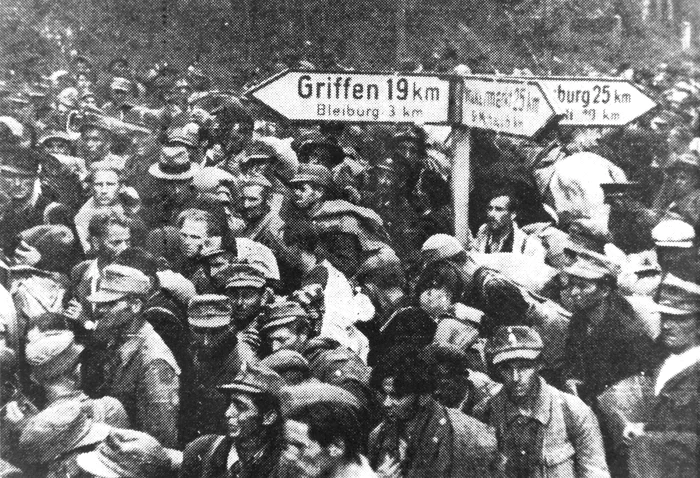
Column of Wikipedia Photo Ustase Soldiers
Tito, the leader of the army of Yugoslav partisans decided that their Nazis and allies would not escape unpunished. Especially after the massacres of the Serbs. So he ordered two divisions, the third and fourth to cut the path of the column in retreat and to capture as many soldiers of the axis. During the pursuit, groups of partisans have already begun to catch and execute German and Croatian soldiers. On May 14, around 9.00, in the morning, the column of Germans, Croats and Slovenians tried to force the Yugoslav block in the area of Poljana, near the border with Austria. Immediately the fights with the Yugoslav troops, with artillery exchanges on both sides began. During the night and in the morning of May 15, the axis troops were shattered.
Some of the soldiers fled over the hills trying to reach Austria, others remained, confused. A terrible slaughter was outlined. At that time, however, the British stationed in Austria intervened. A division of English tanks reached Poljana and tried to mediate the situation. Immediately, the soldiers of the axis raised the white flags, announcing that they were taught to the English. They had lost over 350 people and hoped to get rid of Tito's supporters.
Over 30 days of slaughter
The British did not connect with them and forced them to surrender to the Yugoslav army. Take in custody of Yugoslavs, many prisoners were actually slaughtered by partisans. Eye witnesses such as Teodor Pavic, a courier for the Croatian independent state, confessed that the Yugoslav partisans fired with the machine guns and the mortars to the prisoners column. Other repatriations followed, especially Croatians from Ustase. Initially, the Yugoslav troops followed the status of the prisoner of war, but then the slaughter began. The supporters performed individually or in groups, Croatians, Slovenians, citizens. In addition to the prisoners of war, they also suffered civilians, all those suspected of connections with Ustase or the Croatian or Slovenian patriotic guards. Within a month of days, the number of victims increased rapidly to almost 100,000.
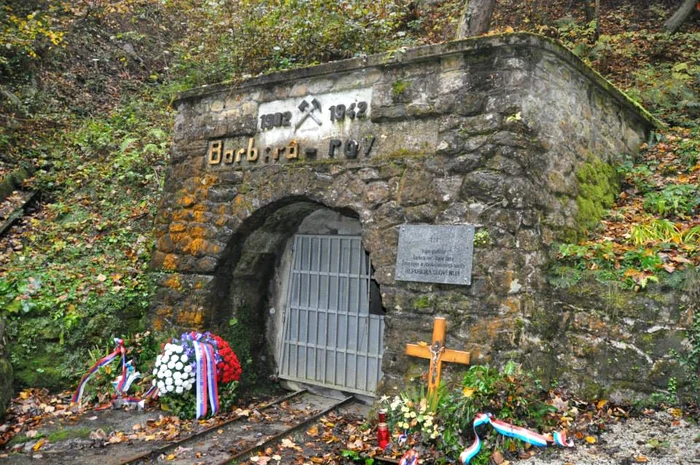
One of the wells in which the Croatian Croatians were thrown on the Wikipedia photo
“It is very difficult to determine how many were killed by partisans between May and June 1945, especially because historians, according to origin or ideology, offers different data. From my point of view, the number closest to reality is the 80,000 victims, a number related to the Austrian historian Michael Portmann. However, there are always in Slovenia, especially in Slovenia. Conditions, can reach 100,000 ”states the historian Alvaro Penas, in an interview with the European Conservative publication. The British were accused of shaking the partisans, the prisoners of war. But their fate had already been decided in Ialta.
“The fate of the refugees, military and civilians was decided at the conference in Ialta. Stalin demanded that all the Soviet fortress who fought on the Germans, would be delivered to them. And the Yugoslavs entered this category, including Croatians and Slovenians. At first, the British promised the soldiers and the civilians, in Italy. In which they were boarded, they went directly to Yugoslavia, and everyone who is in the wagons, gave the partisans in other situations. Later, the British justified themselves saying that Tito had promised human conditions and treatment for prisoners ”adds Alvaro Penas to the same interview.