The European Union is running out of time to implement key economic reforms proposed by former European Central Bank President Mario Draghi two years ago. Analysts warn that failure to act could lead the EU to become a “sick man” on the world stage.
The bloc has set a deadline of the end of 2027 to enact significant elements of Draghi’s plan, which includes establishing a complete single market with capital markets and energy unions, increasing joint borrowing, and reducing the need for unanimous support from member states for major reforms.
As of July, the EU had fully implemented only 15.7% of Draghi’s proposals, while roughly another 40% had been partially addressed, according to the European Policy Innovation Council, a Belgian non-profit organization. Mike Peacock, a seasoned Reuters analyst and former communication director for the Bank of England, highlights that only 3% of major proposals have been successfully legislated.
A significant challenge is that the EU executive, led by Ursula von der Leyen, can only advance these initiatives with the unanimous agreement of all member states. The upcoming electoral calendar in Europe complicates this further, as governments facing voters may be reluctant to cede more sovereignty. Peacock warns that if these elections result in leaders less inclined to pursue reforms, the fabric of EU integration could begin to unravel.
Election Challenges Ahead for the EU
France will hold presidential elections in April 2027, marking the first major vote that could impact EU reform efforts. The EU is racing to finalize its long-term budget for 2028-2034 ahead of these elections, concerned that they could lead to a populist government led by Marine Le Pen.
Although Le Pen’s National Assembly party has backed away from leaving the EU, it still aims to reduce France’s contributions to the EU budget and withdraw from essential components of energy policy while reintroducing border controls.
Italy and Poland will also hold elections later in 2027, and Spanish Prime Minister Pedro Sanchez has called for early elections at the end of November. These electoral events may further hinder reform efforts as leaders might be hesitant to support sovereignty-compromising reforms ahead of elections.
The Unique Situation in Germany
Peacock notes the case of Germany, where Chancellor Friedrich Merz’s coalition government could remain in power until 2029. However, rising support for the far-right Alternative for Germany (AfD), which advocates for closer ties with Russia and strict immigration controls, could obstruct reform efforts in Europe’s largest economy.
Since taking office last year, Merz has pushed for a more ambitious reform agenda compared to most of Germany’s neighbors. His government has relaxed the so-called “debt brake”—a fiscal rule seen by some analysts, including Peacock, as a hindrance to economic growth.
This decision aims to facilitate substantial increases in defense spending and the establishment of a €500 billion infrastructure fund. While such expenditures are popular, reform measures like tightening controls on sick leave and social welfare abuses, as well as gradually raising the retirement age, have proven unpopular, as evidenced by recent regional election results.
“The main conclusion is that Germans do not want reforms and either wish to remain in an unchanging present or go back to the past,” wrote Carsten Brzeski, chief economist at ING, after the ruling Christian Democratic Union suffered significant losses in regional elections amid rising AfD support.
Decisive Tests for EU Plans
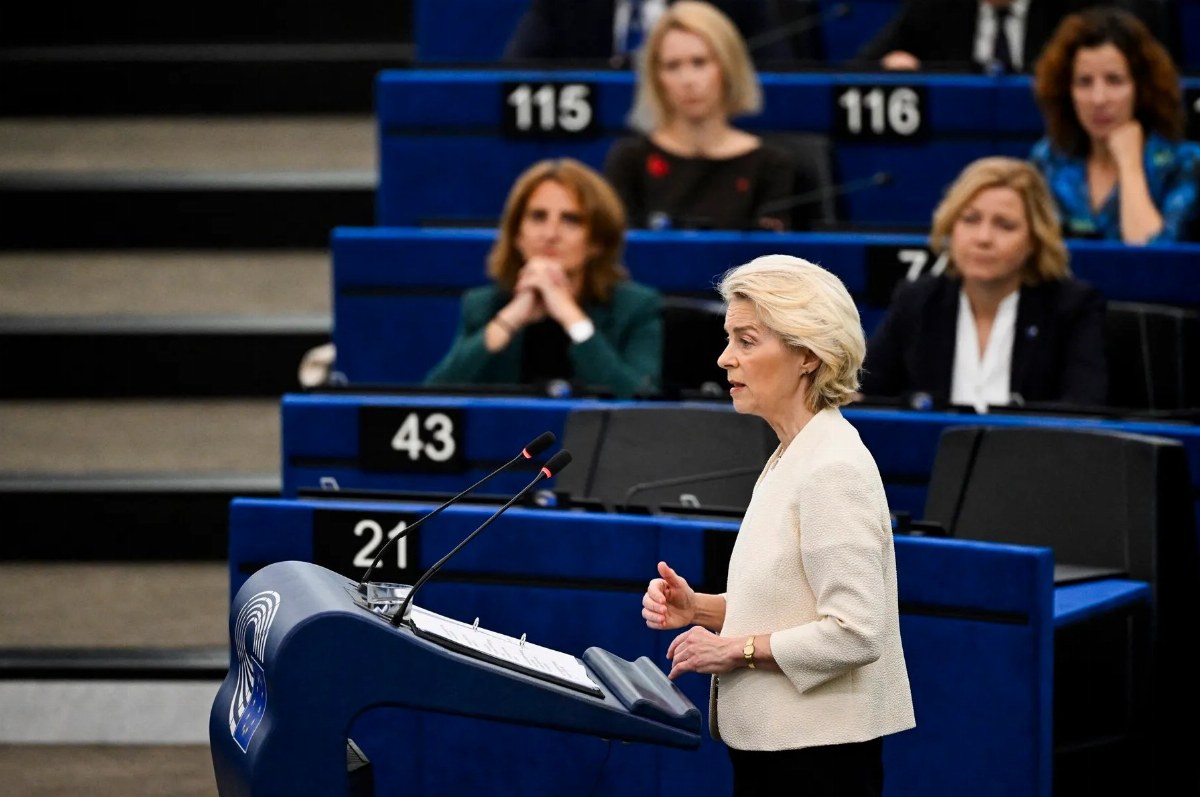
Despite these challenges, Peacock asserts that there is a palpable sense of urgency among EU officials. “Where projects are in the strategic interest of Europe, we must massively accelerate,” von der Leyen stated last month in her annual “State of the Union” address to the European Parliament.
Nonetheless, there appears to be little willingness to share power. Draghi’s call for increased joint borrowing in the Eurozone seems doomed to fail. The decisive tests will now be whether EU leaders can establish an economic and investment union as well as an energy union.
Creating a single capital market could help the bloc mobilize the €35 trillion in household savings spread across the 27 member states, which are often invested abroad. A parallel effort to simplify a fragmented regulatory system could also yield significant gains, Peacock continues. An April analysis by the International Monetary Fund estimated that the reform agenda could boost European productivity by 20% over the next decade, although this projection relies on several optimistic assumptions.
“Without Progress, the Productivity Gap with the US Will Surely Widen”
An essential component of this agenda for enhancing competitiveness is energy reform. The European Central Bank estimates that rapid adoption of artificial intelligence could increase productivity in the EU by up to 4% over the next decade.
However, building and operating data centers and AI infrastructure are feasible only if supported by a seamless flow of electricity across national borders at competitive prices. Christine Lagarde, President of the European Central Bank, recently warned that the bloc risks missing out on the AI boom entirely and becoming overly dependent on foreign states—particularly the US and China—for essential technological components.
“In the absence of progress, the productivity gap with the US will almost certainly widen, European output will likely be even more affected by lower-cost Chinese competitors, and the bloc will undoubtedly have to continue sourcing essential technological components from abroad,” Peacock emphasizes. He concludes, “The EU, characterized by risk aversion, has long procrastinated on reforms, but continuing this approach now could be one of the most perilous decisions of all.”