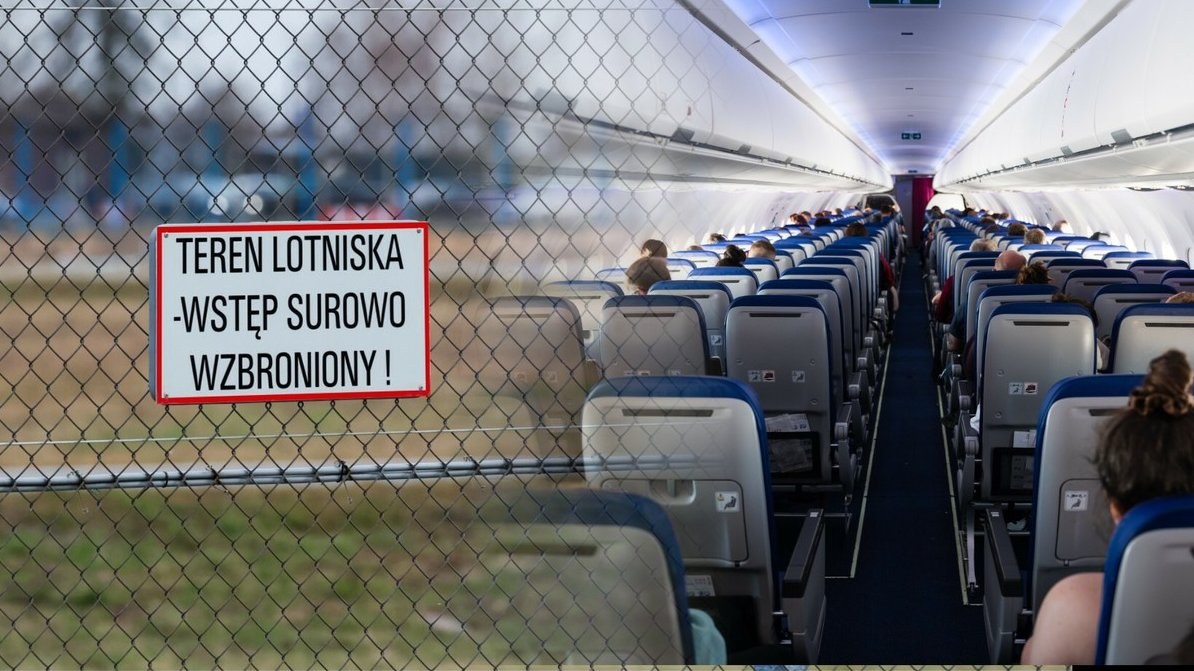
A protracted legal conflict between Poland and Pfizer regarding COVID-19 vaccine supply agreements may result in a considerable rise in flight ticket prices. Poland failed to accept a placed order and lost its case in a Belgian court, which ruled that the country must pay approximately 5.7 billion zł (around $1.3 billion). With the possibility to appeal the ruling, Poland’s failure to comply has forced Pfizer to block funds from the Polish Air Navigation Services Agency (PAŻP) that are channeled through Eurocontrol, an organization based in Brussels that manages air traffic charges across Europe.
Pfizer’s actions have raised concerns, as these blocked funds represent 80% of PAŻP’s budget, equivalent to the agency’s operational costs over five years. Janusz Janiszewski, former president of PAŻP and current expert at the Ad Rem Experts Forum, clarified that the funds seized are not PAŻP’s but belong to the Polish state, highlighting the legal complexities surrounding the case.
As the court hearing is set for October 15, Janiszewski warned that the financial future of PAŻP hinges on the court’s ruling. The Polish government has proposed a contingency funding measure of about 1.5 billion zł for 2027, intended to help PAŻP continue its operations amid declining revenue from air traffic fees. However, uncertainty looms if the dispute with Pfizer is prolonged, potentially lasting until 2028 or 2029.
Janiszewski noted that the EU regulations dictate that public funds allocated for operational costs of air navigation services must be included in the fee structure for airspace users within two years. He expressed concerns over a double burden on PAŻP, indicating that the agency might have to repay both the state and the equivalent amount to airlines, potentially amounting to a total repayment of around 3 billion zł. If this occurs, it could lead to a significant increase in navigation fees charged by PAŻP, driving up ticket prices for passengers by approximately 20%.
While the dispute with Pfizer remains central, Janiszewski emphasized that PAŻP faces broader financial challenges. He cited rising operational costs and decreasing efficiency, with personnel costs ballooning from 594 million zł in 2019 to an estimated 939 million zł in 2024. This includes salaries for air traffic controllers, some of whom earn around 1.5 million zł gross annually.
In the worst-case scenario, a shortage of funds could disrupt air traffic control and NATO operations near Poland’s eastern border. However, Infrastructure Minister Dariusz Klimczak reassured that PAŻP is financially secure until the end of the year due to a government agreement.
PAŻP has reiterated that it is not a party to the dispute with Pfizer, emphasizing that navigation fees are intended for ensuring safety and continuity of air traffic, not for settling commercial claims. The agency stated that the fee structure for its services remains unchanged until the end of 2029.
In light of these developments, Poland has prepared a backup plan in case the court ruling turns unfavorable, ensuring that funding would be maintained through legislative adjustments. However, any emergency law could face potential veto from the President.
LOT Polish Airlines has confirmed that, for now, there are no immediate risks to flight operations or ticket prices stemming from the Pfizer legal dispute, maintaining regular communication with PAŻP and monitoring the situation closely.