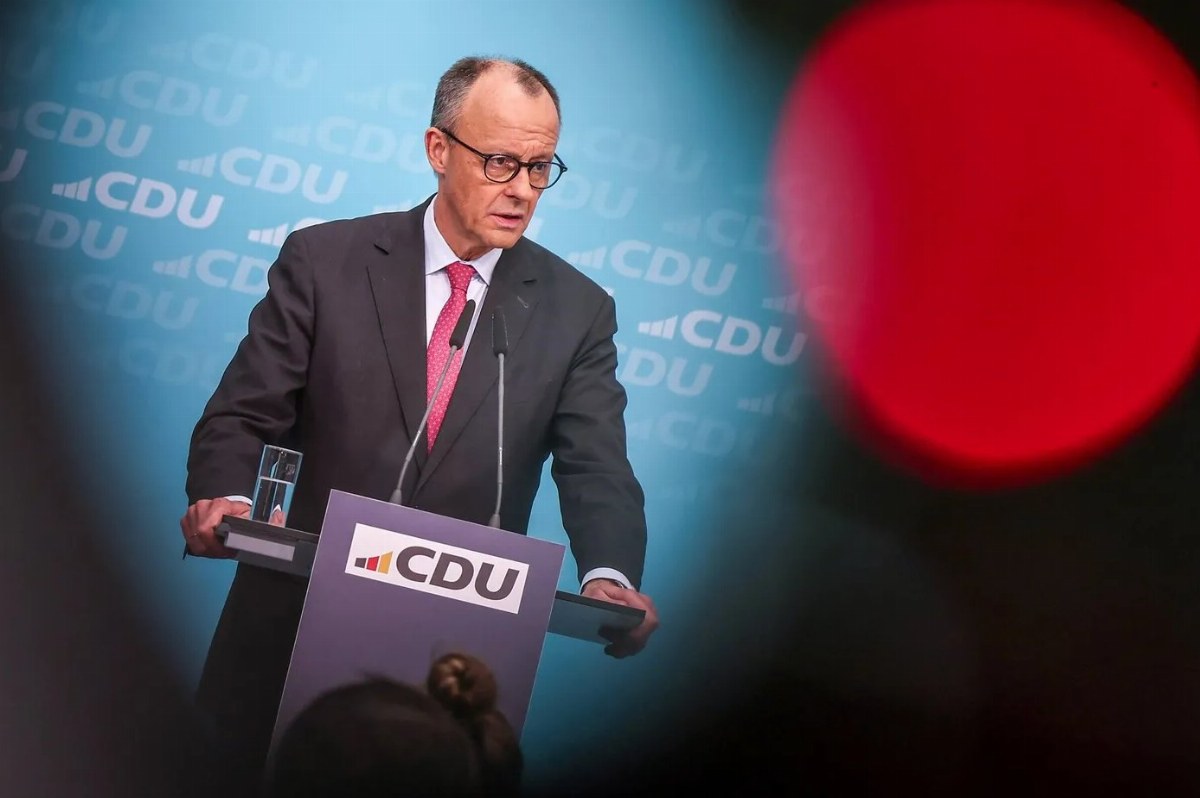
The political future of German Chancellor Friedrich Merz is in jeopardy as the country approaches elections this Sunday in the eastern state of Mecklenburg-Vorpommern. The far-right party Alternative for Germany (AfD) is anticipated to perform well, although its chances of forming a regional government remain slim.
Following a significant victory in the September 6 elections in Saxony-Anhalt, the AfD is again positioned to secure the top spot in the upcoming elections, coinciding with those in Berlin. In its first regional election victory, the AfD garnered nearly 44%, effectively doubling the Christian Democratic Union’s (CDU) support under Merz.
This shocking result underscored the potential for a far-right victory in future federal elections, scheduled for 2029, shaking the politically consensual landscape of Germany.
Polling in Mecklenburg-Vorpommern
Recent polling from the INSA institute shows the AfD at 37%, slightly ahead of the Social Democrats (SPD) at 35%. The radical left party Die Linke stands at 10%, and the Greens at 5%, while the CDU under Merz is trailing with only 7%.
Ironically, Merz’s hopes of preventing an AfD government hinge largely on the popularity of SPD’s Manuela Schwesig, who leads a coalition with Die Linke and boasts a personal approval rating exceeding 60%.
If these numbers are confirmed on Sunday, they could pave the way for a coalition among the SPD, Die Linke, and the Greens, provided they surpass the 5% threshold required for parliamentary representation.
“It’s primarily Schwesig’s brand,” noted Wolfgang Muno, a political science professor at the University of Rostock, as reported by Reuters. He highlighted her status as the most recognized politician in the state, successfully distancing herself from Merz’s Berlin government, where the SPD is a minor coalition partner to the CDU.
Merz’s Low Standing
In just over a year in office, Merz’s national approval rating has plummeted to 14%, with single-digit support in the eastern states. This decline comes as promised reforms have fallen short and economic uncertainties have intensified, eroding voter trust in his government.
The CDU is heading towards potentially its worst electoral performance ever, jeopardizing its ability to surpass the critical 5% threshold for parliamentary inclusion, which would be a dramatic setback.
In recent weeks, German media has speculated about Merz’s future, fueled by leaks from within his party. There is growing expectation that another AfD victory could cost him his position, if not immediately, then in the coming months.
Support for Merz Within the Party
For now, senior leaders within his conservative party have expressed their support, aware that replacing him could jeopardize their reform agenda without addressing the underlying economic issues challenging his administration.
Eight CDU state leaders publicly backed Merz in a joint statement released Wednesday, aiming to quell speculation about his potential resignation.
“Now more than ever, the German political landscape requires stability,” they stated, referencing uncertain election outcomes in Poland, Italy, Spain, Greece, and France next year.
Merz’s conservatives have called for an extraordinary meeting on Sunday to coordinate their party’s response to the election results in Mecklenburg-Vorpommern and Berlin, demonstrating unity behind Merz’s leadership, according to a party source.
The joint letter was signed by the premiers of Rhineland-Palatinate, North Rhine-Westphalia, Saxony, Thuringia, Schleswig-Holstein, Hesse, Saxony-Anhalt, and Berlin. Markus Söder, the Premier of Bavaria and chief of the CSU, the CDU’s sister party, also expressed support for Merz.
Disheartening Polls
However, a recent INSA poll indicated that 78% of respondents, including a majority of his party’s supporters, no longer view Merz as the right person for the chancellorship.
Schwesig, seen as a potential future leader of the SPD, has been a vocal critic of Merz, calling for more government measures to tackle soaring fuel prices and condemning his inability to connect with voters facing rising living costs.
“The Chancellor does not give people the impression that he sees and understands their problems,” Schwesig remarked during a press meeting in the port city of Rostock. “He simply ignores this issue,” she added.
AfD Promises in Mecklenburg-Vorpommern
Like other regions in the east, Mecklenburg-Vorpommern faces a shortage of skilled labor, with its healthcare and elderly care systems heavily reliant on foreign medical professionals. The AfD’s promises to curtail immigration and restore access to cheap energy from Russia by rekindling ties with Moscow resonate with voters in former communist states, where hostility towards the west-dominated political establishment remains strong.
“We are experiencing a great momentum again,” said Leif-Erik Holm, the AfD’s leading candidate in Mecklenburg-Vorpommern. “The Chancellor is already completely overwhelmed by the situation, and it feels like he could resign at any moment,” he stated.
The shipbuilding sector in this state is witnessing a revival, fueled by Germany’s multi-billion euro military reconstruction efforts, alongside a booming tourism sector that has rejuvenated an economy hit hard in the years following reunification. However, like the rest of the country, Mecklenburg-Vorpommern struggles with years of sluggish economic growth, exacerbated by rising gasoline prices that particularly impact this largely rural state, where many rely on cars for transportation.
Holm has adopted a more moderate tone in his campaign, welcoming foreigners with jobs and avoiding much of the divisive rhetoric that characterized the campaign in Saxony-Anhalt.