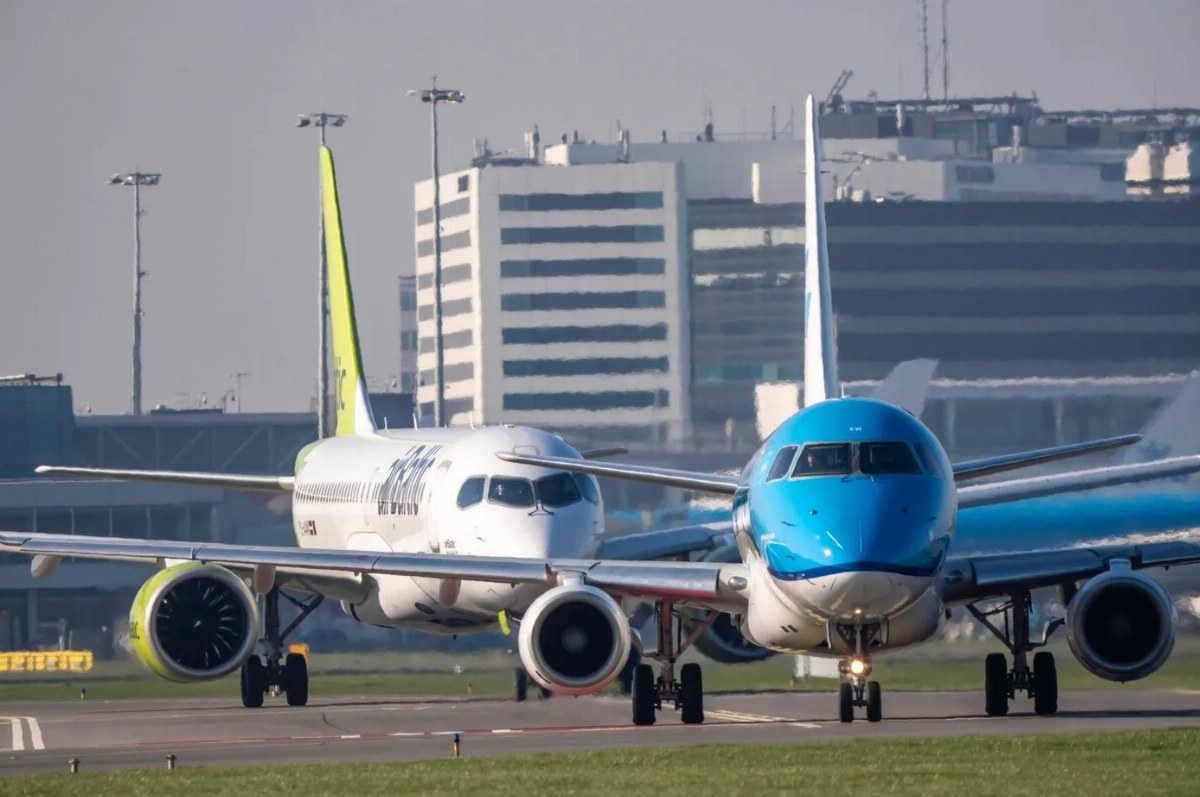
Latvian airline airBaltic announced on Monday that it has filed for Chapter 11 bankruptcy protection in New York as part of a restructuring plan aimed at reducing its debts. This move comes as the ongoing conflict in Iran continues to exert increasing pressure on the airline sector, according to reports.
The airline revealed in a statement that it secured a financing commitment of €350 million from various creditors, including Strategic Value Partners, Barclays, Hayfin Capital Management, Morgan Stanley, and Oaktree Capital Management, to support its operations during the restructuring process.
Chapter 11 of the U.S. Bankruptcy Code allows businesses, regardless of their structure—be it corporation, partnership, or sole proprietorship—to reorganize their activities. This procedure closely resembles insolvency processes in Romania.
The conflict between the U.S. and Iran has led to a doubling of jet fuel prices, triggering the worst crisis in the airline industry since the COVID-19 pandemic.
Investors and airline executives have been warning for months that operators with fragile financial statements and greater exposure to volatile oil prices would be the most affected by the conflict.
State-Owned Airline Seeks Creditor Protection
AirBaltic, which is predominantly state-owned, stated that its decision aims to obtain protection from creditors while it negotiates debt restructuring. The company added that flights will continue to operate as scheduled during the court-supervised process.
This makes airBaltic the second airline worldwide and the first in Europe to enter this procedure citing rising fuel costs, following the May bankruptcy of the U.S. low-cost carrier Spirit Airlines. Spirit executives had failed to secure creditor support for a government-funded rescue plan.
In addition to financial pressures that previously compelled the Latvian government to provide a €30 million loan in April, airBaltic’s liquidity position deteriorated further in recent months due to escalating fuel costs.
Other airlines, such as AirAsia, Southeast Asia’s largest low-cost carrier, are also seeking additional capital amid intensified financial pressures from rising fuel costs and significant losses caused by currency fluctuations.