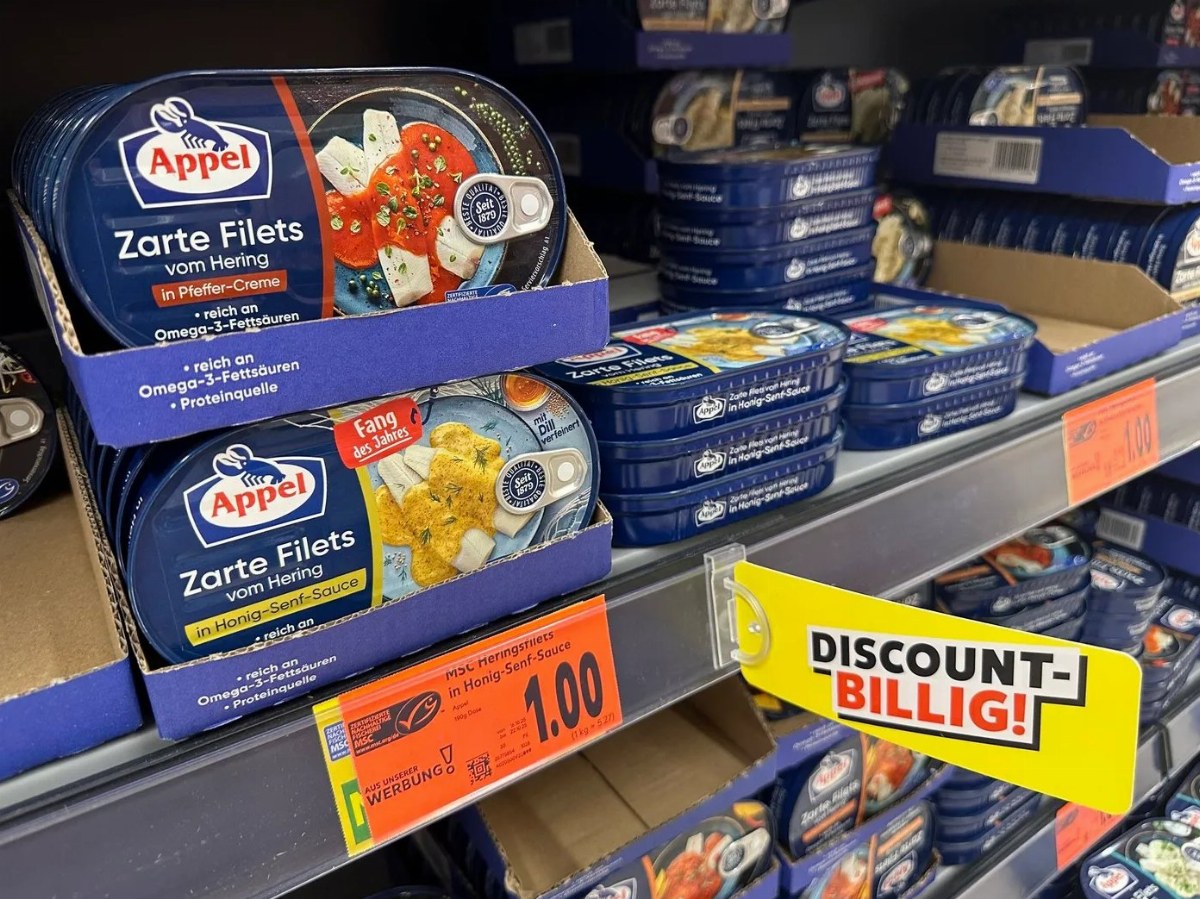
German supermarkets are experiencing a shortage of sardines, attributed to a significant decline in fish stocks along the coasts of Morocco and Western Sahara. This situation, described by chains like Lidl and Aldi Nord as a “tense raw material situation,” has left consumers struggling to find sardines in stores, according to reports from NTV.
A survey among various retailers indicates that customers seeking sardines may encounter limited availability. Aldi Nord acknowledged that specific products might be temporarily out of stock due to challenging fishing conditions.
Rewe, another major supermarket chain, echoed these concerns, calling the supply situation a “tense raw material situation at a European level,” impacting both private label products and branded items.
In response to inquiries, Lidl noted that increased demand for sardines has led to occasional availability restrictions, but they are actively working with suppliers to resume regular stock levels as swiftly as possible.
Kaufland has also admitted to experiencing isolated shortages, and food delivery service Picnic reported similar challenges.
The root cause of this sardine shortage lies in the main fishing area for the European market, which has faced a significant decline in fish stocks for several years. Stefan Meyer, director of the Fish Information Center in Hamburg, pointed out that in 2022, 965,000 tons of sardines were caught, a stark contrast to the expected 525,000 tons for 2024, as reported by the Moroccan Fishing Administration.
Meyer explained that last year’s conditions did not improve, with climate change, altered marine conditions, and high fishing pressure contributing to the dwindling stocks. The Moroccan government has responded with stricter management measures, and from February 2026, the export of frozen sardines will be heavily restricted or suspended to ensure domestic market supply.
This is particularly relevant for European processors, as Morocco has historically been the largest supplier. Experts do not foresee a short-term recovery of stocks off the North-West African coast.
While “true sardines” (Sardina pilchardus) are also found in the North-East Atlantic, particularly off Spain and Portugal, the recovery of these stocks has not been sufficient to meet the growing demand. Meyer suggested that prices may rise due to the lack of alternatives, as producers increasingly turn to similar fish species, such as round sardines (sardinella), found primarily in the Indian Ocean, Pacific West, and tropical Atlantic waters.